Aloo Gobi with Charred Cauliflower and Amchur
Cauliflower roasted hard and separate, then folded into spiced potatoes with a tart hit of dried mango
Contents
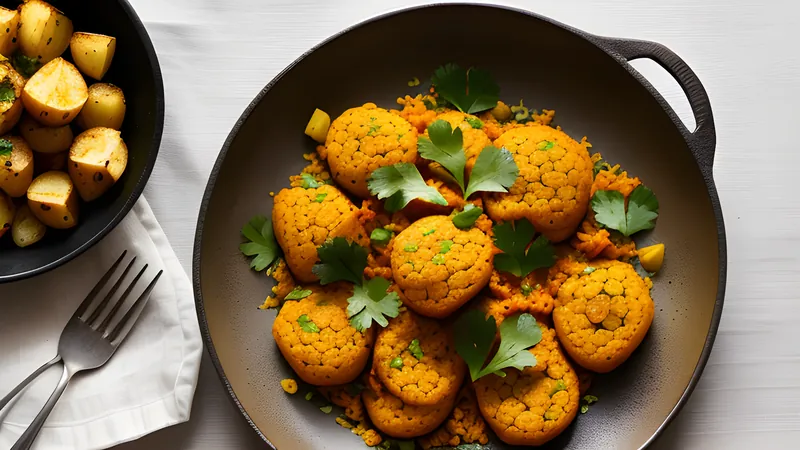
↓ Jump to recipeMost aloo gobi is a dish of compromise: the cauliflower goes into the same pan as the potatoes at the same time, and because cauliflower cooks faster and holds more water, it ends up soft, grey and slightly boiled-tasting by the time the potatoes catch up. This version separates the two. The cauliflower goes into a screaming hot oven on its own tray until its edges char and blacken like a good piece of roast meat, while the potatoes take their time in a proper masala. A finishing dust of amchur, dried and ground green mango, gives the whole thing a clean, sour lift that a squeeze of lemon never quite matches. The result tastes like the dish this always should have been.
Aloo Gobi with Charred Cauliflower and Amchur
Ingredients
- 1 large cauliflower (about 900g), cut into 4cm florets
- 4 tbsp neutral oil, divided
- 600g waxy potatoes, peeled and cut into 2cm cubes
- 1 tsp cumin seeds
- 1/2 tsp black mustard seeds
- 1 large onion, finely sliced
- 4 garlic cloves, finely grated
- 2cm ginger, finely grated
- 2 green chillies, slit lengthways
- 1 tsp ground turmeric
- 1 tsp ground coriander
- 1/2 tsp Kashmiri chilli powder
- 1 tsp amchur (dried mango powder), plus extra to finish
- 1 tsp garam masala
- 1 1/2 tsp fine salt, plus more for the cauliflower
- 2 tbsp chopped fresh coriander, to finish
- 1 lime, cut into wedges, to serve
Method
- Heat the oven to 220C fan (240C conventional, gas mark 9). Toss the cauliflower florets with 2 tablespoons of the oil and a generous pinch of salt, spread on a large tray in a single layer, and roast for 25-30 minutes, turning once, until deeply charred at the edges and tender.
- Meanwhile, parboil the potato cubes in salted water for 6 minutes until just tender at the edges but not falling apart. Drain well and let them steam-dry for a few minutes.
- Heat the remaining 2 tablespoons of oil in a wide, heavy pan or kadhai over medium heat. Add the cumin and mustard seeds and let them sizzle and pop for 20-30 seconds.
- Add the sliced onion and cook for 8-10 minutes, stirring occasionally, until soft and turning golden at the edges.
- Stir in the garlic, ginger and green chillies and cook for 1 minute until fragrant.
- Add the turmeric, ground coriander and chilli powder, stir for 30 seconds to toast the spices in the oil, then add the parboiled potatoes and 1 1/2 teaspoons of salt. Toss to coat every piece, then cover and cook for 8-10 minutes, stirring gently every couple of minutes, until the potatoes are fully tender and starting to catch a little at the base of the pan.
- Add the charred cauliflower to the pan and fold it through gently, taking care not to break up the florets too much.
- Sprinkle over the amchur and garam masala, toss once more, and cook uncovered for 2 minutes to let the flavours settle.
- Taste and adjust salt, then finish with a little extra amchur if you want more tang, the chopped coriander, and lime wedges on the side.
Where this comes from
Aloo gobi belongs to the vast, everyday repertoire of North Indian home cooking, the kind of dish that rarely appears on a restaurant menu with any ceremony because it’s too ordinary to need one — which is exactly its appeal. Potato arrived in India with Portuguese traders in the sixteenth century and took a couple of centuries to work its way fully into the vegetable cook’s arsenal, but once it did, it paired naturally with cauliflower, itself a nineteenth-century British import that took to Indian growing conditions with enthusiasm. By the time both vegetables were common in Punjabi and Delhi kitchens, aloo gobi had become one of the default “sabzi” dishes: a dry-ish vegetable curry cooked with onion, ginger, garlic and a handful of ground spices, served alongside dal and roti as the vegetable component of an everyday thali.
It’s a dish built for using what’s in the vegetable basket rather than following a fixed recipe, which is why versions vary enormously from household to household — some wetter, some bone dry, some built on a tomato base, some with nothing but onion and spice. What stays constant is the logic: two humble vegetables, a short spice list, and a technique that turns both into something more than the sum of their parts. Amchur, the sour dried mango powder that finishes this version, is a Punjabi and North Indian pantry staple used the way a French cook might use a squeeze of lemon at the end of a sauce — to brighten and cut through richness right before serving, never cooked in from the start where its sharpness would dull.
Why the cauliflower gets roasted separately
Cauliflower is mostly water, and it releases that water as soon as it hits heat. Cook it in a crowded pan alongside potatoes and aromatics, and it steams rather than fries or roasts; the moisture it sheds pools at the bottom of the pan, softening everything around it and stopping any of the vegetables from developing real colour. That steamed texture is the single biggest reason home versions of aloo gobi disappoint — the cauliflower turns mushy and a little sulphurous, the flavour of an overcooked brassica rather than a nutty, caramelised one.
Roasting the florets alone, in a hot oven, on a tray with enough space between each piece, solves this directly. The moisture that would otherwise steam the vegetable simply evaporates off the tray instead of pooling, so the surface of the cauliflower dries out fast enough to catch and brown before the inside overcooks. What you get is a genuine Maillard reaction at the edges — that same complex, savoury-sweet browning you’d want on a seared steak or a roast potato — alongside a tender, still-structured centre. Adding this charred cauliflower to the pan only at the very end, once the potato masala is fully cooked, means it keeps that contrast: crisp, caramelised edges meeting a soft, spice-coated potato underneath, rather than everything collapsing into one uniform texture.
The method, in practice
Parboiling the potatoes before they meet the spices matters almost as much as the cauliflower’s separate roast. Waxy potatoes hold their shape well, but raw cubes dropped straight into a masala take a long time to cook through, and by the time they’re tender, the aromatics around them have often scorched. A six-minute parboil gets them most of the way there without breaking them down, so the final simmer in spice and oil is really about absorbing flavour rather than cooking the vegetable from scratch — the potatoes take on turmeric’s colour and the toasted spice’s warmth in a fraction of the time, and the pan stays in control the whole way.
Toasting the ground spices — turmeric, coriander, chilli — in the oil for thirty seconds before anything else goes in is a small step that changes the whole dish. Ground spices are mostly volatile aromatic compounds bound up in a dry powder; heat releases those compounds into the fat, where they dissolve and carry through everything that follows, rather than sitting on the surface as raw powder that tastes chalky and bitter. Do this too long, though, and the same compounds burn off, turning acrid rather than fragrant — thirty seconds over medium heat, with the pan never left unattended, is the right window.
The recipe
Serves 4 as a side dish, or 2-3 with rice as a light main.
Ingredients
- 1 large cauliflower (about 900g), cut into 4cm florets
- 4 tbsp neutral oil, divided
- 600g waxy potatoes, peeled and cut into 2cm cubes
- 1 tsp cumin seeds
- 1/2 tsp black mustard seeds
- 1 large onion, finely sliced
- 4 garlic cloves, finely grated
- 2cm ginger, finely grated
- 2 green chillies, slit lengthways
- 1 tsp ground turmeric
- 1 tsp ground coriander
- 1/2 tsp Kashmiri chilli powder
- 1 tsp amchur, plus extra to finish
- 1 tsp garam masala
- 1 1/2 tsp fine salt, plus more for the cauliflower
- 2 tbsp chopped fresh coriander
- 1 lime, cut into wedges
Method
- Heat the oven to 220C fan. Toss the cauliflower with 2 tablespoons of oil and a good pinch of salt, spread on a tray with space between the florets, and roast 25-30 minutes, turning once, until well charred and tender.
- Parboil the potatoes in salted water for 6 minutes, drain, and let them steam-dry.
- Heat the remaining oil in a wide pan, sizzle the cumin and mustard seeds for 20-30 seconds, then soften the onion for 8-10 minutes until golden.
- Add garlic, ginger and green chillies, cook 1 minute.
- Stir in the turmeric, coriander and chilli powder, toast 30 seconds, then add the potatoes and salt. Cover and cook 8-10 minutes, stirring occasionally, until fully tender.
- Fold in the charred cauliflower gently.
- Sprinkle over the amchur and garam masala, toss, and cook uncovered 2 minutes.
- Taste, adjust salt and amchur, and finish with coriander and lime wedges.
Tips, substitutions and storage
If you can’t find amchur, a squeeze of lime stirred through at the very end gets you part of the way there, though amchur’s flavour is drier and more concentrated than fresh citrus — it’s worth ordering a small bag online if your local shop doesn’t stock it, since it also lifts chana masala and dal tadka beautifully. Keep leftovers in the fridge for up to three days; the potatoes reheat well in a dry pan over medium heat, but add the amchur fresh each time rather than reheating it in, since its brightness fades with repeated cooking. This dish doesn’t freeze well — the potatoes turn grainy — so treat it as a fridge-only leftover.
For a smokier version, finish the roasted cauliflower under a hot grill for the last 2-3 minutes instead of just roasting, watching closely so it chars rather than burns. If you want more substance, a tin of drained chickpeas folded in with the cauliflower turns this into a heartier one-pan main, and it stands up well next to saag paneer or crispy paneer tikka on a shared table, with a garlic butter naan for scooping.
Variations
Swap the potato for cubed sweet potato and cut the parboil to 4 minutes for a sweeter, softer version. A handful of frozen peas, stirred in with the cauliflower, is a common household addition and adds welcome colour. For a version with more bite, hold back a few of the charred cauliflower florets and scatter them raw-charred on top just before serving rather than folding them all in, so every portion gets a piece with a properly crisp surface. However you finish it, the dish rewards patience in exactly two places: giving the cauliflower a hot, empty tray, and giving the potatoes time to actually absorb the spice before anything else joins them.
Related Content