Aioli
Real garlic and oil, whisked by hand
Contents
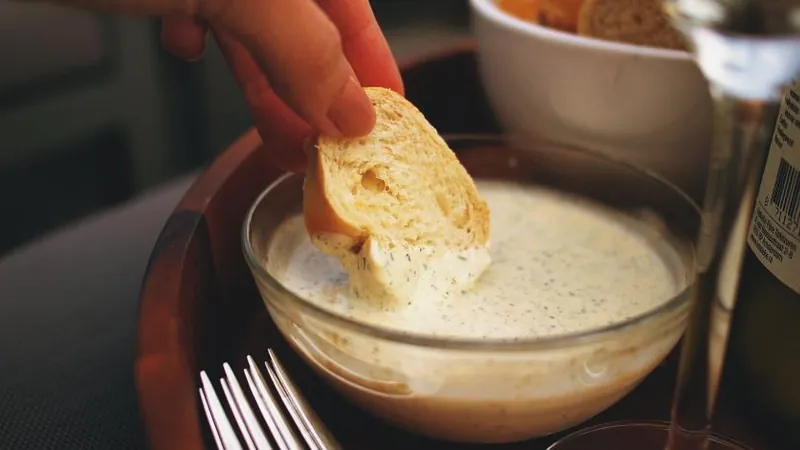
↓ Jump to recipe<p>There is a version of aioli in every supermarket chiller cabinet, and almost none of it is aioli. What you usually get is jarred mayonnaise with a whisper of garlic paste stirred through, pleasant enough but timid. The real thing is a sharp, punchy, unapologetically garlicky sauce that you whisk yourself in about fifteen minutes, and once you have made it you will find the shop version faintly embarrassing. My one small liberty here is a squeeze of lemon at the end, which the purists of Provence would frown at but which keeps the whole thing bright rather than heavy.</p>
<div class="recipe-card" id="recipe">
<div class="recipe-card-head"><p class="recipe-card-title">Aioli</p>
<div class="recipe-card-actions"><a class="recipe-pin" href="https://www.pinterest.com/pin/create/button/?description%3dAioli%26media%3dhttps%253A%252F%252Fmedia.vo.rs%252Faioli-1448217_1920.jpg%26url%3dhttps%253A%252F%252Fvo.rs%252Fstory%252Faioli%252F" target="_blank" rel="nofollow noopener" aria-label="Save to Pinterest"><i class="fab fa-pinterest-p fa-fw"></i> Save</a><button type="button" class="recipe-print" onclick="window.print()" aria-label="Print recipe"><i class="fas fa-print fa-fw"></i> Print</button>
</div>
</div>
<div class="recipe-meta"><span class="recipe-meta-item"><span class="recipe-meta-label">Serves</span>1 small bowl (about 200ml)</span><span class="recipe-meta-item"><span class="recipe-meta-label">Prep</span>15 min</span><span class="recipe-meta-item"><span class="recipe-meta-label">Cook</span>0 min</span><span class="recipe-meta-item"><span class="recipe-meta-label">Cuisine</span>Spanish</span><span class="recipe-meta-item"><span class="recipe-meta-label">Course</span>Sauce</span></div>
<div class="recipe-cols">
<div class="recipe-ingredients">
<h3>Ingredients</h3>
<ul><li>2 large egg yolks, at room temperature</li><li>0.25 tsp fine salt</li><li>1 tsp Dijon mustard</li><li>2 fat cloves of garlic</li><li>200ml grapeseed or light olive oil</li><li>1 tsp lemon juice</li></ul>
</div>
<div class="recipe-method">
<h3>Method</h3>
<ol><li>Crush the garlic to a fine paste with the salt using a mortar and pestle, or grate it on a Microplane.</li><li>Whisk the egg yolks with the mustard and garlic paste in a bowl for 30 seconds until smooth and slightly thickened.</li><li>Add the oil one teaspoon at a time at first, whisking hard until each addition disappears and the base thickens.</li><li>Once you have a stable emulsion, pour the remaining oil in a thin, steady stream while whisking constantly.</li><li>Whisk in the lemon juice, then taste and adjust the salt. Cover and chill until needed.</li></ol>
</div>
</div>
</div><h2 id="what-aioli-actually-is">What aioli actually is</h2><div class="ad-unit ad-in-article" aria-label="Advertisement">
<span class="ad-label">Advertisement</span>
<ins class="adsbygoogle" style="display:block;text-align:center"
data-ad-client="ca-pub-3726833845844946"
data-ad-slot="3291553914"
data-ad-format="auto"
data-full-width-responsive="true"></ins>
<script>(adsbygoogle = window.adsbygoogle || []).push({});</script>
</div>
<p>The name is the giveaway. It comes from the Occitan and Catalan words <em>all</em> (garlic) and <em>oli</em> (oil), and in its oldest, strictest form that is genuinely all it contains: garlic pounded to a paste in a mortar, then emulsified with olive oil drop by drop until it stiffens into a pale, glossy sauce. No egg, no mustard, no lemon. This ancient version is notoriously temperamental, because garlic and oil do not want to stay together, and cooks along the Mediterranean coast argued for generations about how to keep it from collapsing.</p>
<p>The garlic-and-oil-only aioli survives today, most famously in the <em>grand aioli</em> of Provence, a summer feast where a big bowl of the sauce sits at the centre of the table surrounded by poached salt cod, boiled eggs, snails, and platters of vegetables. It is food built around the sauce rather than the other way round, a communal ritual for high summer when the new garlic is sweet and mild. In Catalonia the same idea appears as <em>allioli</em>, served with grilled meat, rice dishes and <em>fideuà</em>.</p>
<p>Somewhere along the line, and largely for the sake of the cook’s sanity, egg yolk crept in. The yolk is a powerful emulsifier, full of lecithin, and it turns aioli from a nerve-racking balancing act into something a home cook can make reliably on a weeknight. Strictly speaking, garlic mayonnaise and true aioli are not the same thing, and a Provençal grandmother might tell you so in no uncertain terms. But the egg-yolk version is what most of us make and eat, and it is genuinely good, so that is the recipe here, with a nod to its purer ancestor.</p>
<h2 id="the-garlic-question">The garlic question</h2>
<p>Garlic is the entire point, so treat it seriously. Use fresh, firm heads and check each clove: if there is a green shoot running through the centre, dig it out, because that germ is where the bitter, acrid taste lives, and it gets worse as garlic ages. Older, softening cloves taste harsh and sulphurous raw, which is exactly the state you are eating them in here.</p>
<p>How you break the garlic down matters too. Crushing it to a paste with salt in a mortar and pestle, or grating it on a Microplane, ruptures far more cells than chopping and releases the maximum allicin, the compound responsible for that hot, pungent bite. That is what you want in an aioli. The salt is not just seasoning; the crystals act as an abrasive that helps grind the garlic into a smooth paste and draws out its moisture. If you find raw garlic too fierce, you can blanch the whole cloves in boiling water for thirty seconds before crushing, which knocks back the heat without killing the flavour, but a proper aioli should announce itself clearly.</p>
<h2 id="how-to-make-it">How to make it</h2><div class="ad-unit ad-in-article" aria-label="Advertisement">
<span class="ad-label">Advertisement</span>
<ins class="adsbygoogle" style="display:block;text-align:center"
data-ad-client="ca-pub-3726833845844946"
data-ad-slot="3291553914"
data-ad-format="auto"
data-full-width-responsive="true"></ins>
<script>(adsbygoogle = window.adsbygoogle || []).push({});</script>
</div>
<p>Start with everything at room temperature, which helps the emulsion form. Crush the garlic with the salt to a smooth paste, then scrape it into a bowl with the egg yolks and mustard. Whisk hard for about half a minute until the yolks thicken and pale slightly; this builds the base that the oil will cling to.</p>
<p>Now add the oil slowly. This is the only rule that really matters. For the first third of the oil, add it a teaspoon at a time, whisking until each addition has completely vanished into the mixture before adding the next. Rushing here is the single most common cause of failure. As the sauce visibly thickens and turns glossy and stiff, you can relax and pour the rest of the oil in a thin, steady stream, whisking all the while. Finish with the lemon juice, taste, and correct the salt. You should end up with a thick, spoonable sauce that holds a soft peak.</p>
<p>A note on the oil: a full extra-virgin olive oil can turn unpleasantly bitter when whisked hard, because blitzing damaged olives releases bitter polyphenols, so I use a neutral grapeseed oil for the bulk and, if I want that olive note, finish by hand-stirring in a spoonful of good extra-virgin at the very end.</p>
<h2 id="when-it-splits-and-how-to-save-it">When it splits, and how to save it</h2>
<p>A broken aioli is oil sitting in greasy pools rather than a smooth sauce, and it happens to everyone. The cause is almost always oil added too fast, or too cold, overwhelming the yolk’s ability to hold it in suspension. The fix is reassuringly simple. Put a fresh egg yolk, or a teaspoon of warm water, into a clean bowl, then whisk the split mixture into it slowly, a little at a time, exactly as if it were the oil. The new yolk gives the emulsion something to grab onto and it comes back together. Do not throw a broken batch away; it is entirely rescuable.</p>
<h2 id="the-tools-you-use-change-the-result">The tools you use change the result</h2>
<p>You can make this with nothing more than a bowl and a balloon whisk, and doing it by hand gives you the most control, because you feel the exact moment the emulsion takes and thickens. It is also the traditional way, and there is a quiet satisfaction in it. That said, a stick blender in a tall, narrow jug is the modern shortcut, and it works because the fast-spinning blade breaks the oil into tiny droplets almost instantly. The trick with a stick blender is to put the yolks, garlic, mustard and all the oil into the jug together, rest the blender flat on the bottom, and blitz without moving it until a pale emulsion climbs up the sides, then slowly lift it to draw in the rest. A food processor works too but tends to produce a looser, less glossy sauce, and it is more prone to splitting because the larger volume warms up and the blade whips in too much oil at once. Whatever you use, keep the equipment scrupulously clean and free of grease, because a filmy bowl can stop an emulsion forming in the first place.</p>
<p>A word on quantities and scaling. Two yolks will happily hold the 200ml of oil in this recipe, and in principle a single yolk can emulsify a startling amount of oil, well over half a litre, because the lecithin coats each new droplet as it goes in. In practice, keep the ratio generous with yolk, because a sauce carrying the absolute maximum oil is fragile and splits at the slightest provocation, whereas one with a comfortable margin is stable, forgiving and keeps its texture in the fridge.</p>
<h2 id="serving-it">Serving it</h2>
<p>Aioli belongs with anything fried, grilled or roasted. It is the classic partner for <a href="/story/patatas-bravas/">patatas bravas</a>, where its cool richness balances the smoky heat of the sauce, and it is glorious dolloped onto <a href="/story/crispy-roast-potatoes/">crispy roast potatoes</a> still hot from the oven. Spread it on grilled bread, spoon it over roasted vegetables, or serve it alongside prawns, grilled fish or a bowl of <a href="/story/mussels-in-white-wine-garlic-and-cream/">mussels in white wine, garlic and cream</a>. Thinned with a little warm water, it makes a punchy dressing for salad leaves or a dip to sit next to <a href="/story/charred-lemon-hummus/">charred lemon hummus</a> on a mezze table.</p>
<h2 id="storage-and-safety">Storage and safety</h2>
<p>Because this aioli contains raw egg yolk, treat it with respect. Keep it covered in the fridge and eat it within two days; the raw garlic actually acts as a mild preservative, but freshness is everything. Do not leave it standing at room temperature for long stretches, and if you are serving it to anyone pregnant, very young or elderly who should avoid raw egg, use pasteurised eggs, which are sold specifically for this purpose. Never freeze it, as the emulsion breaks on thawing into an oily mess that cannot be brought back.</p>
<h2 id="variations-worth-trying">Variations worth trying</h2>
<p>Once you have the base technique, aioli takes flavour well. Stir in a teaspoon of smoked paprika and a pinch of cayenne for a Spanish <em>rouille</em>-adjacent sauce that is superb with fish soup. A spoonful of finely chopped roasted red pepper, blended smooth, gives colour and sweetness. Saffron steeped in a tablespoon of warm water lends a golden hue and a subtle savoury depth for serving with seafood. Fresh herbs, whisked in at the end, take it in a greener direction: basil for something almost pesto-like, or dill and lemon for fish. The one thing I would keep constant, whatever else you do, is the garlic. Make it timid and you have merely made mayonnaise; make it bold and you have made aioli.</p>
Advertisement
Related Content

Advertisement
