Agua de Jamaica: Hibiscus Agua Fresca
A cold steep for a cleaner, less puckering hibiscus tea
Contents
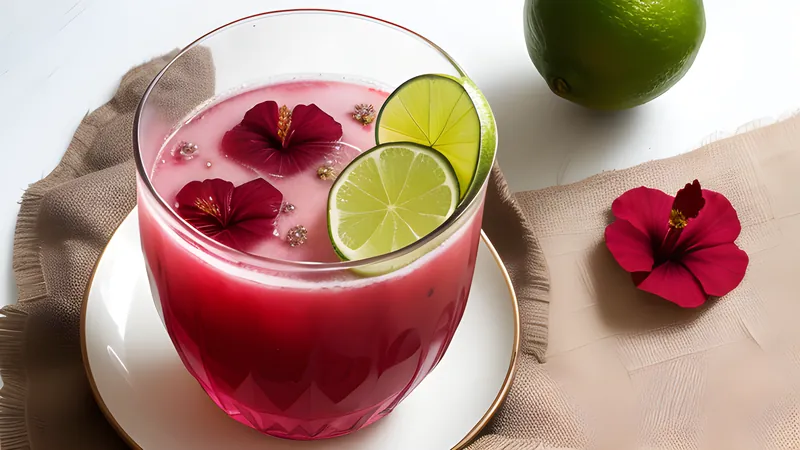
↓ Jump to recipeAgua de jamaica is usually made the fast way: dried hibiscus flowers dumped into boiling water, simmered for ten minutes, strained, sweetened. It works, and it is what most taquerias serve from tall plastic jugs alongside horchata and tamarind water. But boiling hibiscus this hard also boils out its tannins along with its colour, and the result can taste sharp in a flat, mouth-drying way rather than genuinely tart. Cold-steeping the flowers overnight instead gets you the same deep ruby colour and the same cranberry-adjacent tartness, with a cleaner finish and none of the puckering.
Agua de Jamaica: Hibiscus Agua Fresca
Ingredients
- 40g dried hibiscus flowers (flor de Jamaica)
- 1.2 litres cold water, plus more to taste
- 80–100g caster sugar, or to taste
- 1 cinnamon stick (optional)
- Juice of 1/2 lime
- Pinch of fine salt
- Ice, to serve
- Lime wedges and mint, to garnish
Method
- Rinse the dried hibiscus flowers briefly in a sieve under cold water to remove any dust or grit.
- Put the flowers into a large jug or jar with the cinnamon stick, if using, and pour over the 1.2 litres cold water.
- Cover and refrigerate to steep for at least 8 hours, or up to 24; the longer end gives a deeper colour without extra bitterness, since the steep is cold.
- Strain through a fine sieve into a clean jug, pressing the flowers gently to release the last of the liquid, then discard (or reserve; see notes).
- Whisk in the sugar a little at a time, tasting as you go, until dissolved and balanced against the tartness.
- Stir in the lime juice and a small pinch of salt to sharpen and round out the flavour.
- Taste and dilute with a splash more cold water if the concentrate is too intense; it should be tart, floral and only lightly sweet.
- Chill fully and serve over plenty of ice, garnished with a lime wedge and a sprig of mint.
The flower behind the name
Despite the name, jamaica has nothing to do with the country of Jamaica and nothing to do with actual berries. It is Hibiscus sabdariffa, and what gets dried and sold as “flor de Jamaica” is actually the calyx, the fleshy, star-shaped structure that cups the base of the bloom and swells after the flower itself drops away. The plant most likely originated in West Africa, and it travelled two directions from there: east into South and Southeast Asia, where related infusions are drunk across those regions too, and west across the Atlantic on the same colonial and enslaved-trade routes that moved so many other crops, arriving in the Caribbean and Mexico by the colonial period.
The drink took the name of the port the plant is widely believed to have arrived through, Jamaica, and it settled into Mexican life as one of the “aguas frescas,” the family of lightly sweetened fruit-and-water drinks (tamarind, watermelon, cucumber-lime, and jamaica among the most common) sold from big glass barrels at markets and taco stands across the country. It is also drunk widely across West Africa itself as bissap or zobo, and across the Caribbean and parts of the Middle East and South Asia under other names; hibiscus tea is one of those rare drinks that genuinely belongs to several cultures at once rather than to one, each with its own spicing and sweetening habits.
The case for a cold steep
Boiling dried hibiscus does two things you may not want. It extracts colour and acidity very fast, which is exactly why the boiled method is the standard one, but it also pulls a heavier load of tannins out of the calyces, the same class of compound that makes an over-brewed black tea taste dry and slightly bitter on the back of the tongue. Heat accelerates almost every kind of extraction indiscriminately, the good and the harsh together, and ten minutes at a rolling boil does not discriminate between hibiscus’s bright malic and citric acids and its more astringent, drying compounds.
A cold steep slows all of that extraction down and, crucially, slows it unevenly: the tart, fruity acids and the vivid anthocyanin pigments that give jamaica its colour come out steadily over hours in cold water, while the tannins that need heat to dissolve efficiently stay largely locked in the plant material. Give the flowers eight hours or more in the fridge and you pull out nearly as much colour and tartness as a boil would give you, with a noticeably softer, cleaner finish. It is the same logic behind cold-brew coffee tasting less bitter than hot-brewed: time substitutes for heat, and the flavours that heat would rush out arrive more gently instead.
The other advantage of cold-steeping is practical. There is no pan to watch, no risk of a boil-over, and the jug can sit in the fridge overnight or through a working day without you doing anything to it. Rinse the dried flowers first; they are sold loose and often carry a little dust from processing, and a quick rinse under the tap in a sieve costs nothing.
There is a reason the boiled method persists despite this, and it is worth being honest about: it is faster, and in a busy market stall making litres of the stuff for a lunchtime rush, ten minutes on the stove beats an eight-hour wait every time. For home cooking, where you can plan a day ahead, the trade is easily worth making. I now steep a jug every time I empty the fruit bowl of anything worth reducing to a syrup, since the cold jamaica keeps happily in the fridge waiting for its turn to be sweetened and served, and starting one before bed means it is ready to strain and finish the next morning with almost no active effort.
The recipe, step by step
Rinse 40g dried hibiscus flowers briefly under cold running water in a sieve. Tip them into a large jug or jar, add a cinnamon stick if you want a warmer, slightly spiced note running underneath the tartness, and pour over 1.2 litres cold water. Cover and refrigerate for at least 8 hours; overnight is the easiest way to hit this without thinking about it, and up to 24 hours is fine if that suits your schedule better, since the cold steep does not turn bitter the way an over-long hot brew would.
Strain through a fine sieve into a clean jug, pressing the spent flowers gently with the back of a spoon to release the last of the liquid trapped in them. Whisk in 80 to 100g caster sugar, a little at a time, tasting as you go: the concentrate straight off the flowers is genuinely sharp, closer to cranberry juice than to a soft fruit tea, so it needs real sweetness to balance, but you want to stop while it is still recognisably tart rather than turning it into cordial. Stir in the lime juice, which sharpens the whole thing rather than sweetening it further, and a small pinch of salt, which does the same quiet trick here as it does in lemonade: rounding the sweetness without reading as salty. Taste once more and, if the concentrate feels too intense, stretch it with a little extra cold water. Chill fully before serving over plenty of ice, with a lime wedge and mint if you have it.
Tips, substitutions and storage
Agua de jamaica keeps well in the fridge, sealed, for up to a week, and the flavour holds better than most fruit waters because there is no fresh fruit pulp to spoil. It is best diluted to taste at the point of drinking rather than pre-diluted and stored, since concentrate keeps longer and more flexibly than a fully mixed jug.
Do not throw the spent flowers away without a second thought. Simmered briefly in a little sugar syrup, they make a jammy compote that is good spooned over yoghurt, or blitzed with a splash of the strained liquid into a rough coulis for drizzling over the saffron and cardamom rice pudding. If you cannot find loose dried hibiscus, some shops sell it as “sorrel” (the Caribbean name) or in tea-bag form; tea bags work in a pinch, though you will need more of them and the flavour is usually thinner, since bagged hibiscus is often cut smaller and pre-exhausted a little in processing.
Variations
For a version closer to Jamaican (the island) sorrel, add a few slices of fresh ginger and a couple of whole cloves to the cold steep alongside the cinnamon; that version is traditionally made for Christmas and often carries a splash of rum once strained. A few slivers of orange peel steeped in with the flowers add a bitter-orange lift that works well against the tartness. And for a drink with real crossover appeal at a barbecue, mix equal parts finished agua de jamaica with the salted watermelon agua fresca; the hibiscus’s tartness and the watermelon’s sweet, salty finish balance each other in a way neither manages alone.
A little steeped in with black tea, half and half, makes a hibiscus iced tea with more backbone than either drink has alone, closer to what is sold as “red tea” in parts of the American South. And if you want a version to serve alongside something rich, like a plate of tacos al pastor, keep the sweetness low and the lime high; the tartness does the same job a squeeze of citrus does on the tacos themselves, cutting straight through the fat.
However you flavour it, the cold steep is the part worth keeping. It costs nothing but a jug of fridge space overnight, and it is the difference between a jamaica that tastes bracing and one that tastes merely sour.
Related Content