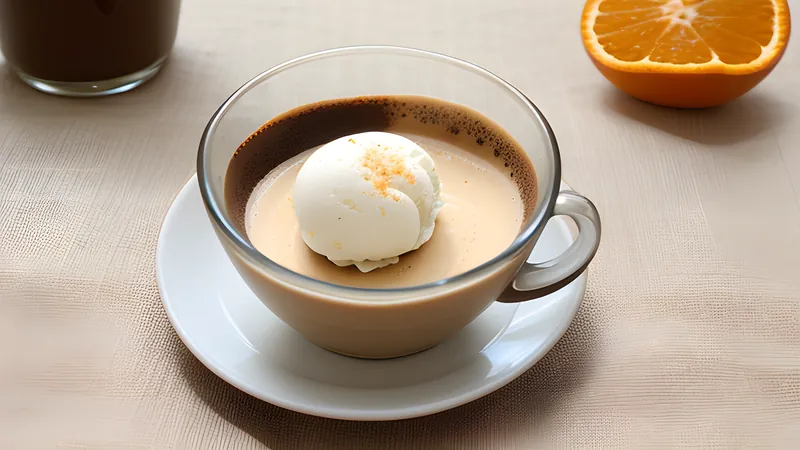
Affogato with Amaretto
The Italian espresso-drowned ice cream, sharpened with almond liqueur and orange
Contents
↓ Jump to recipeAffogato means drowned, and that single word is the whole recipe. A scoop of cold vanilla ice cream, a shot of scalding espresso poured over it at the table, and a race against physics as the coffee melts the ice cream from the top down and the two collapse into a warm-and-cold, bitter-and-sweet mess that is better than the sum of its parts. There is no cooking. There is barely a recipe. And yet it is one of the most satisfying ways to end a meal I know, which is exactly why Italians have been ordering affogato al caffè in cafés and trattorias for generations — it lives on the menu somewhere between a dessert and a coffee, and can’t quite decide which it is, which is part of the charm.
Italians take their categories seriously, and the beauty of affogato is that it politely ignores them. It is a pudding you can also justify as your after-dinner coffee, so you order it and skip the agonising over whether to have both. That practicality is very Italian, as is the insistence on quality: with only two real ingredients, there is nowhere to hide. The coffee has to be a proper, freshly pulled espresso — strong, hot and a little bitter — and the ice cream has to be good vanilla, the kind flecked with actual seeds and made with real custard. Cheap ice cream, thin with air and heavy with stabilisers, melts into something watery and sad; a dense, eggy gelato or a proper vanilla holds its cold and its structure long enough to do the job.
Affogato with Amaretto
Ingredients
- 2 generous scoops good vanilla ice cream (about 120g)
- 2 shots hot espresso (about 60ml total)
- 2 tbsp amaretto
- 1 strip orange zest, pared with a peeler
- 2 amaretti biscuits, crushed
- 1 small pinch flaky sea salt
Method
- Chill two small glasses or cups in the freezer for 10 minutes.
- Twist the orange zest over each glass to release its oils, then drop it in.
- Add a tablespoon of amaretto to each chilled glass.
- Put a scoop of very cold vanilla ice cream into each.
- Pull the espresso fresh and pour a hot shot over each scoop at the table.
- Scatter with crushed amaretti and a tiny pinch of flaky salt, and serve at once with a spoon.
A dessert that arrived with the espresso machine
Affogato is younger than most Italian classics, because it could not exist until espresso did. The pressurised espresso machine was patented in Italy in the early twentieth century — Luigi Bezzera filed his design in 1901, and Desiderio Pavoni commercialised it soon after — and the drink we would recognise as a short, thick shot of espresso only became widespread through the 1950s and 60s, as bar machines spread across the country. Ice cream, of course, is far older; the Italian tradition of gelato reaches back centuries, with the Sicilian and Neapolitan makers among its great pioneers. Affogato is what happened when the two met on the same café counter: someone, somewhere, tipped a hot shot over a scoop of gelato instead of drinking it alongside, and a house standard was born. It has no single inventor and no founding town, which suits it — it is less a recipe than a habit, passed hand to hand across a country that drinks more espresso before lunch than most nations manage in a week.
That informality is why you will find it spelled and served a dozen ways. Some bars use fior di latte, some vanilla, some a scoop of stracciatella; some add a biscuit, some a nip of liqueur, some nothing at all. There is no committee guarding the definition, which is exactly the freedom a home cook wants.
The physics of hot on cold
What makes an affogato work is contrast, and contrast that is constantly changing as you eat. The espresso, at around ninety degrees, hits the ice cream at minus ten or so, and the boundary between them becomes the interesting bit: the surface of the ice cream melts instantly into a cool coffee cream, while the core stays frozen and firm. Every spoonful you take is a slightly different ratio of hot bitter liquid, cold sweet solid, and the melting cream in between. This is why timing matters more than anything else. An affogato is assembled at the last possible second and eaten immediately; leave it standing and the whole thing slumps into a lukewarm coffee milkshake, pleasant enough but with all the drama gone. Chilling the glasses buys you a little time; pouring the espresso at the table buys you more.
The amaretto and orange, which is the twist
Plain affogato is perfect as it is, and I would never argue otherwise. But a tablespoon of amaretto in the bottom of the glass turns it into something for the end of a long dinner. The almond liqueur’s bittersweet, marzipan warmth sits between the coffee and the vanilla and marries them, adding a boozy depth that makes the whole thing taste more considered. Then I twist a strip of orange zest over the glass before anything else goes in, so its aromatic oils spray across the surface — orange and coffee are one of the great flavour pairings, and that citrus lift stops the sweetness turning heavy. A crushed amaretti biscuit on top brings a sandy, almond crunch that echoes the liqueur, and the smallest pinch of flaky salt sharpens every flavour at once. It is still, essentially, drowned ice cream. It just wears a jacket. If you like the coffee-and-almond direction, it is the same conversation happening in a slice of coffee and walnut cake, and the amaretto note ties it to a good zabaglione with Marsala.
Method, step by step
There is very little to it, and that is the point, so the small details are where you win. Chill two small glasses or espresso cups in the freezer for ten minutes; a cold glass slows the melt and keeps the temperature contrast alive longer. Pare a strip of orange zest with a peeler, taking just the coloured skin and none of the bitter white pith, and twist it hard over each chilled glass so you can see the fine spray of oil catch the light, then drop the strip in. Add a tablespoon of amaretto to each glass.
Now get everything to the point of assembly before you pull the coffee, because from here it is a sprint. Put a generous scoop of very cold vanilla ice cream — around 60g each, straight from the coldest part of the freezer — into each glass. Pull two fresh shots of espresso, and carry them to the table still steaming. Pour a hot shot directly over each scoop so it starts to melt the top and pool around the base, scatter over the crushed amaretti and a tiny pinch of flaky salt, and hand out spoons at once. It should be eaten within a minute or two, while it is still a proper collision of hot and cold.
Kit, coffee and getting it right
You do not need an espresso machine, though it gives the best result. What you need is coffee that is strong, hot and freshly made, so a stovetop moka pot is a superb and traditional stand-in — Italian home kitchens have made affogato with moka coffee for decades. A very strong Aeropress shot, or even a small quantity of good filter brewed at double strength, will do at a pinch; what you must avoid is weak, lukewarm or stale coffee, because there is nothing else to carry the flavour. Match the intensity of the coffee to the sweetness of the ice cream: the more bitter and concentrated your espresso, the better it cuts through.
Quantities scale effortlessly for a crowd, which makes affogato a brilliant end to a dinner party — line up chilled glasses each holding a scoop and a splash of amaretto, and let people pour their own shot from a jug of freshly made coffee. It turns a pudding into a small piece of theatre with almost no work.
Variations worth trying
The template invites tinkering. Swap the amaretto for a different liqueur and you change the mood entirely: Frangelico brings hazelnut, Kahlúa doubles down on the coffee, a little Pedro Ximénez sherry adds raisiny darkness, and Nocino, the green-walnut liqueur, is wonderfully bittersweet. Change the ice cream and you have a new dessert each time — a scoop of pistachio, of hazelnut, of dark chocolate, or of the toasted, sesame-rich halva ice cream all take the hot espresso beautifully. For a non-alcoholic version, leave out the liqueur and lean harder on the orange zest and a whisper of vanilla. And for the purists at the table who think I have gilded a perfect thing, pour their espresso over plain vanilla with nothing else at all — they will be entirely, annoyingly right, and it will still be one of the best puddings you can make in ninety seconds.
Related Content