Aam Panna: Green Mango Summer Cooler
Charred green mango, roasted cumin and black salt against the heat
Contents
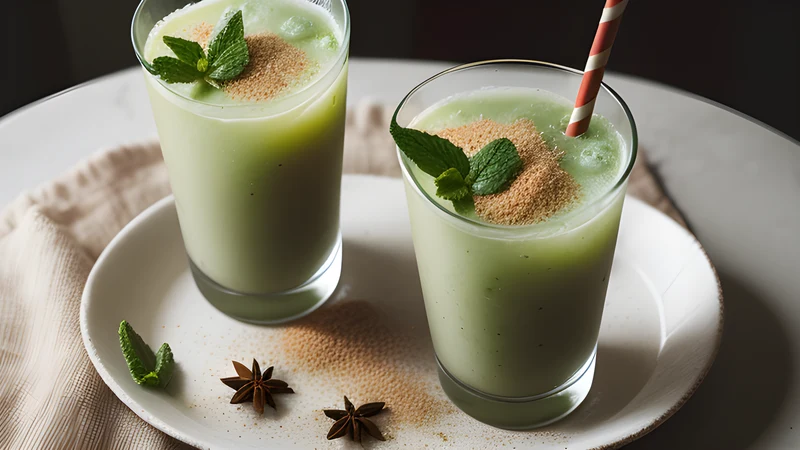
↓ Jump to recipeWhen the north Indian summer turns brutal and the loo, the searing dry wind, blows in off the plains, aam panna is the drink that answers back. It is made from raw, unripe mangoes, which are green, hard and mouth-puckeringly sour, cooked down and spiked with roasted cumin, black salt and a hit of jaggery. The result is tart, salty, sweet and savoury all at once, and it is treated across northern India as a genuine remedy against heatstroke as much as a refreshment. My small addition is to char the mangoes over a flame before blending, which lends the whole drink a gentle smokiness underneath the sourness.
That char is worth the extra few minutes. Blistering the skin over direct heat does two things: it softens the flesh so it scrapes easily from the stone, and it caramelises the mango’s sugars and introduces a faint, smoky bitterness that gives the finished cooler real depth. The traditional method is to boil or roast the mangoes whole, and boiling works perfectly well if you have no flame; the char is my flourish, and it turns a simple sour drink into something with shadows in it. The pairing of tart fruit with warm spice is one I keep coming back to, the same logic that makes my mango chutney, properly spiced work, only here it is loosened into a glass.
Aam Panna: Green Mango Summer Cooler
Ingredients
- 2 large raw green mangoes (about 500g total), firm and sour
- 60g jaggery or soft light brown sugar, plus more to taste
- 1 tsp cumin seeds
- 3/4 tsp black salt (kala namak)
- 1/2 tsp fine sea salt
- 1/4 tsp freshly ground black pepper
- 10 fresh mint leaves, plus sprigs to serve
- 600ml cold water, plus more to taste
- Plenty of ice
Method
- Char the mangoes. Hold each mango with tongs over a gas flame, or place under a hot grill, turning, until the skin blackens and blisters all over and the flesh softens, about 8 to 10 minutes. Alternatively, boil them whole in water for 15 minutes until soft. Leave until cool enough to handle.
- Toast the cumin seeds in a dry pan over a medium heat for 1 to 2 minutes, shaking, until fragrant and a shade darker. Tip onto a plate to stop them cooking, then grind to a coarse powder in a mortar.
- Peel the charred mangoes and squeeze and scrape all the soft pulp from the stones into a blender, discarding skin and stones. You should have about 250g of pulp.
- Add the jaggery, most of the ground cumin, the black salt, sea salt, pepper and mint leaves to the blender with 200ml of the cold water. Blitz until completely smooth. Taste the concentrate: it should be intensely sweet, sour and savoury.
- To serve, half-fill glasses with ice. Spoon 3 to 4 tbsp of concentrate into each and top with the remaining cold water, adjusting to your taste. Stir well, dust with the reserved cumin, and finish with a mint sprig.
A drink built to fight the heat
Aam panna is not a modern café invention; it is old, practical folk medicine that happens to taste wonderful. Across Rajasthan, Uttar Pradesh, Maharashtra and Bengal, families make it in early summer when the mango trees are heavy with unripe fruit, precisely the season when the heat is at its worst. The reasoning is sound. Raw mango is rich in vitamin C and pectin, and the drink is loaded with salt, both the ordinary and the mineral-heavy black kind, which replaces what a sweating body loses. A glass of aam panna is the subcontinent’s answer to a sports drink, arrived at centuries before anyone bottled electrolytes.
Black salt, kala namak, is central to the flavour and worth seeking out. It is a rock salt, kiln-fired with charcoal and herbs, and it carries a distinctive sulphurous, almost eggy tang that tastes strange on its own and utterly right in a drink like this. It gives aam panna its characteristic savoury funk, the thing that stops it being merely sweet-and-sour and pushes it into properly moreish territory. You will find it in any Indian grocer and increasingly in larger supermarkets; ordinary salt cannot stand in for its particular flavour, though the drink survives if you use only sea salt in a pinch.
The other defining spice is roasted cumin. Toasting the seeds in a dry pan before grinding transforms them, driving off the raw, slightly soapy edge and bringing out a deep, nutty, almost smoky warmth. This roasted cumin, bhuna jeera, is scattered over everything from raita to chaat across India, and here it is both blended in and dusted on top, so you get its aroma with every sip.
Choosing and cooking the mangoes
Everything rests on getting properly sour, unripe mangoes. You want fruit that is hard as a cricket ball, green-skinned and white-fleshed inside, with no give when you press it. A ripe or even semi-ripe mango has developed its sugars and lost its sourness, and it will give you a bland, cloying drink that misses the whole point. Indian and other South Asian grocers sell raw green mangoes through the early summer, often labelled kachcha aam or simply cooking mangoes; ask if you are unsure, because sourness is the non-negotiable quality here.
Cooking softens the flesh so it purées smoothly and mellows the fiercest of the sourness into something drinkable. However you do it, charring, grilling or boiling, the mangoes are ready when the flesh has turned soft and the stone pulls away easily. If you char over a flame, expect the skins to blacken alarmingly; that is exactly right, and it all peels away to reveal soft, khaki-green flesh beneath. Scrape every bit of pulp from around the stone, as the flesh closest to the stone is often the most intensely flavoured.
Balancing the concentrate
Aam panna is built as a strong concentrate that you then dilute to taste, which is the sensible way to make any big-flavoured cooler, because raw mangoes vary so much in sourness that a fixed recipe would be a gamble. Blitz the pulp with the spices, salt, jaggery and mint into a thick, dark khaki paste, then taste it neat, bracing yourself, because it should be almost too intense: aggressively sour, sweet enough to make you wince, and firmly salty. Diluted over ice with plenty of cold water, all of that resolves into balance.
Adjust boldly at the concentrate stage. If the sourness is savage, more jaggery rounds it; if it tastes flat, a little more black salt and a squeeze more sourness from an extra mango wake it up. Jaggery, the unrefined cane sugar sold in dark blocks, brings a molasses depth that plain sugar lacks and is the traditional sweetener, though soft brown sugar is a decent substitute. Keep some cumin back to dust over the finished glasses, as the aroma hitting your nose as you drink is half the pleasure.
One common misstep is under-seasoning out of caution. A cooler this bold needs a firm hand with the salt and the souring; timid amounts give you a watery, apologetic drink that tastes of not much. Trust the tradition and season assertively, tasting the diluted glass rather than the concentrate to judge the final balance, because the ice and water knock everything back by a good third.
Serving, storage and variations
The concentrate is where the make-ahead magic lives. It keeps in a sealed jar in the fridge for a week and freezes beautifully; I freeze it in an ice-cube tray and pop a couple of aam panna cubes into a glass of cold water for an instant cooler through the summer. Diluted and ready to drink, it is best fresh, as the mint dulls and the drink separates on standing, though a stir revives it.
Serve it very cold, over lots of ice, ideally in the afternoon when the heat is at its most punishing and a sweet-sour-salty jolt is exactly what a wilting body wants. Some like it a little thicker and more like a smoothie; others lengthen it until it is barely more than flavoured water. Both are correct, and it is worth setting the concentrate out and letting people mix their own strength.
For variations, a pinch of ground ginger or a little grated fresh ginger in the blender adds a warming prickle that suits the drink well. A few threads of the herb ajwain, or a pinch of chaat masala dusted on top, pushes it further into savoury, street-food territory. And if you want to soften the whole thing for children or the sour-averse, blending in a couple of tablespoons of ripe mango pulp alongside the raw tempers the acidity while keeping the character. The love of a cold, spiced, faintly medicinal drink to see off the heat runs right across the subcontinent, the same impulse that gives us a soothing glass of golden turmeric milk (haldi doodh) at the day’s other end.
Aam panna is a drink with a job to do, and it does it superbly: it cools, it restores, and it tastes of the height of an Indian summer. Charred over a flame for that thread of smoke, it becomes something I make far beyond any heatwave, whenever I want a glass of something bracingly, gloriously alive.
Related Content