A Proper Panzanella: Stale Bread's Finest Hour
What to do with a loaf that has gone past its best
Contents
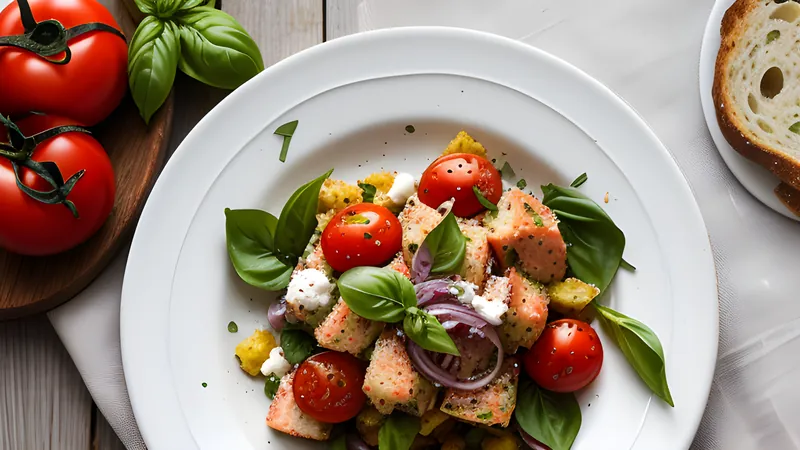
↓ Jump to recipePanzanella exists because Tuscan cooks refused to bin a loaf just because it had gone hard. Stale bread, revived with tomato juice and good oil, is the whole point of the dish, and a fair number of modern versions miss it by using soft, fresh bread that turns to mush. This one goes a step further than a plain soak: the bread is charred first, so it picks up a bitter, smoky edge that a simple stale crust never gets, and the dressing leans on caper brine as well as tomato juice, giving the whole bowl a savoury backbone.
A Proper Panzanella: Stale Bread's Finest Hour
Ingredients
- 300g stale coarse country bread or sourdough, a day or two old
- 1 garlic clove, halved
- 5 tbsp extra-virgin olive oil, divided
- 800g ripe mixed tomatoes (beefsteak, plum, cherry), cut into rough chunks
- 1 tsp fine salt, for the tomatoes
- 1 small red onion, very thinly sliced
- 1 cucumber, halved lengthways and sliced
- 2 tbsp capers, drained, plus 1 tbsp of their brine
- 2 tbsp red wine vinegar
- A large handful of basil leaves, torn
- Black pepper
Method
- Tear the bread into rough 4cm chunks and char them in a dry griddle pan or under a hot grill for 3 to 4 minutes, turning once, until streaked black at the edges.
- While still warm, rub the charred bread all over with the cut side of the garlic clove and drizzle with 2 tablespoons of the olive oil.
- Toss the tomato chunks with the salt in a colander set over a bowl and leave to drain for 15 minutes, reserving the juice that collects underneath.
- Whisk the reserved tomato juice with the caper brine, red wine vinegar and remaining 3 tablespoons of olive oil.
- In a large bowl, combine the charred bread, drained tomatoes, red onion, cucumber and capers.
- Pour over the dressing and toss well, then leave to sit for 10 to 15 minutes so the bread starts to soften.
- Scatter with torn basil and a good grind of black pepper, and toss once more just before serving.
The Story
Panzanella’s origins sit in the Tuscan countryside, where bread was baked large and infrequently, often in a shared village oven, and a family’s loaf had to last the best part of a week. By day three or four it was hard enough to need soaking, and the cooks who wasted nothing turned that stubborn crust into a meal rather than throwing it to the chickens. The earliest written mentions date to the sixteenth century, when the poet and painter Bronzino praised bread soaked in oil and onion in a burlesque poem, though the tomato-heavy version most people know now is younger, arriving only once tomatoes had become common in Italian kitchens after the sixteenth-century exchange with the Americas and, more decisively, after they became cheap and everyday in the nineteenth century. The name itself likely comes from pane (bread) and zanella, an old Tuscan word for a small bowl or basin — a description of how the dish was traditionally served and eaten, straight from the vessel the bread had been soaking in, rather than plated up separately. Some food historians also trace it to pan molle, “soft bread,” describing the texture the stale loaf takes on once it’s been properly soaked, which is as good a one-word summary of the entire dish as any recipe could manage.
What makes panzanella work is a simple piece of physics: stale bread has lost moisture but kept its structure, so it can soak up a liquid dressing and swell back to something tender without collapsing the way fresh, springy bread does. Fresh bread is still full of trapped air and elastic gluten, and it turns gluey the moment it meets liquid. A loaf that has dried out for a couple of days has a firmer, more open crumb, and it drinks the dressing evenly instead of turning to paste at the edges while staying dry in the middle. If your bread is properly rock hard rather than merely stale, tear it up and leave it to soak for a full 30 minutes rather than the usual 10 to 15, checking as you go.
The charring here is the twist on the classic method, and it earns its place. A traditional panzanella dunks the bread whole in water and then squeezes it out, which softens it evenly but does nothing for flavour beyond what the dressing supplies. Tearing the loaf into chunks and blackening the edges in a dry pan first adds a bitter, smoky note that plays against the sweetness of ripe tomatoes far better than a neutral soak, and it also means the bread keeps a little resistance in the centre even once it has taken on the dressing, so you get contrast within a single mouthful rather than a uniform softness.
Salting the tomatoes and using their own liquid as the base of the dressing is the other detail worth respecting. A ripe tomato is mostly water held in cells that rupture under salt, releasing a sweet-sharp juice that concentrates the tomato’s flavour rather than diluting it. Recipes that skip this step and just chop the tomatoes into the bowl lose that juice into the bread randomly and unevenly, and the salad ends up tasting thinner for it. Fifteen minutes in a colander is enough to draw out a genuinely useful few tablespoons of liquid, and it also firms up the tomato flesh slightly, so the chunks hold their shape rather than collapsing into mush once tossed.
Cucumber, or not
Ask a cook from Florence whether panzanella should contain cucumber and you’ll get a firm yes; ask someone from Siena and you may well get a firm no, on the grounds that cucumber dilutes the dish’s real subject, which is bread and tomato. Both versions are legitimately traditional, and the disagreement is closer to a regional dialect than a right-and-wrong split — the same way opinions differ across Italy on whether basil belongs in a proper ragù. This recipe includes cucumber for the crunch and coolness it adds against the charred bread, but leaving it out entirely, and adding a little extra tomato in its place, is a perfectly authentic choice if that’s the version you grew up with or simply prefer.
What can go wrong
The single biggest failure mode is a soggy, uniform mush, and it almost always comes from one of two causes: bread that was too fresh to begin with, or dressing added too far in advance and left to sit for hours. Panzanella wants only 10 to 15 minutes of resting time for the flavours to marry and the bread to soften at the edges; an afternoon in the fridge is far too long. Leave it dressed in the fridge for three or four hours and even good stale bread will have given up entirely, turning the salad into something closer to a wet crumb than a plate of contrasting textures.
The second common mistake is under-seasoning the tomatoes before they meet the bread. Because the bread is thirsty and largely flavourless on its own, a bland tomato mixture becomes a bland salad the moment it is absorbed; season the tomatoes properly at the salting stage as well as in the final dressing, so the flavour is built into every layer of the bowl. Skimping on the salt here is the difference between a panzanella that tastes vivid and one that tastes like wet bread with a garnish.
Finally, resist the urge to substitute a supermarket sliced loaf. Its open, springy crumb and thin crust cannot take up dressing the way a dense, chewy sourdough or coarse country loaf can; it either disintegrates or, if used fresh, refuses to absorb anything at all and just sits there slick with oil. A proper Tuscan loaf, a rustic sourdough, or a similarly dense, thick-crusted bread is worth seeking out specifically for this dish. Watch the char stage carefully too — a couple of minutes past golden and streaked is the goal, but leave the bread under the grill much longer than that and the bitterness stops being a pleasant contrast and starts tasting simply burnt, a flavour no amount of good tomato juice will rescue. Pull the bread the moment you see solid black streaks rather than waiting for an even, all-over char, since the unevenness is exactly what gives you both the smoky bits and the plainer bread flavour in the same bowl.
Storage, make-ahead and variations
Panzanella is best eaten within an hour of dressing, while the bread still has some structure left, rather than after a long stint in the fridge. If you want to get ahead, char the bread, salt the tomatoes and make the dressing separately up to a day in advance, keeping everything covered and chilled, then combine only shortly before you plan to eat. Leftovers, if you have them, keep for a day in the fridge but will have softened considerably by the time you get to them; a scattering of fresh basil and a splash more olive oil helps revive a tired second serving.
For variations, swap the red wine vinegar for sherry vinegar if you want a rounder, nuttier tang, or add a tin of good oil-packed anchovies, mashed into the dressing, for a savoury depth that plays beautifully against the char on the bread. Torn burrata or a few spoonfuls of soft goat’s cheese turned through at the end brings a creaminess that tomato-only versions lack. In late summer, when good tomatoes are genuinely at their peak, this is a salad that needs almost no help beyond ripe fruit and a decent loaf.
If you like the way a salted-and-drained tomato behaves in a bowl, my Insalata Tricolore, done with actual tomatoes leans on exactly the same trick with mozzarella and basil. And for another salad built on stale bread doing honest work, my Caesar salad shows what a proper crouton, rather than a bagged one, can do for a bowl of leaves.
Related Content