World Wildlife Conservation Day
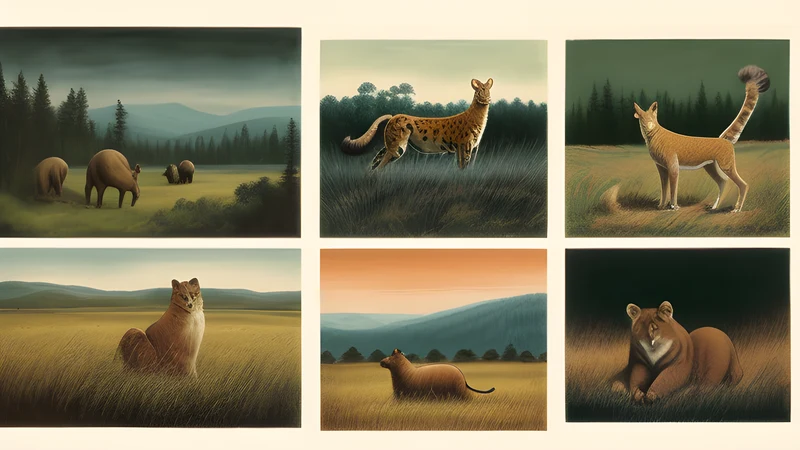
In November 2012, the United States Secretary of State, Hillary Clinton, delivered a speech in Washington describing wildlife trafficking as a national security concern as much as a conservation one, and announced a day to confront it. World Wildlife Conservation Day was first observed on 4 December 2012, the anniversary of that call to action, and it has been marked on that date since. Its focus is narrower and grimmer than a general celebration of animals: it targets the vast illegal trade in wild creatures and their parts, an industry that funds criminal networks, corrupts governments and is emptying whole landscapes of their most iconic species.
What the day confronts
The illegal wildlife trade is one of the largest black markets on the planet, worth an estimated seven to twenty-three billion US dollars each year and ranking alongside the trafficking of drugs, weapons and people. It moves elephant ivory, rhino horn, tiger bone, pangolin scales, exotic birds, reptiles, timber and countless other products from the wild into markets thousands of miles away. The animals at the centre of it are among the most recognisable on Earth, and several of them are being driven toward extinction to satisfy demand for ornaments, trophies and unproven traditional remedies.
The day was designed to treat this as an enforcement and security problem rather than only an ecological one. Clinton’s framing was deliberate: the same routes and networks that smuggle animal parts also move other contraband, and the profits have been linked to armed groups and organised crime. By declaring 4 December a day to fight wildlife trafficking, the US State Department sought to mobilise diplomats, customs officers and police alongside the conservationists who had long fought the trade largely alone.
The history: a diplomatic response to a poaching crisis
The day emerged during a sharp escalation in poaching. In the years around 2012, elephant killing across Africa reached levels not seen in decades, with tens of thousands of elephants slaughtered annually at the peak for their tusks, and rhino poaching in South Africa climbing from a handful of animals a year to over a thousand. Demand from fast-growing Asian economies, combined with sophisticated smuggling operations, had turned poaching from opportunistic hunting into an industrialised assault on Africa’s megafauna.
The international legal framework already existed. The Convention on International Trade in Endangered Species, known as CITES, had regulated cross-border trade in threatened species since it came into force in 1975, banning commercial trade in the most endangered animals outright. What was missing was political weight and enforcement, and World Wildlife Conservation Day was part of a broader diplomatic push in the early 2010s to give anti-trafficking work the profile it needed. It is distinct from the United Nations’ World Wildlife Day, held on 3 March, which celebrates wild plants and animals more broadly; the December day keeps its sharper focus on the illegal trade.
Why it matters
The stakes are measured in species. The pangolin, a shy, scaled insect-eater most people have never heard of, is thought to be the most trafficked mammal in the world, with more than a million taken from the wild in recent years for their meat and scales. Elephants, rhinos and tigers all face poaching pressure that individual reserves cannot withstand without international help. Once a species’ numbers fall below a certain point, the loss can become irreversible, and no amount of later effort can rebuild a population reduced to scattered survivors.
There is a human cost too. Rangers are killed every year defending wildlife against armed poachers, communities lose the natural heritage that underpins tourism and their own identity, and the corruption that lubricates the trade weakens the rule of law far beyond the forest edge. The day’s argument is that protecting wildlife is inseparable from protecting people, a theme it shares with campaigns like International Cheetah Day and International Polar Bear Day, each of which links a single species’ survival to broader human choices.
How it is celebrated
Because the day was born of policy rather than folklore, much of its observance is educational and civic. Conservation organisations use it to publish investigations and campaigns, urging the public to refuse products made from endangered animals and to report suspected trafficking. Zoos, museums and schools run programmes explaining how the trade works and why a curio bought abroad might represent a poached animal. Governments and NGOs release data on seizures and prosecutions, using the date to demonstrate progress or expose where enforcement is failing.
Social media does much of the heavy lifting, spreading the stories of trafficked species to audiences that would never otherwise encounter them. Fundraising drives support ranger patrols, sniffer-dog units at ports and demand-reduction campaigns in consumer countries. The most effective celebrations tend to be those that turn awareness into a concrete action, whether donating to an anti-poaching unit or simply learning to recognise and avoid the products that drive the killing.
World variations and the demand-reduction front
The trade is global, and so is the response. Range states in Africa and Asia bear the front line of poaching and invest in anti-poaching patrols, wildlife forensics and cross-border cooperation to catch smugglers. Transit countries work to intercept shipments at ports and airports, where trained dogs and scanners increasingly detect concealed ivory and scales. The most important battleground, many conservationists argue, lies in the consumer markets, where campaigns aim to make the purchase of ivory or rhino horn socially unacceptable rather than aspirational.
Some of the clearest victories have come from demand reduction. Public campaigns and legal bans in major markets, including the closure of domestic ivory markets in several large economies during the late 2010s, coincided with falling prices for illegal ivory and, in some regions, a decline in elephant poaching. These shifts show that the trade responds to pressure on demand as much as to enforcement at the source, and the day continues to press on both fronts at once.
Traditions and symbols
The day has no single emblem, but its imagery gathers the most trafficked species into a shared appeal: the elephant with its tusks, the rhino, the tiger, the pangolin curled into a defensive ball, the parrot and the sea turtle. Anti-trafficking campaigns often use the stark visual of a confiscated ivory pile, sometimes shown being crushed or burned by governments as a public statement that the trade has no future. The recurring motif is the silhouette of vanishing wildlife against a wild horizon, a reminder of what a landscape emptied of its great animals would look like.
Fun facts
The pangolin, though largely unknown to the wider public, is believed to be the world’s most trafficked mammal, hunted for scales made of keratin, the same substance as human fingernails, which has no proven medical value.
Several governments have publicly destroyed their seized ivory stockpiles, crushing or burning tonnes of tusks at a time, to signal that the material has been permanently removed from any possibility of sale.
Wildlife detection dogs have become a frontline tool against trafficking, trained to sniff out ivory, rhino horn and pangolin scales hidden inside shipping containers among tonnes of legitimate cargo.
The illegal wildlife trade is estimated to rank among the most lucrative transnational crimes on Earth, sitting in the same tier as trafficking in narcotics, arms and human beings.
The CITES treaty that underpins global wildlife-trade law now regulates trade in tens of thousands of species of animals and plants, from great whales down to orchids and cacti, a scope far wider than the charismatic mammals that dominate the headlines.
The people who guard the wild
Behind every anti-trafficking statistic stands a ranger. Wildlife rangers patrol reserves that can span thousands of square kilometres, often underpaid, poorly equipped and outgunned by poachers carrying automatic weapons and night-vision gear. Scores of rangers are killed in the line of duty each year, ambushed on patrol or targeted for refusing to look the other way, and the danger has made conservation one of the more hazardous professions in parts of Africa and Asia. World Wildlife Conservation Day increasingly draws attention to their role, and to the argument that protecting wildlife means first protecting and properly resourcing the people who stand between an animal and a poacher. Training, fair pay, insurance for rangers’ families and modern equipment have become central demands of the movement, on the reasoning that no law and no treaty means anything without someone willing to enforce it on the ground, in the dark, at genuine personal risk. The day honours those guardians as much as the animals they defend.
A closing reflection
The animals at the heart of this day are worth more to the criminals who kill them dead than most people alive will ever pay to see them living, and that grim arithmetic is exactly what the day exists to overturn. Every tusk left on an elephant, every scale left on a pangolin, depends on choices made far from the forest: by a shopper, a customs officer, a legislator. World Wildlife Conservation Day insists that the fate of the wild is being decided in those ordinary decisions, and that it is not yet too late to decide differently.
Related Content