World Whale Day
In 1980, on the island of Maui in Hawaii, a marine researcher named Greg Kaufman founded a day to honour the humpback whales that gather in the warm Hawaiian waters each winter to breed. Kaufman had established the Pacific Whale Foundation the year before, and World Whale Day grew out of his conviction that people who came to know whales would want to protect them. Held on the third Sunday of February, at the height of the humpback season off Maui, it began as a local festival and has spread into a worldwide celebration of whales and the effort to save them. It falls at a moment when the great whales, having been hunted to the edge of extinction within living memory, are one of conservation’s rare and fragile success stories.
Introduction
Whales are the largest animals that have ever lived, and among the most intelligent, and yet for most of the modern era humanity’s relationship with them was almost entirely one of slaughter. World Whale Day exists to celebrate these animals, to spread understanding of their lives, and to keep attention on the threats that still endanger them even after the worst of the hunting has stopped. It is marked by aquariums, conservation groups, whale-watching communities and schools, and its spiritual home remains the Maui Whale Festival, of which it is the centrepiece.
The animals themselves
The word “whale” covers a remarkable range of creatures, all of them cetaceans, the group of fully aquatic mammals that returned to the sea from land-dwelling ancestors around fifty million years ago. They split broadly into two kinds. The baleen whales, including the blue, humpback, fin and right whales, have no teeth but plates of a fibrous material called baleen, which they use to filter vast quantities of tiny prey from the water. The toothed whales, which include the sperm whale, the orca and all the dolphins and porpoises, hunt individual prey and navigate by echolocation. Orcas, despite their old name of killer whale, are in fact the largest members of the dolphin family, and different populations have distinct hunting cultures and dialects passed down through generations, a form of tradition once thought unique to humans.
The scale of the largest is difficult to grasp. A blue whale can reach thirty metres in length and weigh as much as a hundred and fifty tonnes, heavier than the largest dinosaur. Its heart is the size of a small car, its tongue can weigh as much as an elephant, and a human could swim through its largest blood vessels. That such an animal feeds almost entirely on krill, shrimp-like creatures a few centimetres long, is one of nature’s stranger arrangements.
The song and the movement to save whales
Much of the modern affection for whales can be traced to a single scientific discovery. In 1970 the biologists Roger Payne and Scott McVay published their finding that male humpback whales produce long, complex, structured songs, patterns of moans, cries and rumbles that repeat and evolve over a season and are shared across whole populations. Payne released an album, Songs of the Humpback Whale, that sold in huge numbers and put the eerie, beautiful sound of a whale into millions of living rooms. It transformed the public image of whales from that of a resource into that of a fellow intelligence, and it helped power the “Save the Whales” movement that became one of the defining environmental campaigns of the 1970s.
That movement had urgent cause. Industrial whaling in the nineteenth and twentieth centuries had killed whales on an almost unimaginable scale, driving several species to the brink. In 1946 the International Whaling Commission was established, initially to manage the hunt, but growing scientific and public alarm eventually pushed it to adopt a moratorium on commercial whaling that took effect in 1986. That ban, imperfectly observed by a few nations but broadly effective, is the reason some whale populations exist at all today.
Recovery and the threats that remain
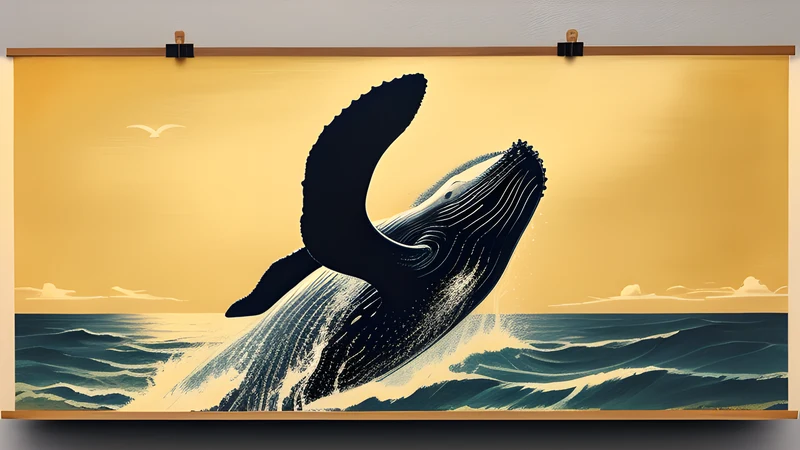
The moratorium has produced one of conservation’s genuine triumphs. Humpback whales, hunted to perhaps a few per cent of their original numbers, have recovered strongly across much of the world, and the sight of them breaching is now common where it had become rare. Yet the recovery is uneven and incomplete. The North Atlantic right whale, hunted early because it floated when killed and swam slowly, remains critically endangered, with only a few hundred individuals left and every death a blow to the species’ survival.
The dangers now are mostly accidental rather than deliberate. Whales are struck and killed by ships along busy coastal routes. They become entangled in fishing gear and drown or die slowly dragging ropes and nets. They swallow plastic. The rising noise of shipping and industry interferes with the sound-based world in which they communicate and navigate. And climate change is shifting the distribution of the krill and fish they depend on. World Whale Day keeps these quieter, less visible threats in public view now that the harpoon is largely gone.
Whales as ecosystem engineers
One of the more surprising things science has learned is how much the ocean itself depends on whales. By feeding at depth and releasing nutrient-rich waste near the surface, whales fertilise the tiny plankton that form the base of the marine food web and that produce much of the world’s oxygen, a process sometimes called the “whale pump”. Scientists have estimated that restoring whale populations to their pre-whaling numbers could lock away a meaningful amount of atmospheric carbon, making the protection of whales a small but real part of the response to climate change. When a whale dies and sinks, its enormous carcass, a “whale fall”, becomes an entire ecosystem on the seabed, feeding specialised communities of creatures for decades and locking away a great store of carbon. A living whale, and even a dead one, turns out to be a significant player in the ocean’s chemistry, which connects the animals to the wider ocean-health concerns of days such as World Reef Awareness Day and World Seagrass Day.
How it is celebrated
On Maui the day is the high point of a season-long festival, with a parade, a “Parade of Whales”, live music, marine education and, above all, whale-watching, as thousands of humpbacks fill the channel between the islands. Around the world the day is marked with whale-watching trips, aquarium events, beach clean-ups, film screenings and fundraising for whale research and rescue. Communities that host migrating whales, from Australia to South Africa to New England, use the day to celebrate their seasonal visitors and to teach responsible whale-watching that does not disturb the animals.
World variations
Because whales migrate along the coasts of every continent, communities the world over have their own whale seasons and their own relationship with the animals. In Hawaii, the day’s birthplace, it is the humpback that reigns, and the whole festival is timed to the winter breeding gathering off Maui. Along the eastern coast of Australia the day coincides with growing pride in the recovery of the humpback, whose numbers off Queensland and New South Wales have rebounded so strongly that whale-watching has become a major seasonal industry. In South Africa the town of Hermanus is famous for southern right whales visible from the shore, and even employs a “whale crier” who blows a horn to announce sightings.
The day also carries a sharper political edge in places where whaling has not entirely ended. A small number of nations continue to hunt whales, and World Whale Day in those contexts becomes part of an ongoing argument about tradition, science and ethics rather than a straightforward celebration. Indigenous communities in the Arctic and elsewhere maintain carefully limited subsistence hunts that the International Whaling Commission recognises as distinct from commercial whaling, and these too form part of the complicated global picture the day sits within.
Fun facts
The song of the humpback whale is one of very few animal sounds sent into space: a recording was included on the Voyager Golden Record launched in 1977, meaning whale song is now travelling through interstellar space as a sample of life on Earth. Sperm whales have the largest brain of any animal that has ever lived, and they hunt giant squid in the crushing dark thousands of metres down, holding their breath for well over an hour. Some bowhead whales are thought to live more than two hundred years, making them the longest-lived mammals on the planet, and individuals alive today may have been born before the age of industrial whaling. And a whale’s ancestors were four-legged land animals; the closest living relative of whales is thought to be the hippopotamus, which shares a common ancestor with them from around fifty million years ago, a connection that ties World Whale Day loosely to land days like World Manatee Day, whose gentle sea cows made a similar return to the water.
A closing reflection
There is a rare hopefulness in World Whale Day, of a kind not many conservation observances can offer. Within the lifetime of people still living, the great whales were being rendered into oil and margarine at a rate that would have wiped several species from the earth within decades. Then something shifted. A recording of a whale singing reached enough people to change what a whale meant, laws followed, the killing largely stopped, and the animals began, slowly, to come back. The day celebrates that reversal while refusing to be complacent about it, holding on to a simple lesson: that when we decide an animal is worth saving, we sometimes actually manage to save it.
Related Content