World Wetlands Day
On 2 February 1971, in a resort town on the southern shore of the Caspian Sea, delegates from eighteen nations signed a treaty with an unwieldy name and a modest ambition that would grow into something far larger. The town was Ramsar, in Iran, and the document became the Convention on Wetlands of International Importance, universally shortened to the Ramsar Convention. It was the first modern international treaty devoted to conserving a single type of habitat, and the habitat it chose was the one people had long treated as wasteland: the marsh, the bog, the mudflat and the swamp. World Wetlands Day, first observed in 1997 on the twenty-sixth anniversary of that signing, marks the date each 2 February and asks the world to reconsider ground it has spent centuries trying to drain.
Origins
The Ramsar Convention began with birds. Through the 1960s, ornithologists and conservationists watched with alarm as the wetlands of Europe and western Asia were drained for farming and development, taking with them the vast flocks of waterfowl that depended on them for breeding and migration. A series of international conferences, driven in part by the biologist Luc Hoffmann and the International Waterfowl Research Bureau, worked towards a treaty that might protect these places across borders, since migrating birds respect no national boundaries. The negotiations concluded at Ramsar, and the convention came into force in 1975 once enough countries had ratified it.
The observance itself came later. In 1997 the Ramsar Secretariat launched World Wetlands Day to raise public awareness, choosing the anniversary of the signing. The first celebrations were modest, but the day spread as more countries joined the convention, which by the twenty-first century counted well over 170 contracting parties. In 2021 the United Nations General Assembly gave the day formal recognition, adopting a resolution that designated 2 February as World Wetlands Day on the UN calendar and cementing an observance that had begun as a secretariat’s initiative.
History
Wetlands have suffered from a long-standing prejudice, deeply rooted in Western culture, that treated them as unhealthy, unproductive and faintly sinister. Marshes were associated with disease, with the “miasma” once blamed for malaria, and with the loss of good farmland to standing water. For centuries the ambition of improving landowners and governments was to drain them. In England, Dutch engineers led by Cornelius Vermuyden drained the great wetland of the Fens in East Anglia in the seventeenth century, converting one of the largest marshlands in the country into arable fields and provoking violent resistance from the “Fen Tigers” whose fishing and fowling economy it destroyed. Across the world, similar drainage schemes consumed enormous areas: the Everglades of Florida, the marshes of Mesopotamia, the wetlands of the Netherlands, the swamps of the American South.
The scale of the loss became clear only as scientists began to measure it. Studies estimate that the world has lost the great majority of its wetlands since 1700, with the pace of destruction accelerating through the twentieth century as machinery made drainage cheap and thorough. It was against this backdrop that the ecological value of wetlands began to be understood, and the Ramsar Convention arrived as one of the first serious attempts to reverse an attitude centuries in the making. The convention introduced the concept of the “List of Wetlands of International Importance,” now numbering more than 2,400 sites covering hundreds of millions of hectares, from the Okavango Delta in Botswana to the Wadden Sea of northern Europe.
Why It Matters
The case for wetlands rests on the sheer range of work they do, quietly and for free. They filter and purify water, trapping sediment and breaking down pollutants so that what flows out is cleaner than what flowed in. They store water like sponges, buffering both floods and droughts by holding back heavy rain and releasing it slowly through dry spells. Coastal wetlands such as mangroves and salt marshes absorb the force of storm surges and protect shorelines from erosion, a service whose value became painfully clear in the aftermath of tropical cyclones and tsunamis. Peatlands, a particular kind of wetland where waterlogged conditions prevent dead plants from fully decaying, store vast quantities of carbon; though they cover only a small fraction of the land surface, they hold roughly twice as much carbon as all the world’s forests combined, and draining them releases that carbon into the atmosphere.
Wetlands also cradle an outsized share of life. They are among the most biologically productive habitats on earth, supporting fish nurseries, amphibians, insects and the migratory birds whose plight first inspired the Ramsar Convention. The animals that rebuild these habitats have their own champions: the beaver, celebrated on International Beaver Day, is an ecosystem engineer whose dams create wetlands where there were none. The health of wetlands is bound up with the health of the rivers that feed them, a link marked each September on World Rivers Day.
How It Is Celebrated
Each World Wetlands Day carries a theme set by the convention, directing attention to a particular aspect of wetland conservation such as water, biodiversity or wetlands and climate. Around that theme, wetland reserves and nature centres run guided walks, birdwatching events and educational activities, and schools build lessons on water and ecology. Governments use the date to announce new Ramsar sites or restoration projects. Communities living beside wetlands often mark the day with clean-ups and planting, and conservation charities time appeals and reports to coincide with the attention. The observance is deliberately flexible, encouraging participation at every scale from a single classroom to a national government.
World Variations and Cultural Context
Wetlands mean very different things across the world, and the observance reflects that variety. In Bangladesh and the Mekong Delta, wetlands are the foundation of rice cultivation and inland fisheries that feed tens of millions, so their protection is a matter of food security rather than abstract conservation. In the Arctic and the northern peat bogs of Scandinavia, Russia and Canada, the concern is carbon, since these cold, waterlogged soils hold immense stores that a warming climate threatens to release. In East Africa, the wetlands of the Rift Valley lakes support flamingos and the tourism they draw, while the reed marshes of southern Iraq sustain the Marsh Arabs, whose way of life was nearly extinguished when the wetlands were drained for political reasons in the 1990s and partially revived when they were reflooded. The day’s flexible, locally led format allows each of these very different communities to mark it on its own terms, from a peatland restoration project in the Scottish Highlands to a mangrove replanting on a tropical coast.
Traditions and Symbols
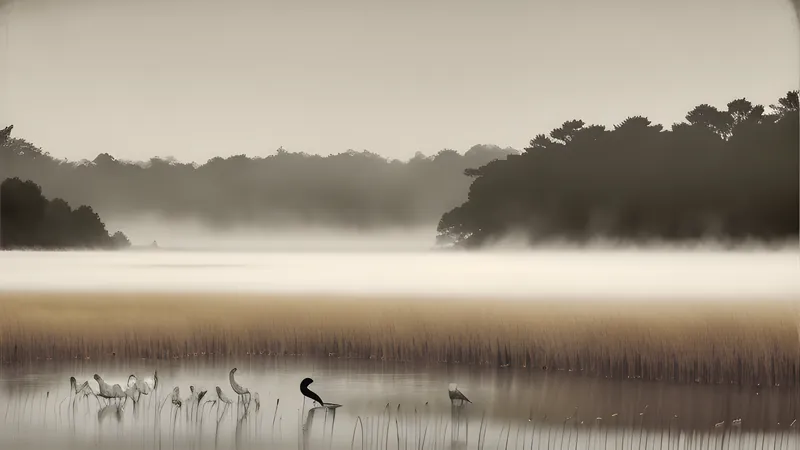
The waterbird remains the emblem of the day and of the convention it commemorates, a nod to the migrating flocks that set the whole enterprise in motion. Ramsar sites are marked with a distinctive logo, and designation as a “Wetland of International Importance” carries genuine prestige for the countries and communities that hold them. The day has also helped rehabilitate the very vocabulary of wetlands, encouraging people to see words like bog, fen and marsh as descriptions of valuable habitats rather than terms of dismissal.
Fun Facts
The Ramsar Convention is one of the oldest international environmental agreements still in force, predating the better-known conventions on climate change and biodiversity by two decades.
Peatlands cover only around three per cent of the world’s land surface yet store roughly a third of all soil carbon, making their protection one of the cheapest ways to keep carbon out of the atmosphere.
The world’s largest tropical wetland is the Pantanal, straddling Brazil, Bolivia and Paraguay, which floods across an area larger than England during the wet season.
Mangrove forests can reduce the height of wind and swell waves by up to two-thirds over a few hundred metres, sheltering the coasts behind them from storms.
The Iraqi Marshes, drained deliberately in the 1990s, were partially reflooded from 2003 onwards, and much of the reed-bed ecosystem and the Marsh Arab culture that depended on it began to recover.
Wetlands are estimated to remove a substantial share of the nitrogen and phosphorus running off farmland, which is why constructed wetlands are increasingly built as living water-treatment systems for towns and industry.
The Sundarbans, a vast tidal mangrove forest shared by Bangladesh and India, is the last stronghold of a population of tigers that have adapted to swim between islands and hunt in brackish water.
A Closing Reflection
The Ramsar Convention asked people to value the very landscapes their ancestors had laboured to destroy, and that reversal is the quiet drama at the heart of World Wetlands Day. For centuries the marsh was ground to be conquered, a source of fever and a waste of good soil, and the improving instinct of engineers and farmers was to drain it dry. The science of the past half-century has revealed that same ground to be among the hardest-working on earth, purifying water, storing carbon, sheltering coasts and teeming with life. Choosing a small Iranian town on the Caspian to give the world its first wetlands treaty was a modest beginning for so large an idea, and each 2 February the day carries that idea a little further.
Related Content