World Tuna Day
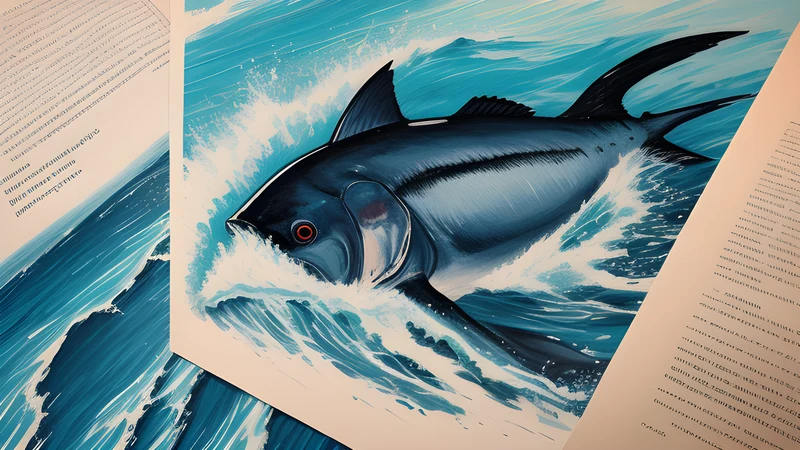
World Tuna Day is observed on 2 May, a date the United Nations General Assembly formally established in December 2016 through resolution 71/124, with the first official observance held in 2017. The day exists because tuna is both extraordinarily important and dangerously overfished: it feeds and employs millions of people, underpins the economies of entire island nations, and includes some of the most heavily exploited large fish in the ocean. The observance is a call to manage these remarkable animals before demand empties the seas of them.
An engine with fins
Tuna are not ordinary fish. Members of the genus Thunnus, they are among the very few fish that are partly warm-blooded, using a network of blood vessels called the rete mirabile, a countercurrent heat exchanger that traps the warmth generated by their muscles and keeps their core well above the surrounding water. That warm-bloodedness powers a swimming machine of astonishing capability. A bluefin tuna is built like a torpedo, able to retract its fins into grooves to reduce drag, and can reach bursts of around 70 kilometres per hour, crossing entire oceans on migrations that span thousands of miles. Tuna cannot pump water over their gills while stationary and must swim continuously to breathe, a process called ram ventilation, which means a tuna quite literally never stops moving from the day it hatches to the day it dies.
The Atlantic bluefin, Thunnus thynnus, is the giant of the family, capable of exceeding three metres in length and weighing more than 600 kilograms, a warm-blooded predator that patrols from the Gulf of Mexico to the Mediterranean. Alongside it swim the yellowfin, the bigeye, the albacore and the small, abundant skipjack, each with its own place in the market and the marine food web.
From cheap protein to luxury
Tuna occupies two utterly different economic worlds. At one end sits the skipjack, the most heavily caught tuna species, which fills the billions of cans of “light” tuna sold cheaply around the world, while the paler albacore supplies “white” tuna. Canned tuna is a twentieth-century invention, born in southern California around 1903 when a sardine shortage pushed the Pacific fishery to try preserving albacore instead, and it grew into a global staple of affordable protein.
At the other end sits the bluefin, transformed by the global appetite for sushi and sashimi into one of the most valuable wild animals on Earth. The fatty belly meat known as otoro commands extraordinary prices, and the ceremonial first-tuna auction of the Japanese new year has produced genuinely staggering sums: in January 2019, the restaurateur Kiyoshi Kimura paid 333.6 million yen, roughly 3.1 million US dollars, for a single Pacific bluefin at Tokyo’s Toyosu market. That single price captures the whole problem the day addresses, because a fish worth millions is a fish worth chasing to the edge of extinction.
The pressure on the stocks
The value of tuna has driven relentless fishing. Atlantic bluefin populations collapsed through the late twentieth century as industrial fleets, spotter planes and purse seiners pursued the spawning aggregations, and the Southern bluefin remains classified as endangered. The story is not uniformly bleak: strict quotas enforced by the International Commission for the Conservation of Atlantic Tunas, painfully negotiated and imperfectly policed, have allowed Atlantic bluefin numbers to rebound significantly since around 2010, one of the more encouraging fisheries recoveries on record. The lesson runs both ways, showing how quickly a great fish can be driven down and how it can recover when nations agree to restraint.
Tuna fishing also entangles other creatures. In the eastern Pacific, yellowfin tuna swim beneath dolphins, and the practice of netting the dolphins to catch the tuna below once killed them in enormous numbers, prompting the “dolphin-safe” labelling introduced in 1990. Fish-aggregating devices and long lines still take unintended sharks, turtles and seabirds, which is why sustainable gear and honest labelling sit at the centre of the modern tuna debate.
Why the day matters
The United Nations created World Tuna Day because tuna is a shared resource of global significance. The fishery is worth tens of billions of dollars a year and provides protein and livelihoods across the developing world, and for several small Pacific island states the licensing of their tuna-rich waters, coordinated through agreements such as the Parties to the Nauru Agreement, is among the largest sources of national revenue. Managing tuna well is therefore a matter of food security, economic survival and ocean health at once. The day draws attention to the science of sustainable catch limits and the hard work of the regional fisheries bodies that must agree them. It belongs among the ocean-focused observances such as World Reef Awareness Day, World Fish Migration Day, World Seagrass Day and World Whale Day.
How the day is marked
World Tuna Day is observed chiefly by governments, conservation groups and the fishing industry rather than through public festivity, which suits a day about resource management. Regional fisheries bodies, the FAO and marine charities release stock assessments and campaign material, calling for science-based quotas and better enforcement against illegal, unreported and unregulated fishing, which drains an estimated fifth of the global catch. Certification schemes such as the Marine Stewardship Council use the day to highlight sustainably caught tuna and to nudge shoppers towards pole-and-line and verified dolphin-safe products. Aquariums and coastal communities run educational events, and in the Pacific island nations that depend on tuna, the day carries real weight as a moment to assert their stewardship of the waters the world’s fleets come to fish. For the ordinary consumer, the practical message is simple: read the label, favour skipjack and pole-caught tuna over threatened bluefin, and treat the premium species as the rare luxury it has become.
A fish worth understanding
Part of the day’s purpose is to close the gap between the tin and the animal, because tuna are genuinely among the ocean’s marvels. They spawn by releasing millions of eggs into open water, of which only a handful survive to adulthood, and the survivors may live for decades and travel between continents; tagged Atlantic bluefin have crossed from American to European waters and back. Their warm muscles let them hunt in cold, deep water where most predators cannot follow, diving hundreds of metres after squid and small fish. This same biology, fast growth, wide range and high value, makes them both resilient and vulnerable, able to rebound when protected yet irresistible to fleets when not. Understanding the tuna as a living animal, rather than a commodity that arrives shrink-wrapped, is the first step towards wanting to keep it in the sea.
Surprising facts
The word “tuna” traces back through the Spanish atún and Arabic al-tun to the ancient Greek thynnos, from a verb meaning to dart or rush, a name earned by the fish’s explosive speed. Bluefin warm their swimming muscles and can also raise the temperature of their eyes and brain, sharpening their vision and reactions in cold, deep water where their prey hides. Tuna have proved notoriously hard to farm, because unlike salmon they will not readily breed in captivity, and most “farmed” bluefin is actually wild juveniles caught and fattened in pens, a practice known as ranching; it was only in 2002 that researchers at Japan’s Kindai University finally closed the life cycle and raised bluefin from egg to egg in captivity. Because tuna are long-lived apex predators, they accumulate mercury from everything they eat, which is why health authorities advise pregnant women and young children to limit their intake of the largest species. And the sheer scale of the fishery is hard to grasp: humans take roughly five to six million tonnes of tuna from the oceans every year, with the humble skipjack making up around half of it, most of it destined for a can.
An ancient catch
Long before industrial fleets, Mediterranean peoples built their culture around the bluefin’s predictable migration. The Phoenicians and Romans salted and traded tuna, stamping the fish on their coins, and the elaborate trap fishery known as the almadraba in Spain and the mattanza in Sicily set out labyrinths of nets each spring to intercept the shoals moving in to spawn. The final chamber, where the great fish were raised and taken, was worked with songs and rituals handed down for centuries, a communal event that combined harvest, ceremony and hard, bloody labour. Versions of these traps still operate off Andalusia and southern Italy, prized for the quality of their catch and increasingly run under tight quotas, a living link between the modern conservation debate and a relationship between people and tuna that reaches back nearly three thousand years.
A closing reflection
The tuna is easy to overlook, encountered by most people only as a flake in a sandwich or a slice on rice, its life as a warm-blooded ocean sprinter entirely hidden. World Tuna Day asks for a moment’s recognition of what that quiet tin actually contains: one of the fastest, most far-ranging and most sophisticated animals in the sea, drawn from a wild population that human appetite can exhaust within a generation. The recovery of the Atlantic bluefin proves that the outcome is still ours to decide, and the choice made at the fish counter and the negotiating table will determine whether these extraordinary fish are still crossing the oceans a century from now.
Related Content