World Sudoku Day
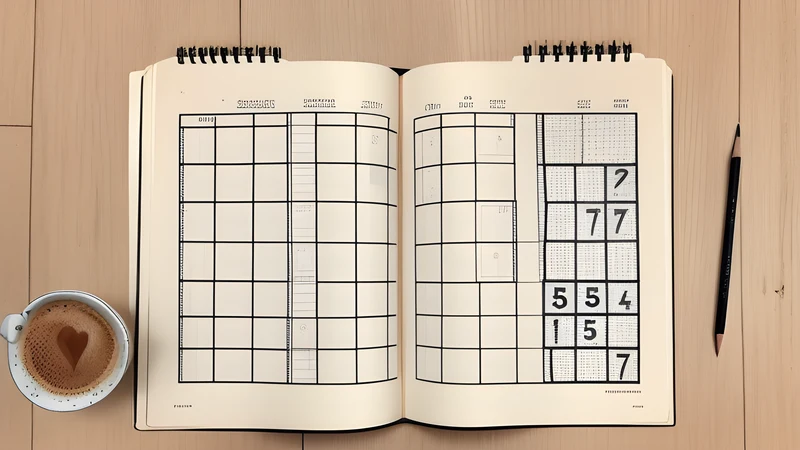
The ninth of September was chosen for World Sudoku Day by the simplest possible arithmetic: a sudoku grid is nine squares wide and nine squares tall, so the ninth day of the ninth month became its natural home. It is a young holiday for a puzzle that feels far older than it is, a grid of eighty-one cells that arrived in the world’s newspapers barely two decades ago and became, almost overnight, the most widespread pencil-and-paper pastime on the planet.
An American invention with a French ancestor
The direct ancestor of sudoku is the Latin square, a grid in which each symbol appears exactly once in every row and column. The Swiss mathematician Leonhard Euler studied such squares in the eighteenth century, and although he did not invent the puzzle that followed, his work gave it a respectable mathematical pedigree.
The puzzle itself was born in the United States. In 1979 a retired architect from Indiana named Howard Garns published a grid he called “Number Place” in Dell Pencil Puzzles and Word Games. It was a Latin square with a twist, adding the requirement that each of nine three-by-three boxes also contain the digits one to nine. Garns never signed his creation, and he died in 1989 without ever seeing it become a global craze. His authorship was only established later by researchers who noticed that the puzzle appeared in Dell magazines exactly when his name was on the contributors’ list and vanished when it was not.
The Japanese name and the long detour east
Number Place travelled to Japan, where the puzzle publisher Nikoli introduced it in 1984 under the cumbersome title “Sūji wa dokushin ni kagiru”, roughly “the digits must remain single”. The phrase was mercifully shortened to sudoku, written with characters meaning “single number”. Nikoli’s president Maki Kaji, often called the godfather of sudoku, refined the puzzle’s presentation, insisting that the given numbers be arranged in symmetrical patterns and that every grid have a single logical solution reachable without guessing. He never patented the idea, a decision that let it spread freely, and he died in 2021 having watched his puzzle conquer the world.
The New Zealander who lit the fuse
For twenty years sudoku remained largely a Japanese enthusiasm. Its explosion into the West was the work of one obsessive hobbyist. Wayne Gould, a retired judge from New Zealand living in Hong Kong, discovered the puzzle in a Tokyo bookshop in 1997 and spent six years writing a computer program to generate grids automatically. In late 2004 he persuaded The Times of London to print his puzzles, offering them free in exchange for a credit to his website. Within months rival newspapers across Britain, and then across the world, were racing to add their own daily sudoku. By 2005 the puzzle had become a genuine international phenomenon, filling commuter trains, waiting rooms and the back pages of newspapers on every continent.
History as a puzzle for mathematicians
Sudoku turned out to be more than a diversion; it became a small playground for serious mathematics. In 2005 two researchers, Bertram Felgenhauer and Frazer Jarvis, used a computer to count the total number of valid completed grids and arrived at an almost unfathomable figure of 6,670,903,752,021,072,936,960, more than six sextillion. A separate and harder question, how few starting clues a puzzle can have while still guaranteeing a single solution, resisted proof for years. In 2012 an Irish team led by Gary McGuire settled it with a year of computer time, establishing that no valid sudoku can have fewer than seventeen given numbers.
The competitive circuit
Sudoku is not only a solitary morning ritual. The World Puzzle Federation held the first World Sudoku Championship in the Tuscan town of Lucca in Italy in March 2006, drawing national teams that raced through grids of escalating difficulty against the clock. The championship has run almost every year since, in cities from Prague to Bangalore, and top solvers finish fiendish puzzles in a few minutes that would take a casual player an evening. Countries hold national qualifiers, and the fastest competitors treat the grid as a sport, training their pattern recognition the way an athlete trains a muscle. The championships have also driven the invention of new formats, because setters must constantly stay ahead of solvers who have memorised every standard technique. Rounds now mix classic grids with diabolical variants under strict time limits, and the scoring rewards both speed and the nerve to attempt the hardest puzzles first. National federations in Japan, Germany, the Czech Republic and India have built strong programmes, and the sport has produced its own quiet celebrities, solvers whose names mean nothing outside the puzzle world yet who are followed devotedly within it.
The craft of setting a good grid
Behind every satisfying puzzle sits a designer making careful choices, and the best sudoku are handcrafted rather than spat out by an algorithm. Nikoli built its reputation on human-made puzzles whose given numbers form pleasing symmetrical patterns and whose difficulty rises through a logical staircase of techniques, so that a solver learns something new as the grid opens up. Setters grade their creations by the solving methods required, from simple scanning for the last empty cell in a region up to advanced patterns with intimidating names like the X-wing, the swordfish and the XY-chain. A puzzle that forces a solver to guess is considered a failure; the art lies in guaranteeing that pure reasoning, applied patiently enough, will always find the way through.
A daily habit for the mind
Doctors and researchers have taken an interest in what sudoku does to the ageing brain. It has become a fixture of the advice given to people hoping to keep their minds nimble, alongside crosswords and other logic games, on the theory that regularly exercising working memory and reasoning may help preserve them. The evidence is more modest than the enthusiasm; large studies suggest that puzzle-solvers who do sudoku often tend to have sharper reasoning in later life, though whether the puzzles cause the sharpness or simply attract the already-sharp remains an open question. What is beyond doubt is that the puzzle offers a low-cost, absorbing quarter of an hour that asks nothing of the body and everything of the attention, which is much of its enduring charm.
Why the day matters
The appeal of sudoku rests on a quiet paradox: it contains no arithmetic at all. The digits one to nine are merely convenient symbols; one could solve the puzzle with nine colours or nine animals and lose nothing. What it demands instead is pure deductive logic, the patient elimination of the impossible until only the necessary remains. That accessibility is the point. It needs no shared language, no cultural knowledge and no special equipment beyond a pencil, which is why it crosses borders as easily as it does. World Sudoku Day celebrates the rare puzzle that a child and a retiree can enjoy at the same table with the same rules.
How it is celebrated
Newspapers and puzzle publishers mark 9 September with special giant grids, championships and printable collections. Schools use the date to introduce logic puzzles to pupils, arguing that sudoku teaches persistence and systematic thinking without ever feeling like arithmetic homework. Online platforms and mobile apps, which now serve millions of puzzles a day, run themed challenges and leaderboards. Care homes and community centres, where sudoku has long been valued as gentle mental exercise, often build the day into their activity calendars.
Fun facts
The largest sudoku ever created was carved into a hillside near Bristol in England in 2007, a grid measuring more than three hundred feet across, though the farmer’s version turned out to have multiple solutions and was quietly corrected.
A properly constructed sudoku has exactly one solution, and puzzles with more than one answer are considered defective by serious setters, no matter how enjoyable they might be.
Variants have multiplied wildly: killer sudoku adds arithmetic cages, samurai sudoku overlaps five grids in a cross, and hypersudoku adds extra regions, while jigsaw versions replace the tidy boxes with irregular shapes.
Sudoku has been used in scientific research on error-correcting codes and even in the study of how the human brain reasons, because its logic is complex enough to be interesting yet simple enough to control in an experiment.
The puzzle briefly disrupted a court case in Australia in 2008 when jurors were found to have been solving sudoku during testimony, forcing a costly retrial.
The record for the fastest solve of a standard newspaper-grade puzzle stands at well under a minute for the world’s elite competitors, a speed that leaves most players unable even to read the grid in the same time.
Thomas Snyder, an American biochemist, won the World Sudoku Championship three times and is credited with helping popularise the variant grids that now dominate the competitive circuit.
Sudoku appears in numbers so large that if a person filled in one completed grid every second, working without pause, it would take longer than the current age of the universe to write out every possible arrangement many times over.
A closing reflection
There is something faintly reassuring about a puzzle that promises a single correct answer at a time when so little else does. A sudoku cannot be argued with, bargained with or spun; it is either solved or it is not, and the solution was always there waiting, hidden in plain sight among the given numbers. That certainty, reached by nothing but careful thought, is the whole of its pleasure. Anyone who enjoys watching a hard problem yield to patient logic might also try their hand at International Chess Day or explore the wider world of numbers on the International Day of Mathematics.
Related Content