World Sauntering Day
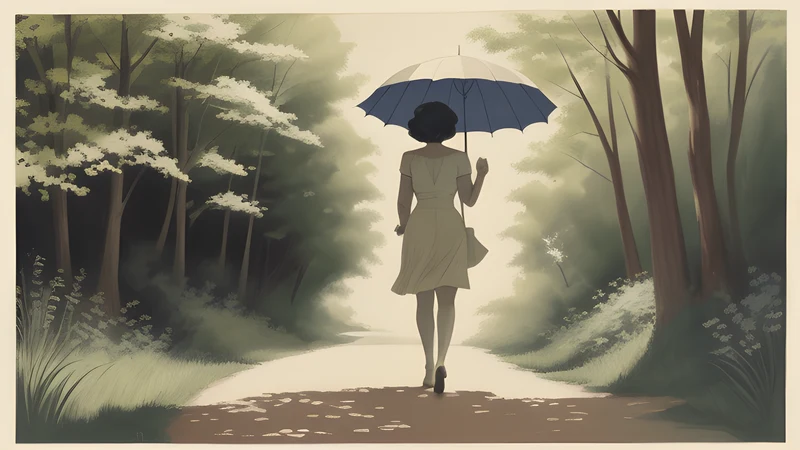
World Sauntering Day was invented in 1979 on Mackinac Island, Michigan, by a public relations man named W. T. Rabe, and it may be the only holiday ever created as a protest against jogging. Rabe worked at the island’s Grand Hotel, and he watched the running boom of the late 1970s with a certain weary amusement. His response was to propose a day dedicated to the opposite impulse: to walking slowly, aimlessly and with pleasure, noticing the world instead of pounding through it. The date settled on 19 June, and the day has ambled its way into calendars ever since, a small, deliberate act of resistance to the tyranny of hurry.
What sauntering actually means
To saunter is to walk in a leisurely, unhurried way, without particular purpose or destination. It is the antithesis of the power walk, the commute and the exercise circuit. Rabe’s own explanation, later relayed by his son John, was characteristically loose: sauntering means going from point X to point Z while caring very little about where you are going, how you get there, or when you might arrive. The whole idea is to slow down, look around, and let the walk itself be the point rather than a means to somewhere else.
That makes World Sauntering Day one of the gentler entries in the calendar, closer in spirit to a philosophy than to a cause. It asks nothing except that, for one day, you refuse to rush, that you take a longer route on purpose, pause to look at things of no importance, and treat the act of moving through the world as a pleasure rather than a task.
The Grand Hotel and W. T. Rabe
The birthplace of the day is worth knowing, because it could hardly be more fitting. The Grand Hotel on Mackinac Island, opened in 1887, boasts what is billed as the longest porch in the world, running some 660 feet along the front of the building, lined with rocking chairs and white columns and looking out over the Straits of Mackinac. It is a place built for exactly the kind of unhurried, contemplative idleness Rabe wanted to celebrate, and a person could saunter its length several times and feel they had achieved the day’s entire purpose.
Rabe himself was a professional publicist with a gift for inventive stunts. Among his other legacies, he is credited with helping found one of the first Sherlock Holmes appreciation societies and with staging elaborate promotional events, so a holiday dreamed up to gently mock a fitness craze fits neatly into his career. The location added its own logic. Mackinac Island has banned motor vehicles since 1898, and to this day travel on the island is by foot, bicycle or horse-drawn carriage, which makes it perhaps the one place in modern America where sauntering is simply the ordinary way to get around.
A word with a deeper history
The pleasure of the day deepens when you consider the word itself, which carries a much older and more romantic history than a 1970s publicity stunt. The origin of “saunter” is genuinely uncertain, but the most beloved explanation was given by Henry David Thoreau in his essay “Walking,” published in 1862. Thoreau claimed the word derived from the medieval pilgrims who wandered the countryside asking charity for a journey “à la Sainte Terre,” to the Holy Land, so that idle wanderers were mockingly called Sainte-Terrers, or Holy-Landers, and the word saunter grew from it. He offered a second possibility too, from sans terre, without land or home, describing one who is equally at home everywhere, which he thought “the secret of successful sauntering.”
Modern etymologists regard both of Thoreau’s derivations as charming folk etymology rather than proven fact, and the real root remains obscure. But the association he drew, between sauntering and a kind of secular pilgrimage, an unhurried, attentive, almost holy walking, has stuck to the word ever since, and it lends World Sauntering Day a lineage far grander than its origins on a hotel porch would suggest.
Why the day matters
Beneath the whimsy, World Sauntering Day makes a serious point that has only grown more relevant since 1979. The pace of daily life has accelerated relentlessly, and the pressure to be productive, to optimise every hour and quantify every step, has spread from work into leisure itself, so that even a walk must now be counted and measured. A day set aside for aimless, unmeasured walking is a small rebellion against that, and it aligns with a growing body of evidence that slow, unhurried time outdoors is good for the mind, lowering stress and lifting mood. In that sense it keeps company with the other gentle, humane observances on the calendar, days like World Laughter Day and World Compliment Day, each of which asks us to reclaim a small, undervalued human pleasure.
How the day is celebrated
The celebration is, appropriately, undemanding. People are encouraged simply to go for a slow, purposeless walk, to leave the phone and the step-counter behind, to take the scenic route, to stop and look at whatever catches the eye. Some communities and parks organise group saunters, deliberately slow strolls with no destination. Others use the day to promote walking, gentle exercise and time in nature. There are no fireworks, no feasts and no obligations, which is precisely as its inventor intended, a holiday whose only rule is to relax the rules.
The art of the stroll across cultures
Sauntering has cousins in many cultures, which suggests Rabe was tapping into something older than a fad. The French have the flâneur, the idle stroller of the nineteenth-century city, immortalised by the poet Baudelaire and the critic Walter Benjamin as a figure who wandered the boulevards observing modern life at leisure. The Italian passeggiata is the traditional evening stroll through town, an unhurried social walk taken to see and be seen rather than to arrive anywhere. The English Romantics built a whole literature around walking for its own sake, and the Japanese practice of shinrin-yoku, forest bathing, prescribes slow, sensory time among trees as a health measure. World Sauntering Day gathers all of these instincts under one cheerfully lazy banner.
The science of slowing down
What began as a publicist’s whim has, in the decades since, been quietly vindicated by researchers who study walking, attention and wellbeing. Studies of slow, unhurried walking, particularly in green space, consistently find measurable benefits: lower levels of stress hormones, reduced blood pressure, improved mood, and a restoration of the kind of relaxed, wandering attention that intense focus depletes. Psychologists distinguish between the tight, effortful concentration a screen or a task demands and the soft, open attention a stroll through a park allows, and they find that the second kind is genuinely restorative, letting the mind recover its capacity to focus afterwards. A saunter, it turns out, is genuinely functional, a way of resetting an overloaded nervous system.
There is also a creative case for it. A long line of writers, philosophers and scientists have testified that their best ideas arrived while walking without aim, from the ancient Greek thinkers who taught while strolling to composers, novelists and mathematicians who worked out problems on foot. The unhurried walk seems to loosen the mind, letting associations form that a desk and a deadline would never permit. World Sauntering Day, in celebrating aimless walking, accidentally celebrates one of the oldest and most reliable engines of human thought.
Fun facts
The day was invented specifically as a reaction against the jogging craze of the 1970s, making it one of the few holidays created in direct opposition to a form of exercise.
Mackinac Island, its birthplace, has banned cars since 1898, so it may be the ideal place on earth to saunter, with horse-drawn carriages and bicycles the only alternatives to walking.
The Grand Hotel where the day was born has a porch about 660 feet long, promoted as the longest in the world, purpose-built for exactly the kind of leisurely lingering the day celebrates.
Henry David Thoreau claimed the word saunter came from medieval pilgrims heading “to the Holy Land,” a poetic theory most scholars now doubt but which no one has quite wanted to abandon.
Some communities observe a rival date of 28 August for World Sauntering Day, a discrepancy that has never been fully resolved and which suits a holiday relaxed enough not to mind when exactly it is celebrated; 19 June remains the date most widely cited and tied to the Mackinac Island origin.
W. T. Rabe’s flair for invented occasions extended well beyond this one; he was a serial creator of offbeat commemorations and publicity events, and World Sauntering Day is simply the one that outlived him and quietly went global.
A closing reflection
World Sauntering Day began as a wry joke at the expense of joggers, but jokes sometimes contain the truest wisdom. Somewhere in the decades since 1979 the joke stopped being funny and started being necessary, as the world sped up and the simple act of walking slowly became almost radical. To saunter is to insist that not every journey needs a destination and not every minute needs a purpose. On 19 June, and ideally on many other days too, the invitation is to go outside, walk without hurry, and let the world be interesting again.
Related Content