World Reef Awareness Day
In 2019 an American company that made reef-safe sunscreen, Raw Elements USA, set aside 1 June as World Reef Awareness Day, a call for consumers, businesses and governments to reflect on the state of the world’s coral reefs and the ocean that depends on them. The choice of founder is telling: the day grew directly out of the discovery that ordinary sunscreen chemicals were poisoning coral, and that the small daily choices of holidaymakers were part of a much larger crisis. Marked at the start of June each year, the day has become a focal point for reef conservation campaigns, dive-industry initiatives and public education about ecosystems most people will never see with their own eyes.
Introduction
Coral reefs are among the most extraordinary structures in the natural world, built over thousands of years by colonies of tiny animals, and among the most endangered, threatened by a warming ocean that is pushing them past the limits they can tolerate. World Reef Awareness Day exists to make that paradox widely understood: that reefs are both spectacularly alive and desperately fragile, and that their fate is bound up with human decisions being made right now. The day is a grassroots observance rather than a UN one, founded by an ocean-focused business and taken up by conservationists, divers and aquariums around the world.
What a reef actually is
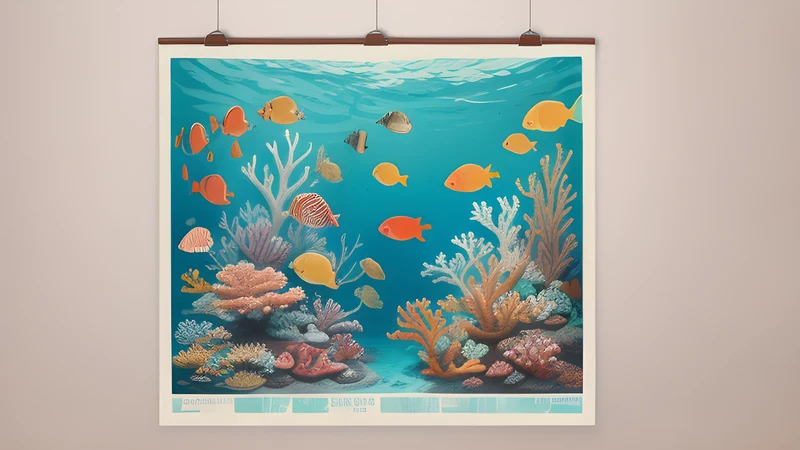
The scale of what corals build is easy to underestimate. A coral reef looks like a plant or a rock, yet it is a vast colony of animals. Each coral polyp is a soft-bodied creature, related to sea anemones, that secretes a hard skeleton of calcium carbonate around itself. Generation after generation builds on the skeletons of the last, and over centuries and millennia these accumulate into the immense limestone structures we call reefs. The Great Barrier Reef off the coast of Queensland stretches for over two thousand kilometres and is the largest living structure on earth, so large it is visible from orbit.
At the heart of the reef is one of nature’s most important partnerships. Coral polyps host microscopic algae called zooxanthellae inside their tissues. The algae photosynthesise, feeding the coral with sugars and giving it its brilliant colour; the coral in turn gives the algae shelter and nutrients. This symbiosis is what allows reefs to flourish in the clear, nutrient-poor tropical waters where little else can, and it is also their great vulnerability. When corals are stressed, above all by heat, they expel their algae, losing both their colour and their main food source. This is coral bleaching, and a bleached reef, ghostly white, is a reef starving.
Why reefs matter
Coral reefs cover less than one per cent of the ocean floor, yet they shelter roughly a quarter of all marine species at some point in their lives, which is why they are so often called the rainforests of the sea. That biodiversity is not an abstraction. Reef fisheries feed hundreds of millions of people, particularly in developing coastal nations that have few alternatives. Reefs form natural breakwaters that absorb the force of storms and protect coastlines from erosion and flooding, a service worth billions and impossible to replicate cheaply with concrete. They draw the divers and snorkellers whose spending sustains whole tourist economies. And they are a source of compounds used in medicine, including drugs derived from reef organisms.
The threats are numerous and mostly of human origin. The gravest by far is climate change, which is warming the oceans and driving the mass bleaching events that have struck reefs worldwide with increasing frequency. Major global bleaching episodes occurred in 1998, in 2016 and 2017, and again in the events of the 2020s, each one killing coral across huge areas. Ocean acidification, caused by the same carbon dioxide that drives warming, makes it harder for corals to build their skeletons at all. Pollution, sediment run-off from the land, destructive fishing, and the sunscreen chemicals oxybenzone and octinoxate all add to the pressure.
History and the sunscreen story
The particular origin of this day, in a sunscreen company, points to one of the more surprising chapters of reef science. Research over the 2000s and 2010s found that certain chemical UV filters common in sunscreen, especially oxybenzone, were toxic to coral even at very low concentrations, contributing to bleaching and disrupting coral reproduction. With millions of swimmers slathering these chemicals on before entering reef waters, the cumulative load was significant in popular tourist spots. The finding led Hawaii to pass a law in 2018, effective from 2021, banning the sale of sunscreens containing oxybenzone and octinoxate, and the Pacific nation of Palau introduced one of the world’s strictest bans of its kind. World Reef Awareness Day carries that consumer-facing message in its DNA, insisting that individual choices, from the sunscreen you buy to the seafood you eat, connect directly to the health of distant reefs.
How it is observed
The day is marked with beach clean-ups, educational programmes in schools and aquariums, dive-industry campaigns promoting responsible practices, and fundraising for reef-restoration projects. Marine research institutions use it to publish updates on reef health and on the growing science of coral restoration, including coral gardening, where fragments are grown in nurseries and transplanted onto damaged reefs, and experiments in breeding more heat-tolerant corals. Businesses connected to the ocean, from dive operators to sunscreen makers, often anchor their sustainability messaging to the date.
The day belongs to a wider family of ocean observances that together try to make the sea’s hidden ecosystems visible. The meadows celebrated on World Seagrass Day often grow alongside reefs and act as nurseries for reef fish, the free-flowing rivers of World Fish Migration Day carry the nutrients and the sediment that reefs depend on and can be harmed by, and the great marine mammals of World Whale Day move through the same threatened waters.
World variations
Reefs are unevenly spread across the tropics, and the day means different things in different waters. In Australia it centres inevitably on the Great Barrier Reef, whose repeated bleaching has become a national and political flashpoint, tangled up with debates over coal and climate policy. In the Coral Triangle, the region spanning Indonesia, the Philippines, Malaysia and neighbouring seas that holds the richest coral biodiversity on the planet, the emphasis is on the hundreds of millions of people whose food and income come directly from the reef. In the Caribbean, where coral cover has collapsed dramatically since the 1970s, restoration and disease response dominate the conversation, especially since the emergence of a devastating stony coral tissue loss disease in Florida in 2014.
Small island nations use the day to speak to a global audience about their existential stake in reef survival, since reefs are both their coastal defence and, in some cases, the very foundation of the land they live on. Landlocked countries, meanwhile, tend to mark the day through aquariums and schools, a reminder that the fate of reefs is decided partly by carbon emissions produced far from any coast.
The restoration effort
For a long time reef conservation meant only protection, drawing lines on a map and keeping people out. The scale of loss has forced a more active approach, and a whole field of reef restoration has grown up in the last two decades. Coral gardeners grow fragments on underwater frames and ropes until they are large enough to be cemented onto degraded reef. Scientists are selectively breeding and even assisting the evolution of corals that can withstand higher temperatures, and experimenting with relocating heat-hardy strains. None of this can substitute for stabilising the climate, and restoration practitioners are the first to say so, but it buys time and keeps genetic diversity alive on reefs that might otherwise be written off.
Fun facts
The Great Barrier Reef is really a system of nearly three thousand individual reefs and hundreds of islands rather than one reef at all, and it has been growing in its current form for around eight thousand years, on the foundations of far older reef structures. Some deep-sea cold-water corals grow in frigid darkness thousands of metres down, entirely without the sunlight-dependent algae of their tropical cousins. Corals reproduce in one of nature’s most spectacular events: on a few nights a year, often triggered by the full moon, entire reefs spawn simultaneously, releasing clouds of eggs and sperm that turn the water into an underwater blizzard. And parrotfish, which graze algae off the reef, grind up so much coral rock in the process that a single large fish can produce hundreds of kilograms of fine white sand a year, meaning the postcard beaches of many tropical islands are, quite literally, fish droppings. A single coral colony the size of a dinner plate may be decades old, and the largest known individual corals are several hundred years old, having survived every storm and heatwave of the centuries since before the reef was ever mapped by Europeans.
A closing reflection
There is a strange intimacy in the fact that a reef thousands of kilometres away can be harmed by the sunscreen on a swimmer’s shoulders, or saved by a shift in the choices people make on land. That is the thread World Reef Awareness Day pulls on. Reefs are built by animals too small to see, over spans of time longer than any human memory, into structures large enough to see from space, and they can be bleached to bone-white in the space of a single hot summer. The day asks that we hold both those facts at once, the grandeur and the fragility, and act while there is still a reef left to act for.
Related Content