World Ranger Day
On 31 July 1992, at a meeting in the Peak District National Park in England, ranger associations from three countries came together to form the International Ranger Federation, a body to link and support the people who guard the world’s protected wild places. Fifteen years later, in 2007, the Federation marked that anniversary by declaring 31 July to be World Ranger Day, a date to honour rangers killed or injured in the line of duty and to celebrate the work of those still in the field. It has grown into a global commemoration, observed in national parks and conservation areas on every continent, and it carries an unusual weight for an observance about a profession, because rangers, unlike most conservationists, die at their work in significant numbers.
Introduction
Rangers are the people on the ground in the world’s national parks, game reserves and wilderness areas: patrolling against poachers, fighting fires, monitoring wildlife, guiding visitors, maintaining trails and enforcing the rules that keep protected land protected. World Ranger Day exists both to celebrate that work and to remember its cost. Each year the International Ranger Federation publishes a Roll of Honour naming the rangers who have died on duty over the preceding year, and the day is built around that solemn accounting as much as around any celebration.
Origins and the two organisations
Two organisations sit behind the day. The first is the International Ranger Federation itself, founded on that July day in 1992 by ranger associations from Scotland, England and the United States, and now representing ranger groups in more than seventy countries. The second is the Thin Green Line Foundation, established in Australia by a ranger named Sean Willmore after he travelled the world documenting the dangers rangers faced. The Foundation raises money to support the families of rangers killed on duty, many of whom, in poorer countries, are left with nothing, and to equip and train rangers working in the most dangerous conditions. The two bodies together give World Ranger Day its distinctive double character, part celebration and part memorial fund.
The dangerous reality
The reason the day dwells on danger is that the danger is real and large. Over recent years, well over a hundred rangers have died on duty annually across the world, and the true figure is certainly higher because many deaths in remote or poorly governed areas go unrecorded. The causes are varied. A large share, particularly in parts of Africa and Asia, are homicides: rangers killed by armed poachers hunting elephants for ivory and rhinos for horn, or by militias and armed groups operating in and around parks. Others die in accidents inherent to the work, drowning, vehicle crashes on rough tracks, animal attacks, and from diseases such as malaria contracted in the field. Some of the deadliest places on earth to be a ranger are the great parks of Central Africa, where conservation has become entangled with armed conflict.
The scale of loss is what sets rangers apart from almost any other environmental role. Protecting a rhino from a well-armed, well-organised poaching syndicate is closer to soldiering than to gardening, and rangers in these front-line areas often work in paramilitary units, poorly paid and under-equipped against opponents funded by an illegal wildlife trade worth billions. Estimates from conservation bodies suggest the world would need well over a million rangers to properly protect the land it has pledged to conserve, several times the number currently employed, which turns the day’s celebration into a recruitment argument as much as a memorial.
History of the ranger profession
The idea of a paid guardian for wild or reserved land is old. Medieval England had foresters and keepers who “ranged” over royal hunting grounds, enforcing forest law, and the word “ranger” descends from that sense of one who patrols a territory. The modern conservation ranger, though, is bound up with the birth of the national park. When Yellowstone became the world’s first national park in 1872, the young United States struggled to protect it from poachers and vandals, and for years the task fell to the US Army before a civilian ranger force and, in 1916, the National Park Service took over. The green-uniformed park ranger became an American icon and a model copied around the world.
As the twentieth century saw protected areas established across Africa, Asia, Latin America and Australasia, each developed its own ranger corps, shaped by local conditions. A ranger in a quiet European national park, guiding walkers and counting birds, does a very different job from an armed anti-poaching ranger in a Central African reserve, yet both belong to the same global profession that World Ranger Day was created to unite.
Why the day matters
Rangers are the difference between a protected area that exists on paper and one that exists in reality. A national park without rangers is simply an unguarded space, open to poaching, illegal logging, encroachment and fire. The world has committed, through international agreements, to protecting an ever-larger share of its land and seas, but those commitments mean little without the people to enforce them on the ground. World Ranger Day makes the case that rangers are essential conservation infrastructure, and that they deserve proper pay, training, equipment and support, together with recognition of the risks they run.
The day connects naturally to the wider calendar of conservation observances, all of which ultimately depend on someone in the field to make protection real. The wildlife that rangers guard is celebrated on days such as World Wildlife Conservation Day and, for the fastest and most persecuted of the big cats, International Cheetah Day, while the effort to save species from the illegal trade links rangers to campaigns like International Vulture Awareness Day.
How it is observed
The day is marked with memorial ceremonies where the Roll of Honour is read aloud, fundraising events for the Thin Green Line Foundation and similar bodies, open days in national parks, and public campaigns telling the stories of individual rangers. Parks around the world hold minutes of silence, light beacons, and invite the public to meet the rangers who protect their local wild places. Social media campaigns thank rangers and share the realities of their work, and conservation organisations use the day to press governments and donors for better funding. Countries increasingly use the day to announce new investment in ranger recruitment, insurance and training, and international bodies have begun pushing for professional standards, welfare protections and even codes of conduct that recognise rangers as a distinct profession with rights as well as duties.
World variations
The meaning of the day shifts sharply with geography, because the ranger’s job varies so much from place to place. In much of Africa the emphasis falls on anti-poaching and on the memorial function, since this is where most rangers are killed and where the illegal wildlife trade puts them in the line of fire. Parks in the Democratic Republic of the Congo, such as Virunga, home to mountain gorillas, have lost scores of rangers to armed conflict, and World Ranger Day there is a genuinely mournful occasion. In India and Nepal, rangers guarding tigers and rhinos face similar dangers from poaching gangs.
In North America, Europe and Australia the day leans more towards celebration and public engagement, with rangers introducing visitors to the wildlife and landscapes they manage, though wildfire has made the work increasingly hazardous in these regions too. Indigenous ranger programmes, particularly in Australia, have become a major and much-celebrated development, combining traditional knowledge with modern conservation and giving remote communities meaningful work caring for their own country. Across all these settings the day performs the same basic act: it names the people who do the guarding, and asks that they be valued.
Fun facts
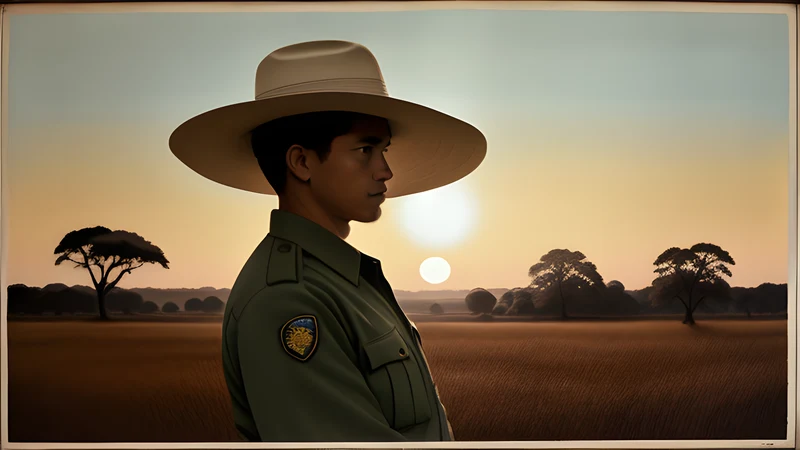
The International Ranger Federation grew from a single meeting of three national associations into a body spanning most of the world’s protected-area systems in just three decades. Rangers include a growing number of women, and all-female anti-poaching units, such as the Akashinga rangers in Zimbabwe, have become celebrated for their effectiveness and for transforming the communities they recruit from. The job description is extraordinarily broad: a ranger may in a single week act as a police officer, a firefighter, a paramedic, a wildlife biologist, a mechanic and a tour guide. Rangers also increasingly rely on technology their predecessors never had, from GPS tracking collars and camera traps to drones and data systems that map poaching hotspots, though none of it removes the need for a human being to walk the ground. And the green uniform of the American park ranger, complete with its distinctive flat-brimmed “campaign hat”, was borrowed from the military and has become one of the most recognisable working uniforms in the world, imitated by ranger services far beyond the United States.
A closing reflection
There is a particular kind of courage in choosing to stand between a wild place and the people who would destroy it, often for little money and less recognition, and sometimes at the cost of your life. World Ranger Day insists that this courage be seen. The animals and landscapes that fill so many other days in the conservation calendar do not protect themselves, and behind every surviving elephant, every unburned forest and every intact reserve there is usually a ranger who walked the boundary at dawn. The day reads out their names, thanks the living, and asks the rest of us to remember that protection comes down in the end to a person, on patrol, right now, somewhere out in the dark.
Related Content