World Porridge Day
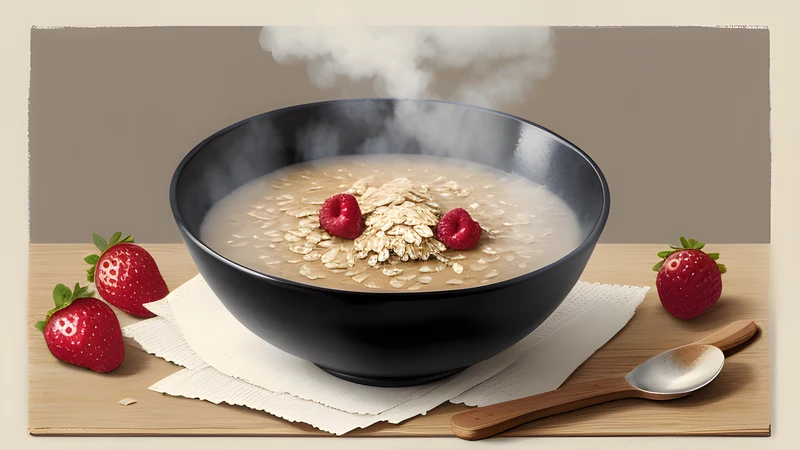
World Porridge Day falls on 10 October, and unlike most food observances it was created to feed people rather than to sell them anything. The Scottish charity Mary’s Meals launched it in 2009, building on the story of its founder Magnus MacFarlane-Barrow, who had seen how a single daily mug of vitamin-enriched maize porridge could keep hungry children in Malawi at their desks instead of scavenging for food. The day asks people to cook a pot of porridge, share it, and donate the cost of a school meal, turning the world’s plainest breakfast into a small act of charity.
One of the oldest foods we make
Porridge, in the broad sense of grain simmered in water or milk until soft, is among the most ancient prepared foods known. Archaeologists working at Grotta Paglicci in southern Italy found traces of processed oat starch on a grinding stone roughly 32,000 years old, evidence that people were pounding and cooking wild oats into a paste long before farming began. The frozen Neolithic body known as Ötzi the Iceman, who died in the Alps around 3300 BC, had eaten a meal that included einkorn wheat, most plausibly as a porridge. Long before bread required ovens and skill, grain and water and a fire made a meal, which is why nearly every agricultural society on Earth arrived independently at some version of porridge.
Oats themselves, Avena sativa, began as a weed among wheat and barley crops and were domesticated relatively late, in cooler northern Europe where they outperformed the grains they had originally infested. That climatic quirk is why oats and Scotland became so tightly bound: oats grew where wheat would not, and they became the staple grain of the Scottish poor.
The Scottish porridge tradition
No nation has taken porridge more seriously than Scotland, where it is spelled into the culture as “parritch” and defended with genuine ritual. Traditional Scottish porridge is made with oatmeal, water and salt, and no sugar, a point of some pride, and it is stirred with a spurtle, a slim wooden rod that keeps the mixture moving without mashing it. Custom held that it should be stirred clockwise with the right hand, sunwise or deiseal, to keep the Devil away, and that it should be eaten standing up. In the days before refrigeration a large batch was sometimes poured into a “porridge drawer” to set solid, then sliced cold and carried into the fields as a portable lunch.
The most famous jibe at Scotland’s oat dependence came from Samuel Johnson, whose 1755 dictionary defined oats as “a grain, which in England is generally given to horses, but in Scotland supports the people”. The Scottish judge Lord Elibank is said to have replied, “and where else will you see such horses and such men?” The exchange has been quoted at Scottish breakfast tables ever since.
Why the day matters
The charitable heart of World Porridge Day rests on a simple economic fact: porridge is one of the cheapest ways to deliver a nourishing meal. Mary’s Meals feeds children in some of the world’s poorest countries, including Malawi, Zambia and Zimbabwe, on fortified maize porridge for a cost of a few pence per meal, and the promise of that meal is often enough to draw children into school and keep them there. The nutrition is real. Oats are high in soluble fibre, particularly beta-glucan, which slows digestion, steadies blood sugar and has been shown to lower LDL cholesterol, and porridge delivers slow-release energy that keeps hunger at bay through a morning. A bowl that costs almost nothing does a surprising amount of good.
How it is marked
World Porridge Day is celebrated with “porridge parties” in homes, schools and workplaces, where people cook up a pot, eat together and give to Mary’s Meals. It coincides each October with the Golden Spurtle, the World Porridge Making Championship held since 1994 in the Highland village of Carrbridge, where competitors travel from around the world to be judged on a bowl of plain oats, water and salt, the traditional way, with a separate “speciality” category for the more adventurous. Winning the golden spurtle trophy is a genuine honour in the porridge world, and the contest has done much to keep the craft alive. The day sits comfortably beside other breakfast observances such as National Toast Day and World Marmalade Day, and alongside staple-food days like the International Day of the Potato.
Porridge around the world
Porridge is a global family with countless local members. East Asia has congee, or jook, a soothing rice porridge simmered soft and eaten with pickles, ginger and slivers of meat or fish, the standard food of the ill and the very young across China and much of Southeast Asia. Across Africa, thick maize porridges anchor daily eating: ugali in East Africa, pap or sadza in the south, banku and fufu in the west, stiff enough to scoop and dip. Latin America drinks atole, a warm masa-based porridge often flavoured with chocolate or cinnamon. The Gulf has harees, wheat and meat pounded to a smooth pottage. Even Italian polenta and the semolina puddings of northern Europe belong to the same broad tribe. Almost every one of these began, like Scottish oats, as the food of ordinary people making the most of the grain they had.
Surprising facts
The word “porridge” became British slang for a prison sentence, later immortalised by the 1970s sitcom of that name, most likely because thin oat gruel was standard prison fare in the nineteenth century. In the fairy tale of Goldilocks and the Three Bears, first written down by Robert Southey in 1837, the entire plot turns on a bowl of porridge being too hot, too cold and just right, making porridge perhaps the most famous breakfast in English literature. Instant porridge oats were engineered by rolling the grain thinner and pre-steaming it so it cooks in seconds, a twentieth-century convenience the Carrbridge purists quietly disapprove of. And the traditional Scottish insistence on salt rather than sugar has genuine culinary logic, since a little salt sharpens the nutty flavour of the oats in the same way it lifts a caramel.
The craft of a good bowl
Behind the plainness lies real technique, which is why the Golden Spurtle can crown a champion from a bowl of three ingredients. The grade of the oat decides everything. Pinhead or steel-cut oatmeal, the whole groat chopped into gritty fragments, gives a nutty, chewy porridge but needs long, patient cooking and frequent stirring. Rolled oats, steamed and pressed flat, cook faster and turn creamier. Fine oatmeal, ground almost to flour, makes the smooth, pouring porridge some Scots swear by. Purists soak their oatmeal overnight to soften it and shorten the cooking, then cook it low and slow, stirring steadily so the starch releases and thickens the whole pot to a gloss.
The eternal argument is water against milk. Water lets the flavour of the oat come through clean and is the traditional and competition standard; milk makes a richer, sweeter, more indulgent bowl but can catch and scorch on the base of the pan. The salt goes in near the end, because added too early it can toughen the grain. Get the ratio, the grade, the heat and the stirring right, and even the plainest recipe rewards the effort with a texture that instant sachets cannot touch.
Oats and a changing reputation
For a food once dismissed as fodder, oats have enjoyed a remarkable rehabilitation. From the 1980s onward, research into soluble fibre turned the oat into a health-food darling, and the beta-glucan it contains is now one of the few dietary components allowed a formal heart-health claim on packaging in Britain, Europe and the United States. That science drove the wave of overnight oats, oat milk and oat-based products that fill supermarket shelves today. Oat milk in particular has become the default plant milk of a generation of coffee drinkers, a use the Scottish crofters who lived on the grain could never have imagined. The grain that Samuel Johnson mocked now commands premium prices in exactly the English cafés that once fed it to horses, a quiet and complete reversal of fortune.
A closing reflection
There is a rightness to a food this old and this humble being chosen to feed hungry children, because porridge has always been the meal that stretches furthest and asks least. It needs no oven, no skill and almost no money, and it has kept people going through Highland winters, wartime rationing and long marches for as long as there have been grain and fire. World Porridge Day gathers all of that quiet history into a single, warming bowl and points it outward, towards a child in Malawi for whom the same simple food is the difference between a morning in school and a morning going hungry. Few breakfasts carry their weight so lightly.
Related Content