World Otter Day
World Otter Day is organised by the International Otter Survival Fund, a charity founded in 1993 and based on the Isle of Skye in Scotland, and it falls on the last Wednesday of May. The fund began marking otters with an annual “Otterly Mad Week”, which grew into a single global day devoted to the thirteen species of otter found across the world. Behind the charm of an animal that seems designed to be adored lies a serious purpose: most otter species are in decline, and the day exists to draw attention to the rivers, wetlands and coasts whose health they both depend on and reveal.
Thirteen species, one family
Otters belong to the mustelid family, the group that also includes weasels, badgers and wolverines, and there are thirteen recognised species living on every continent except Australia and Antarctica. They range enormously in size, from the Asian small-clawed otter, the smallest, which would sit comfortably in a person’s arms, to the giant otter of the Amazon, which can exceed one and a half metres in length, and the sea otter of the North Pacific, the heaviest of them all. Some, like the Eurasian otter familiar to British rivers, live solitary lives along freshwater; others, like the giant otter and the sea otter, are highly social.
What unites them is a life lived in and around water and a set of adaptations for it: webbed feet, powerful tails, dense insulating fur and the ability to close their ears and nostrils when they dive. Most otters are superb swimmers and skilled hunters of fish, crustaceans and shellfish, and several are among the most playful animals in the natural world, sliding down muddy banks and snowy slopes in a way that looks unmistakably like fun.
The history: from fur trade to conservation
The relationship between humans and otters has often been a lethal one. Otter fur is exceptionally dense and warm, and for centuries it was among the most prized in the world. The sea otter in particular was hunted almost to extinction during the eighteenth and nineteenth centuries by the maritime fur trade, which pursued it across the North Pacific from Russia to California; by the early twentieth century perhaps only a couple of thousand sea otters survived out of a population that had once numbered in the hundreds of thousands. An international treaty in 1911 finally gave the survivors protection, and the species has slowly recovered in parts of its range.
Freshwater otters suffered a different, quieter collapse. In Britain, the Eurasian otter disappeared from much of England during the mid-twentieth century, its numbers devastated by pollution from agricultural pesticides that accumulated in the fish it ate, alongside habitat loss and hunting. Its gradual return to English rivers from the 1990s onward, as water quality improved and protections took hold, became one of British conservation’s clearest success stories. The International Otter Survival Fund emerged from this era of concern, and World Otter Day carries its message forward.
Why it matters
Otters are what ecologists call indicator species: because they sit near the top of the food chain in freshwater and coastal systems, their presence signals a healthy, unpolluted environment, and their absence warns that something is wrong. An otter thriving on a river is a sign that the water is clean and the fish are plentiful; an otter gone from a coast may mean pollution, overfishing or habitat destruction has hollowed out the system beneath it. Protecting otters therefore means protecting the whole web of life they sit atop.
The sea otter goes further and acts as a keystone species, one whose influence on its ecosystem far exceeds its numbers. Sea otters eat sea urchins, and sea urchins graze on kelp; where otters are removed, urchin populations explode and strip the kelp forests bare, destroying habitat for countless other species. Where otters return, the kelp forests recover, storing carbon and sheltering fish. This outsized role connects the day to broader conservation campaigns such as World Wildlife Conservation Day and the wider push to protect marine and freshwater habitats also reflected in World Manatee Day.
How it is celebrated
The International Otter Survival Fund coordinates the day, and celebrations blend the joyful with the educational. Zoos, aquariums and wildlife parks with otters hold special feeds, talks and fundraising events, while the fund and other charities run online campaigns sharing otter facts, photographs and appeals for support. Schools use the day to teach children about rivers, coasts and the animals that depend on clean water, and community groups organise river clean-ups and habitat surveys.
Much of the day unfolds on social media, where the otter’s natural photogenic appeal does a great deal of the work; images of otters holding hands, cracking shellfish on their chests or sliding down banks spread widely and carry the conservation message with them. The fund encourages supporters to raise money for otter rescue and rehabilitation and to learn about the threats each species faces, turning affection for a charismatic animal into practical support for its survival.
World variations and the species at risk
The day’s global reach reflects the fact that otters live almost everywhere, and their threats differ by region. In Asia, several species, including the Asian small-clawed and smooth-coated otters, face intense pressure from habitat destruction and a growing illegal pet trade, in which otter cubs are taken from the wild and sold, often after their mothers are killed. Campaigners use the day to warn against the “cute otter” videos that fuel demand for otters as pets, an appetite that is emptying wild populations across Southeast Asia.
In South America, the giant otter is endangered by deforestation, gold mining and mercury pollution in the Amazon basin, while in North America the sea otter’s recovery remains patchy and vulnerable to oil spills and food shortages. In Europe and Britain, the Eurasian otter’s recovery is watched as a hopeful counter-example, though it still faces road deaths and the ever-present risk that water quality could slip again. The day gathers all of these separate struggles under a single banner.
Traditions and symbols
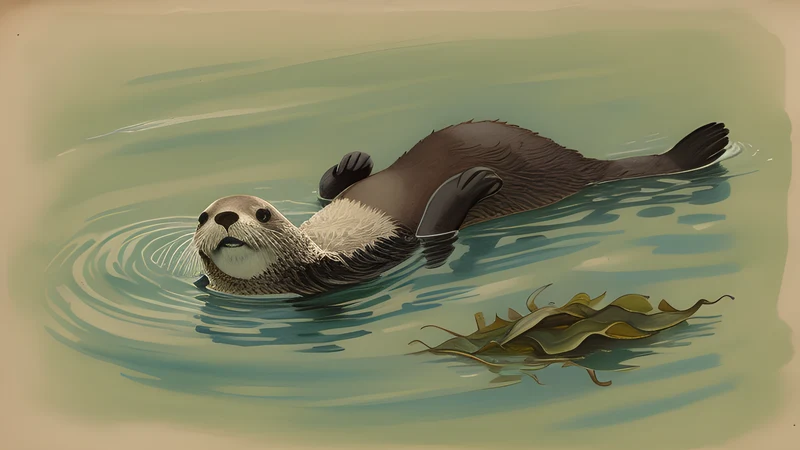
The otter’s image is one of the most endearing in wildlife, and the day leans into it: the sea otter floating on its back with a pebble tool on its chest, the pair of otters holding paws as they rest so as not to drift apart, the river otter’s whiskered face peering above the waterline. These images are affectionate, but the fund is careful to pair them with the reality behind them, using the animal’s appeal as a doorway to the harder facts about pollution, habitat loss and the pet trade. The playful, water-slicked otter has become the day’s warm and effective ambassador.
Fun facts
Sea otters have the densest fur of any animal on Earth, with as many as a million hairs packed into a single square inch, a coat so thick it traps a layer of air that keeps the otter warm without any insulating blubber.
Sea otters use tools, carrying a favourite rock tucked into a loose pouch of skin under the foreleg and using it to smash open shellfish against their chests as they float on their backs.
To avoid drifting apart while they sleep on the water, sea otters sometimes hold paws, and groups of resting otters, called a raft, may wrap themselves in strands of kelp to stay anchored in one place.
The Asian small-clawed otter, the world’s smallest, has partly webbed paws and dexterous fingers it uses to feel for prey under stones, and it is one of the most vocal otters, communicating with a wide range of chirps and squeaks.
An otter’s metabolism runs so hot that a sea otter must eat roughly a quarter of its body weight in food every day simply to stay warm in the cold northern seas.
The rescue and rehabilitation work
Much of the fund’s practical effort, and much of what the day raises money for, is the unglamorous business of rescuing orphaned and injured otters. Cubs found alone after their mothers are killed on roads or by hunters need months of careful, hands-off rearing before they can be returned to the wild, and the fund has trained rescuers and supported otter rehabilitation centres in many countries. The work is painstaking, because an otter that becomes tame is an otter that can never go home, so carers must resist the very affection the animal so easily invites. World Otter Day channels its wave of public goodwill toward this quiet, patient labour, on the principle that admiration means little unless it pays for the food, the veterinary care and the eventual release of the next orphaned cub.
A closing reflection
It is easy to love an otter and harder to notice what its presence quietly means: clean water, living kelp, a river or a coast still working as it should. The last Wednesday in May asks people to move from delight to attention, to see in the sliding, shellfish-cracking, paw-holding otter a small sentinel of the health of the waters it swims in. Where the otters flourish, the water is well; the day’s gentle work is to make sure they still can.
Related Content