World Numbat Day
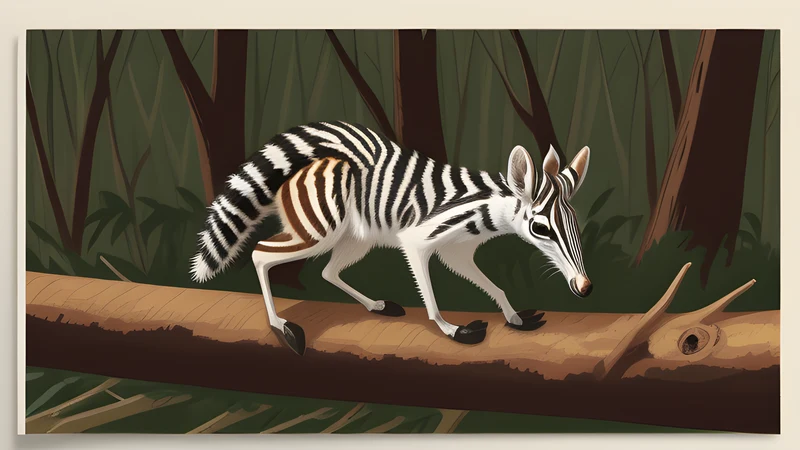
On the first Saturday of November, World Numbat Day celebrates a small, striped, termite-hunting marsupial that most of the world has never heard of and that Australia itself nearly lost. The numbat is the faunal emblem of Western Australia, an animal the size of a large squirrel with a russet coat barred by white stripes and a bushy, upright tail, and it is one of the continent’s rarest mammals, with perhaps a thousand or fewer surviving in the wild. The day is run by Project Numbat, a Western Australian conservation group, and its floating date was chosen to fall on a weekend when zoos and communities can most easily gather. The animal it honours is a genuine oddity, unlike any other marsupial alive.
The daylight marsupial
The numbat, Myrmecobius fasciatus, breaks one of the great rules of Australian marsupials: almost all of them are nocturnal, sleeping through the heat and emerging after dark, yet the numbat is active in broad daylight. The reason is its diet. The numbat eats termites, and almost nothing else, and its whole life is timed to the movement of its prey, which rises toward the surface of the soil and the interiors of fallen logs during the warmer daylight hours. A numbat spends its day nosing through leaf-litter and probing shallow galleries, and it retreats at night into a hollow log or burrow, often plugging the entrance with its tough rump for safety.
To catch its food it carries a remarkable tool: a long, narrow, sticky tongue that can extend some ten or eleven centimetres, roughly half the length of its own body, which it flicks into termite tunnels to draw the insects out. An adult numbat may eat up to twenty thousand termites in a single day. Its teeth, oddly, are numerous but small and weak, degenerate remnants of little use to an animal that barely chews, and its snout is long and pointed for reaching into the narrow spaces where termites hide. It is a creature engineered, down to the tongue and the teeth, around a single food.
An animal without a pouch
The numbat is a marsupial, but it lacks the neat, enclosing pouch that defines the group in the popular imagination. A female has no true pouch at all; instead her four teats sit on the belly, and the tiny newborns, each smaller than a jellybean, cling on and are sheltered only by a patch of crimped golden hair and the swell of the surrounding skin. The young stay attached for months, and later the mother leaves them in a burrow while she forages, returning to nurse. This exposed, pouchless arrangement is one of the features that make the numbat so distinctive among marsupials, and it places the animal on its own solitary branch of the family tree, with no close living relatives.
History of the day
World Numbat Day was created by Project Numbat, a group founded in Western Australia to support the conservation of the state’s animal emblem, and its purpose is to lift the profile of a species too obscure to attract attention on its own. The first Saturday of November was chosen as a reliable annual anchor, and the day is marked at Perth Zoo, which runs the principal captive-breeding programme, and by wildlife groups across Australia and beyond. The day joins the growing calendar of single-species observances, sharing its logic with events such as World Wildlife Conservation Day: give a little-known animal a fixed date, teach people a few surprising facts about it, and turn that curiosity into support for the fieldwork that keeps it alive.
The numbat badly needs the help. Before European settlement it ranged across much of southern Australia, from Western Australia through South Australia and into New South Wales and the arid interior. Within roughly a century that vast range had collapsed to two small pockets of woodland in the south-west of Western Australia, the Dryandra Woodland and the Perup Nature Reserve, and the numbat had vanished from more than ninety-nine per cent of its former country.
Why the day matters
The cause of the numbat’s collapse is written across the whole story of Australian mammal extinction: introduced predators. The red fox, brought to Australia in the nineteenth century for hunting, and the feral cat, spread across the continent, proved catastrophic for a small, ground-dwelling, daytime animal with little defence. Because the numbat forages in the open by day, it is especially exposed to a hunting fox or cat, and the two predators together erased it from most of its range. Habitat clearing for farming compounded the loss, stripping away the hollow logs the numbat depends on for shelter and the woodland that supports its termites.
Saving the numbat has therefore meant, above all, controlling those predators, whether by baiting foxes across large landscapes or by building predator-proof fences around whole reserves. The animal’s plight ties it to the wider story of Australia’s embattled wildlife and to the broader conservation concerns raised on days such as World Frog Day, all of them turning on the same hard question of how native species can survive alongside the animals people have introduced.
The fight to bring it back
The recovery effort has become one of Australia’s more ambitious conservation projects. Perth Zoo breeds numbats in captivity and releases the young into protected sites, a delicate process for an animal with such specialised needs, and the Australian Wildlife Conservancy has established populations behind predator-proof fences at sanctuaries such as Scotia in New South Wales and Mount Gibson in Western Australia, creating refuges where numbats can breed free of foxes and cats. These fenced havens have become arks, holding a growing share of the world’s numbats and offering a source of animals for future reintroductions. Fox-baiting programmes in the two remaining natural strongholds have allowed the wild populations there to cling on, and volunteers and researchers monitor the animals with camera traps and careful surveys, since a shy, fast-moving creature is hard to count.
How it is celebrated
Zoos and wildlife groups mark the day with talks, fundraising and displays built around the numbat’s strange biology, and Perth Zoo in particular uses it to showcase its breeding work. Schools in Western Australia fold the animal into lessons on the state’s wildlife, and Project Numbat sells merchandise and runs campaigns to fund its conservation partnerships. Online, the day fills with photographs of numbats mid-forage, tails held high, and with the striped, wide-eyed faces that make so unlikely a mascot surprisingly photogenic. The tone is upbeat, because the numbat’s story, for all its losses, is one where determined effort has genuinely turned the tide.
An emblem and its meaning
The numbat became the official animal emblem of Western Australia in 1973, chosen partly because it was already so restricted to that state, and it has since appeared on stamps, coins and the badges of conservation campaigns. That status has been double-edged: it gave the animal a measure of official protection and public sentiment, but a mascot on a coat of arms can still slide toward extinction while the emblem endures untroubled on the letterhead. Project Numbat and its partners have worked to keep the living animal, rather than the symbol, at the centre of attention, arguing that a state that puts a creature on its crest has a particular duty to make sure the creature outlasts the crest. For the Noongar people of the south-west, whose country holds the last wild numbats, the animal is known as the walpurti, and its survival is bound up with the health of the woodland they have long inhabited.
A life measured in termites
Everything about the numbat’s ecology flows from its single-minded diet. A numbat does not dig into rock-hard termite mounds like an echidna; instead it works the shallow, softer galleries that termites build through soil and rotting wood, following them by smell and probing with that extraordinary tongue. This makes the animal utterly dependent on a healthy termite population, which in turn depends on an abundance of fallen timber, so the numbat cannot survive in tidied, cleared or heavily grazed country where the dead wood has been removed. The hollow logs that litter old-growth woodland serve the numbat twice over, as larders full of termites and as safe places to sleep, and the loss of such logs to firewood collection and land clearing has been one of the quieter reasons for the animal’s decline. Protecting the numbat means protecting a whole slow ecology of dead wood and the insects that consume it.
Fun facts
The numbat’s white stripes, four to eleven bars across its lower back, are unique to each individual, functioning almost like a fingerprint that researchers can use to tell animals apart. Unlike the giant anteaters it superficially resembles, the numbat is not closely related to them at all, its termite-eating lifestyle being a case of convergent evolution across entirely separate branches of the mammal family tree. A numbat has an unusually large number of teeth for a land mammal, around fifty, yet barely uses them. The numbat is also one of the few marsupials to lack a specialised digging pouch or claws for burrowing on the scale of a wombat, relying instead on speed and hollow logs to escape danger. And despite eating almost nothing but termites, the numbat rarely needs to drink, drawing most of the moisture it requires from the bodies of its prey, and it will bask in patches of morning sun to warm up before the day’s hunt begins.
A closing reflection
There is something quietly heroic about a creature that hunts insects in the open sunlight of the Australian bush, defenceless against the predators people brought to its country, and that survives at all only because a handful of conservationists refused to let it go. The numbat has no fearsome reputation and no commercial value; it is simply a small, striped, harmless animal that happened to be there first. World Numbat Day, on the first Saturday of November, asks the world to notice it before it is too late, and to recognise that Western Australia’s living emblem is still, even now, only a few good decisions away from safety or from loss.
Related Content