World Naked Gardening Day
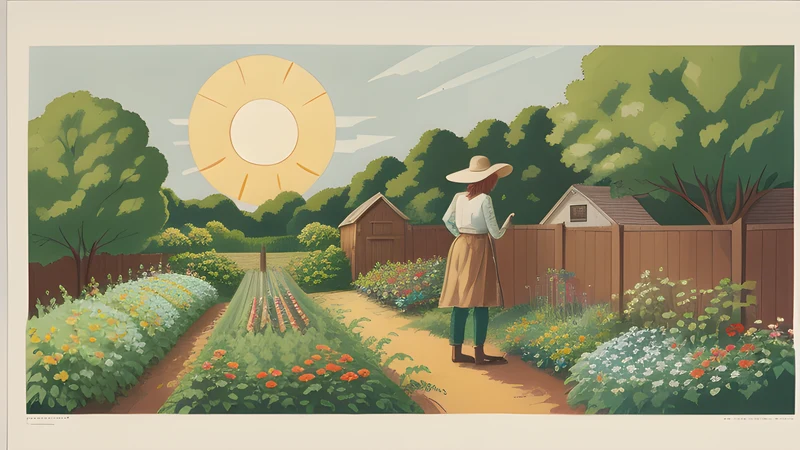
On the first Saturday of May, some thousands of people around the world put down their gardening gloves, take off everything else, and tend their vegetable beds without a stitch on. World Naked Gardening Day was launched in 2005 by a pair of American enthusiasts, Mark Storey and Jacob Gabriel, working through a body-acceptance group called the Body Freedom Collaborative, and it has grown from a fringe idea into one of the more cheerfully absurd fixtures of the spring calendar. The premise is disarmingly simple: gardening is one of the most wholesome and least sexualised of activities, so why not do it, for one day, in the most natural state possible, and reconnect with the soil without the barrier of clothes.
The origins of a gentle provocation
Mark Storey, a Seattle-based writer who served as an editor at the American naturist magazine Nude and Natural, framed the day from the outset as non-commercial and non-political, a piece of good-humoured advocacy rather than a protest or a marketing exercise. The choice of the first Saturday of May was practical: in the northern hemisphere, where the idea first took root, early May is the moment the soil warms, the growing season begins in earnest, and the weather turns just mild enough to make the enterprise plausible without frostbite. The founders encouraged people to garden nude wherever they reasonably could, whether in a private back garden, a naturist club, an allotment among sympathetic neighbours, or simply among their houseplants on a balcony.
The day spread through the naturist community first, then through the wider internet, which has always had an appetite for the fondly ridiculous. Its organisers keep it deliberately low-key, offering no central registration or official events, only an invitation. That looseness is part of its charm and its longevity, and it places the day in the company of other gently whimsical observances such as World Sauntering Day, which likewise asks people simply to slow down and enjoy being outdoors without hurry or purpose.
A longer history than it seems
Although the specific day dates only to 2005, the idea behind it draws on a movement more than a century old. Organised naturism emerged in Germany in the late nineteenth and early twentieth centuries under the name Freikörperkultur, the free body culture, usually abbreviated to FKK, which held that nakedness in nature was healthy, wholesome and socially levelling. The movement grew alongside a broader wave of back-to-nature thinking that swept through northern Europe, encompassing hiking, sunbathing and vegetarianism, and it spread to Britain, France, Scandinavia and North America over the following decades, establishing the network of naturist clubs and beaches that endures today.
Gardening in particular has long carried an association with a return to a simpler, more natural life, from the classical ideal of tending one’s own plot to the cottage-garden tradition and the twentieth-century enthusiasm for allotments and self-sufficiency. World Naked Gardening Day sits at the meeting point of these two currents, the naturist and the horticultural, taking the naturist’s conviction that the unclothed body is nothing to be ashamed of and applying it to the most innocent of outdoor pastimes. The result is a celebration with roots far deeper than its recent invention would suggest.
Why the day appeals
Part of the day’s staying power is that it is genuinely, if mildly, subversive without being confrontational. It gently pushes against the reflexive embarrassment many people feel about their own bodies, and it does so through an activity nobody could construe as provocative. Its supporters talk about the simple sensory pleasure of soil, grass and sun against bare skin, the small thrill of doing something a little transgressive in complete privacy, and the body-positive message that a body engaged in honest work is nothing to hide. There is also an environmental thread, a sense of stripping away the artificial layers between the gardener and the living world, which links the day loosely to the ethos of observances like International Day of Zero Waste.
The day makes no grand claims and demands no commitment beyond an afternoon. It asks only that participants take its central joke seriously enough to actually try it, and reports suggest that a surprising number of gardeners, once they have, find the experience oddly liberating.
The practicalities
For all its light-heartedness, naked gardening rewards a little forethought, and seasoned participants are quick to offer advice. Sunscreen becomes essential on skin unaccustomed to daylight, and a broad-brimmed hat is wise. The choice of task matters enormously: gentle work such as watering, sowing seeds, weeding a soft bed or harvesting is well suited to the unclothed gardener, whereas pruning a thorny rose, strimming nettles, handling stinging plants or splitting logs is emphatically not. Sturdy footwear is almost always kept on, since bare feet and garden tools make poor companions, and gloves may stay too. Privacy is the other consideration, and most participants confine themselves to enclosed gardens, high-fenced allotments or established naturist venues, out of courtesy to neighbours and the law.
How it is celebrated
Because the day has no central organisation, it is celebrated exactly as loosely as it was designed to be. Naturist clubs and communities often hold group gardening sessions, turning the day into a social occasion with a shared meal afterwards, while most participants simply mark it alone or with family in their own gardens. Social media fills with photographs, carefully cropped or shot from behind, of people tending tomatoes and pulling weeds, and gardening writers produce their annual crop of tongue-in-cheek advice columns. The mood throughout is playful and self-aware, much like that of World Laughter Day, which falls at almost the same point in early May and shares its spirit of not taking oneself too seriously.
Naturism around the world
The free-body movement that underpins the day took different forms in different countries, and the differences persist. In Germany, the writer Richard Ungewitter published influential tracts in the early 1900s promoting Nacktkultur, or nude culture, as a route to physical and moral health, and by the 1920s the country had a flourishing network of clubs. France developed a more resort-oriented naturism, epitomised by the vast purpose-built village of Cap d’Agde on the Mediterranean coast, which grew from the 1970s into one of the largest naturist destinations in the world. Britain, more reticent, organised itself around private clubs and quiet stretches of coast; the Central Council for British Naturism, now known simply as British Naturism, was founded in 1964 to represent them, and campaigners have periodically won recognition for designated clothing-optional beaches. Scandinavia folded nudity into the everyday culture of the sauna, where mixed or single-sex nakedness carries no charge at all. World Naked Gardening Day draws on all these traditions, translating a century of naturist practice into a single, accessible spring afternoon.
The wellbeing case for the garden
Stripped of its novelty, the day sits on a foundation of genuine research into why gardening does people good. Studies have repeatedly linked regular gardening to lower stress, improved mood and better physical health, and horticultural therapy is now an established practice in hospitals, care homes and prisons. Some of the benefit appears to come from the soil itself: researchers have investigated a common soil bacterium, Mycobacterium vaccae, for its apparent mood-lifting effect, offering a tidy scientific footnote to the gardener’s old intuition that digging in the dirt makes them feel better. Sunlight on the skin drives the body’s production of vitamin D, and time spent outdoors among growing things has measurable effects on blood pressure and attention. The naked variant simply removes one more barrier between the gardener and those benefits, and while its advocates make their claims with a wink, the underlying case for spending unhurried time growing things is entirely serious.
Fun facts
World Naked Gardening Day is now observed on every inhabited continent, though the fixed early-May date means it lands in autumn for participants in the southern hemisphere, who sometimes shift their celebrations to a warmer time of year. The German FKK movement that underpins the idea was strong enough that, by the early twentieth century, it supported its own magazines, resorts and organisations, and public nudity remains far more normalised in German and Scandinavian parks and saunas than in much of the English-speaking world. Naturist gardeners often report that the day’s biggest practical lesson is a new respect for the humble apron, rediscovered as the one garment worth keeping on. And the day has proved remarkably durable for something with no budget, no sponsor and no governing body, sustained entirely by word of mouth and the enduring human fondness for a harmless bit of mischief.
From fringe to fixture
What began as an in-joke among a handful of American naturists has, over nearly two decades, earned a peculiar respectability. Mainstream newspapers and gardening magazines now run their obligatory pieces each May, usually pairing the safety advice about roses and nettles with a photograph discreetly shot from behind, and garden centres have been known to acknowledge the date with a wink. The day owes its survival to that willingness to be laughed at, a quality it shares with the best of the calendar’s lighter observances, and to the fact that it costs nothing and commits no one to anything. It asks for a single afternoon and a private patch of ground, and in return it offers a small, harmless act of freedom. For a movement with more than a century of earnest history behind it, there may be no better ambassador than a day that manages to be both entirely sincere and entirely tongue-in-cheek.
A closing reflection
There is a quiet wisdom folded into the joke of World Naked Gardening Day. It takes two things people are often taught to feel awkward about, their bodies and the messy business of growing food, and insists that both are wholesome, ordinary and worth enjoying without shame. Whether or not one ever actually gardens in the nude, the day makes a modest, good-natured case for shedding a layer of self-consciousness and reconnecting with the soil that feeds us. On the first Saturday of May, it invites the world to loosen up, get its hands dirty, and remember that the garden, of all places, was never one to stand on ceremony.
Related Content