World Music Day
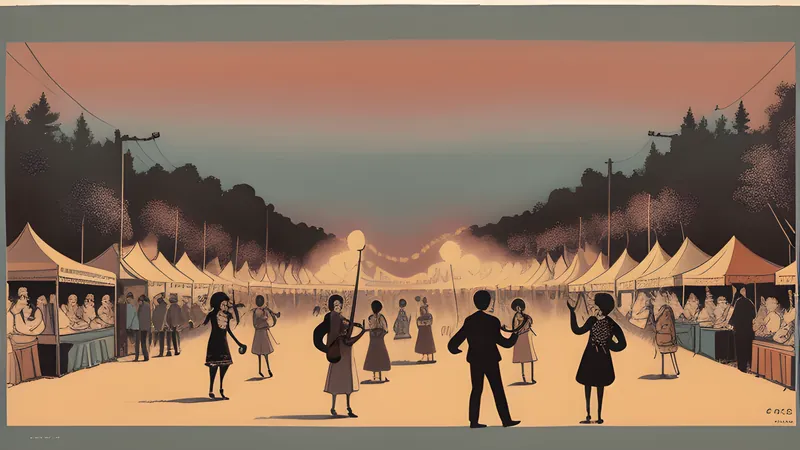
On the evening of 21 June 1982, the streets of Paris filled with an unplanned racket of guitars, brass, choirs and amateur bands that had been told, for the first time, that they could simply play in public wherever they liked. The event had been scheduled to wind down by half past nine; instead it ran deep into the short summer night, the organisers having badly underestimated what would happen when a whole country was invited to make noise at once. That first Fête de la Musique is the ancestor of what is now observed on 21 June in more than 120 countries as World Music Day. It rests on a deceptively radical idea: that on one day a year, music should be free to play and free to hear, with no hierarchy between the conservatoire violinist and the teenager with a borrowed amplifier.
Where the day comes from
The day was born inside the French Ministry of Culture, and its paper trail is unusually clear. In October 1981 the composer and music critic Maurice Fleuret was appointed Director of Music and Dance by Jack Lang, the energetic Minister of Culture under President François Mitterrand. Fleuret carried a slogan that became the festival’s design principle: la musique partout et le concert nulle part — “music everywhere and the concert nowhere”. A 1982 government survey on the cultural habits of the French had just turned up a startling figure: roughly five million people, and about one young person in two, played a musical instrument. Most of that music never left the bedroom or the garage. Lang, Fleuret and the cultural adviser Christian Dupavillon reasoned that an entire hidden country of musicians existed, and that a single open day might coax it into the street.
The choice of 21 June was deliberate rather than convenient. The northern summer solstice gives the longest day of the year and a festive midsummer mood, and Fleuret wanted the music to spill out of halls into the long evening light. The instruction to performers was almost provocatively simple: turn up, play, charge nothing.
History and spread
The first edition succeeded beyond anyone’s plan, and France made the festival an annual fixture. Its export began quickly. In 1985, designated the European Year of Music, the Fête de la Musique travelled beyond French borders for the first time, and Italy adopted it that same year. From there the spread was steady rather than sudden: city after city took the format and bent it to local taste, until by the early twenty-first century it had become one of the most widely observed musical celebrations anywhere, reaching upwards of 120 countries and several hundred cities, from Berlin and Beirut to Manila and Montreal.
What carried it was the absence of any fixed content. The festival exported a rule — play in public, for free, on the solstice — and left every nation to fill it with whatever music it already loved. A framework that imposes nothing but openness turns out to travel lightly, and the day’s growth owes as much to that restraint as to any official promotion. The same impulse to make culture freely available, rather than to gate it behind cost or credential, runs through observances such as World Read Aloud Day, where the act of sharing matters as much as the work itself.
Why it matters
The point of the day is to dissolve, for twenty-four hours, the barriers that ordinarily stand between a person and the making of music: the price of a ticket, the gatekeeping of a venue, the quiet assumption that performance belongs to professionals. A community choir, a busking cellist, a school steel band and a touring jazz trio can all find an audience on the same afternoon, and none of them sends round a hat. Music is treated for one day not as a product to be bought but as something closer to a shared inheritance, played and received without a transaction in between.
There is a second argument folded into the first. By throwing open the streets to every genre at once, the festival becomes a public demonstration of how much musical variety actually coexists in a single city — folk and classical, hip-hop and Gregorian chant, the diaspora rhythms of immigrant neighbourhoods alongside the local conservatoire. The accident of standing on one corner and hearing three traditions in an hour does something no concert programme can: it makes the breadth ordinary. That celebration of many tongues sounding together echoes the spirit of International Mother Language Day, which honours the diversity the festival makes audible.
How it is celebrated
The day is gloriously short on ceremony. Musicians set up on pavements, in parks, in courtyards, on the steps of town halls and outside cafés, mostly without staging or sound checks, and play to whoever drifts by. Larger cities layer organised programmes over the spontaneous ones, booking notable squares and landmarks, but the heart of the day remains improvised: the listener wanders, lingers at one performance, abandons it for another two streets away, and stumbles on sounds they would never have bought a ticket to hear. The line between performer and audience thins, because anyone with an instrument is, in principle, invited to cross it.
In France the day has kept its national scale, with tens of thousands of free concerts in a single evening and broadcasters carrying highlights into the night. Elsewhere the texture shifts with the place, but the format holds: free to play, free to hear, out in the open air while the solstice light lasts.
The practical workings repay a glance, because they reveal how the day balances chaos and order. Most countries register performers loosely, if at all: a band emails a town hall to claim a corner, or simply turns up. Municipalities tend to relax the usual rules on street performance and amplified sound for the day, suspending the permits and noise limits that would otherwise silence an unlicensed guitarist outside a café. That deliberate suspension of the ordinary rules is what makes the festival possible; for one evening, the street belongs to whoever wants to play in it. Volunteers and local cultural offices stitch the larger events together, but the engine of the day is the amateur who decides, that morning, to bring an instrument outside.
Variations across the world
Each country keeps the rule and changes the music. In some cities the day leans on classical and choral traditions; in others popular, folk or electronic music dominates, and local instruments, languages and dance step forward, so that the same global celebration sounds entirely unlike itself from one capital to the next. The English-speaking world often runs the day under the banner “Make Music Day”, a translation of the French homophone slogan, and a network of organisers coordinates simultaneous events across hundreds of cities. The adaptability is the whole secret of its survival: the festival hands over a date and a principle and surrenders all control over the content.
A word on a common confusion. The phrase “world music” in record-shop usage tends to mean musical traditions from outside the Western mainstream — a marketing category as much as a description. World Music Day means something different and broader: it embraces every genre without restriction, drawing no line at all between styles.
Traditions and symbols
The day has no flag, anthem or ritual object, and its real emblems are circumstantial: the open street, the unticketed performance, the long solstice evening that lets the playing run on past dusk. The French slogan Faites de la musique — “make music” — is itself a small piece of wit, a near-perfect homophone of Fête de la musique, “festival of music”, so that the name of the day quietly doubles as an instruction. That pun has become part of its identity, a reminder that the festival asks for participation rather than mere attendance.
Fun facts
- The festival’s name hides a pun: Fête de la musique (festival of music) sounds almost identical to Faites de la musique (make music), so the title is also a command to pick up an instrument.
- The very first edition in 1982 overran badly — it was meant to end at 9.30pm and instead carried on into the small hours, because no one had anticipated how many people would actually play.
- The driving idea came from a statistic: a 1982 survey found around five million French people, and roughly half of all young people, already played an instrument, almost all of them in private.
- The day first left France in 1985, the European Year of Music, with Italy among the earliest adopters, and from there reached more than 120 countries within two decades.
A closing reflection
There is a quiet subversion in a day built on giving music away. Recordings, tickets, royalties and streaming subscriptions have so thoroughly turned sound into something one buys that it takes an annual act of refusal to remember music ever worked another way — as a thing made on a doorstep for whoever was passing, costing nothing and owed to no one. For one long evening a year, a city sets aside its usual rhythms and lets strangers gather to listen together in the street. The arrangement is fragile, unprofitable and slightly chaotic, and that may be exactly why it has spread to a hundred and twenty countries: it gives people back, briefly, a way of sharing music that money had quietly taken away.
Related Content