World Migratory Fish Day
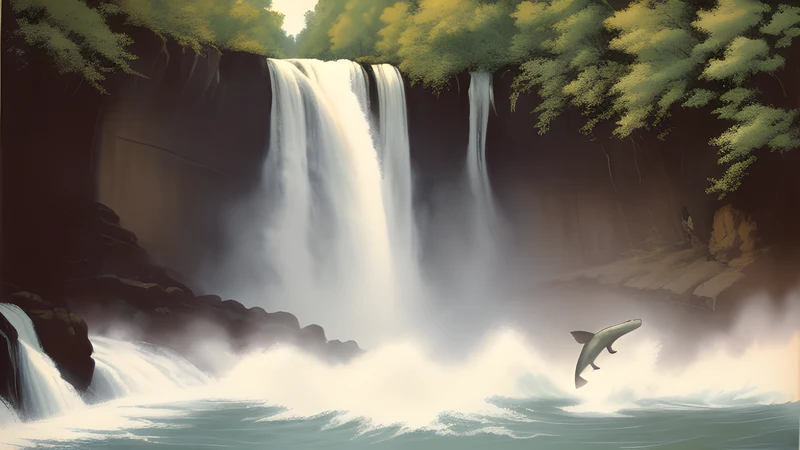
In 2014, a Dutch aquatic ecologist named Herman Wanningen persuaded conservation groups on six continents to hold events on a single Saturday in May, all pointing at the same overlooked fact: that a great many of the world’s fish are travellers, and that we have spent two centuries quietly walling off the roads they use. World Migratory Fish Day, held on a Saturday in late May and coordinated by the World Fish Migration Foundation, is the result. It falls on 23 May in 2026, and it asks a question most people never think about: how does a fish get home when there is a dam in the way?
What a migratory fish is
Migration in fish takes several forms, and the vocabulary is worth knowing because it explains the whole problem. Anadromous fish, such as salmon and sturgeon, are born in fresh water, grow up at sea, and return to the river of their birth to spawn. Catadromous fish do the reverse: the European eel hatches in the Sargasso Sea, drifts thousands of kilometres to the rivers of Europe, spends years or decades maturing in fresh water, and then swims all the way back to the Sargasso to breed and die. Potamodromous fish, meanwhile, migrate entirely within fresh water, moving up and down a river system to reach spawning grounds. In every case the journey is not optional. A fish that cannot reach its spawning ground simply does not reproduce, and a barrier across a river is, for that population, a slow sentence.
The distances involved can be extraordinary. Some salmon climb hundreds of kilometres inland and thousands of metres in elevation, navigating by scent back to the exact gravel bed where they hatched. Sturgeon, ancient armoured fish that predate the dinosaurs, may take twenty years to reach breeding age and then need long stretches of free-flowing river to spawn successfully. When those rivers are dammed, the fish arrive at a concrete wall and stop.
History
The scale of the loss became impossible to ignore in 2020, when the World Fish Migration Foundation and the Zoological Society of London published the first Living Planet Index dedicated to migratory freshwater fish. The headline figure was brutal: monitored populations had fallen by an average of seventy-six per cent between 1970 and 2016, a steeper collapse than that seen in freshwater fish generally, and far worse in some regions. Sturgeon emerged as the single most endangered group of animals on the planet, with most of their two dozen or so species facing extinction.
The cause is not mysterious. The twentieth century was the great age of dam building, and the world’s rivers are now interrupted by hundreds of thousands of barriers, from vast hydroelectric walls to small, forgotten weirs left over from long-dead mills. Each one, however modest, can be enough to stop a fish. A 2020 survey found well over a million barriers on Europe’s rivers alone, most of them too low to appear on any map. Add pollution, overfishing and the warming of rivers, and the migratory species that once ran up waterways in their millions have thinned to a fraction of their former numbers.
World Migratory Fish Day grew directly out of this awareness. The first coordinated global edition in 2014 drew hundreds of events; the campaign settled into a biennial rhythm, held every two years so that organisers can build larger, better-attended events, and adopted a rotating theme. The 2026 edition runs under the banner “We Are River People”, a deliberate attempt to link the health of a river’s fish to the human communities that have always lived alongside it.
Why it matters
Migratory fish are load-bearing pieces of their ecosystems. When salmon return from the sea to spawn and die in their millions, they carry marine nutrients deep inland, feeding bears, eagles, and even the forests themselves, whose trees grow measurably faster near salmon rivers. Eels, sturgeon and shad feed countless predators and once sustained major fisheries and whole coastal economies. Remove the fish and the effects ripple outward through the food web and through human livelihoods that have depended on the annual run for thousands of years.
There is also a simpler argument. A river that a fish can travel freely from source to sea is, almost by definition, a healthy river: connected, oxygenated, and unblocked. Restoring fish passage tends to restore much else besides.
How it is marked
The day is built around local action rather than a central ceremony. Communities organise river clean-ups, guided walks along restored waterways, releases of young fish, and educational events at dams fitted with viewing windows where the public can watch salmon or trout climbing a fish ladder. Scientists use the attention to explain fishways, dam removals and the engineering that lets fish get past human barriers. Schools run river-themed lessons, and conservation groups launch or publicise campaigns to remove obsolete weirs.
Because the day is coordinated globally but delivered locally, its character changes from place to place. The through-line is connection: the campaign’s long-running symbol is a chain of hands, and its message is that a river is a single living system from mountain to sea. That framing places it alongside other water-focused observances such as World Fish Migration Day’s marine cousins and days devoted to the coastal habitats fish depend on, like World Seagrass Day, all of which share the argument that water bodies cannot be protected in isolated fragments.
The great travellers
A handful of species carry most of the day’s story. The Atlantic salmon was once so abundant in British rivers that apprentices in some towns reputedly had clauses in their contracts limiting how often they could be fed it; today wild Atlantic salmon are a conservation concern across much of their range. The European eel, now critically endangered, has collapsed to a small fraction of its former numbers, its glass eels once arriving up estuaries in such density that they were scooped out by the bucket. The beluga sturgeon of the Caspian and Black Seas, source of the most prized caviar, has been driven to the edge by a combination of dams and poaching. And in Southeast Asia the giant Mekong catfish and the freshwater stingrays of that river system, some of the largest freshwater fish on earth, depend on a free-flowing Mekong that a wave of new hydropower dams now threatens. Each species tells the same story in a different accent: a long journey, a barrier, a decline.
Around the world
Some of the most striking results come from dam removal. In France, the demolition of the Vezins and La Roche-qui-Boit dams on the Sélune river, completed around 2022, reopened one of Europe’s largest river restorations to salmon and eels. In the United States, the removal of four dams on the Klamath River, finished in 2024, was the largest dam-removal project in history, restoring hundreds of kilometres of salmon habitat along the California–Oregon border. Elsewhere the work is gentler: volunteers notching out old mill weirs, engineers retrofitting fish passes onto working hydroelectric plants, and governments beginning, slowly, to treat river connectivity as infrastructure worth protecting.
River people
The 2026 theme, “We Are River People”, points at the human half of the story. For as long as there have been settlements on rivers, the annual runs of migratory fish have shaped human life: the timing of festivals, the design of traps and weirs, the calendars of coastal and inland communities alike. Indigenous nations of the Pacific Northwest built entire cultures around the salmon runs, and their fishing rights and ceremonies remain bound to the survival of the fish. In Europe, medieval towns fought over shad and salmon weirs, and the very word for many riverside settlements carries the memory of the fishery that founded them. When a migratory fish population disappears, a thread of human culture frays with it, which is why so many of the day’s events are led by the fishing families, anglers and river communities who feel the loss first, more than by any scientist.
Fun facts
The European eel’s life cycle was such a mystery that for centuries no one could find eel eggs or young, and Aristotle concluded eels arose spontaneously from mud; the Sargasso Sea spawning ground was only pinned down in the twentieth century, and eel breeding has still never been directly observed in the wild. Some sturgeon live longer than a hundred years and can weigh as much as a small car. A returning salmon can identify its home stream by smell alone, detecting the unique chemical signature of the water it hatched in years earlier. And the sea lamprey, one of the oldest migratory fish of all, has a jawless sucker mouth ringed with teeth and has been swimming up rivers to spawn for well over three hundred million years, since long before there were trees on the banks.
A closing reflection
There is something quietly humbling about a fish that will cross an ocean to return to a particular bend of a particular river. It navigates by senses we barely understand, driven by an instinct older than almost anything else alive, and it asks of us only that we leave the path open. For most of the last two centuries we did not, walling off the rivers a barrier at a time without ever meaning to. World Migratory Fish Day is the growing recognition that many of those walls can come down again, and that when they do, the travellers come back.
Related Content