World Marmalade Day
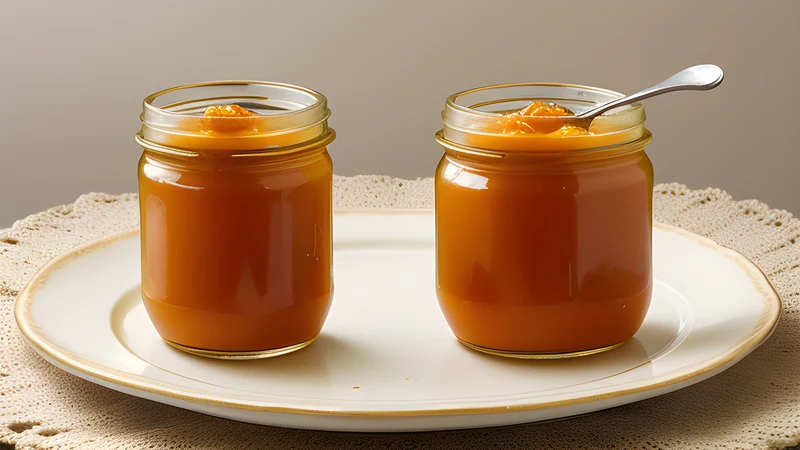
Every 2 March, jars of amber, bitter-sweet preserve get a day of their own. World Marmalade Day, also observed in Britain as National Marmalade Day, sits deliberately in early spring because that is when the short Seville orange season ends and kitchens across Britain finish the year’s marmalade-making. The date honours a preserve that Portugal invented, Scotland reinvented, and a small bear from Peru turned into a cultural emblem.
A word that began with quince
The name comes from the Portuguese marmelada, and marmelo means quince. The earliest marmalade was a solid, sliceable paste of quince boiled with sugar, dense enough to cut with a knife, and it arrived in England as a luxury import in the late fifteenth and sixteenth centuries. Henry VIII was sent a box of it in 1524. This original marmalade was made from quinces, with oranges nowhere in the recipe, and its descendant survives today as Spanish dulce de membrillo, the firm paste eaten with Manchego cheese.
A persistent legend claims the word comes from Marie malade, “Mary ill”, supposedly because marmalade was made to settle the stomach of Mary, Queen of Scots, during a bout of seasickness. It is a charming story and entirely false; the Portuguese word predates Mary by decades and the etymology is settled. Folk etymology has a way of clinging to breakfast tables, and this one has proved unusually sticky.
The Scottish reinvention
The marmalade the English-speaking world now recognises, translucent jelly holding shreds of bitter citrus peel, is a Scottish achievement of the late eighteenth century. The traditional origin story places it in Dundee around 1797, where the grocer James Keiller and his mother Janet are said to have bought a cheap consignment of bitter Seville oranges from a storm-driven Spanish ship in the harbour and, faced with fruit too sour to sell, boiled it with sugar into a chunky preserve. The ship in the harbour is probably legend, and marmalade recipes using citrus existed before the Keillers, but James Keiller & Son, founded in 1797, did build the first commercial marmalade factory and turned Dundee marmalade into a brand recognised across the Empire.
What made the Scottish style distinct was the suspended peel. Rather than a smooth paste, it left the shredded rind visible in a clear set, giving the texture and the faint bitterness that marmalade lovers prize and everyone else finds baffling. In 1874 Frank Cooper of Oxford began selling his coarse-cut “Oxford” marmalade, a darker, chunkier style that travelled remarkably well: jars of Frank Cooper’s marmalade were carried on Captain Scott’s ill-fated Antarctic expedition and were later taken high on Everest, giving the preserve a genuine claim to have reached both the bottom and the top of the world.
Why bitter oranges matter
Real marmalade depends on the Seville orange, Citrus aurantium, a fruit too sour and pippy to eat raw but rich in the natural pectin that makes marmalade set without additives. The season is brief, roughly January to February, which is why marmalade-making is a fixed point in the British winter calendar and why the finished jars are celebrated in early March once the work is done. Under UK and EU labelling law the word “marmalade” is legally reserved for citrus preserves; a spread made from any other fruit must be called jam or a conserve, one of the few cases where a breakfast word is protected by statute.
How the day is marked
World Marmalade Day belongs to a wider marmalade revival centred on the Dalemain Marmalade Awards and Festival in Cumbria, founded in 2005 by Jane Hasell-McCosh at her family home near Penrith. What began as a small competition now receives thousands of entries from dozens of countries each year, judged in a stone hall by panels who taste hundreds of jars, and it has done more than anything else to make marmalade-making fashionable again with a younger generation. The proceeds support hospice care, giving the festival a charitable heart.
On the day itself, home cooks post their year’s batch, cafés put marmalade on the menu, and preserving societies run workshops on the fine art of the set and the shred. It sits comfortably alongside other British breakfast observances such as National Toast Day and World Porridge Day, and near food days further afield like World Baklava Day, each a small argument for the pleasures of a well-made preserve.
Traditions and symbols
Marmalade carries an outsized cultural weight for a jar of boiled fruit. It is the archetypal breakfast preserve of the British imagination, the thing spread thickly on toast in countless novels, and it belongs to a specifically English idea of the morning. James Boswell recorded Samuel Johnson’s fondness for it; the Victorians treated Dundee and Oxford marmalade as markers of a proper table.
Then there is Paddington. Michael Bond’s bear, introduced in 1958 and famously found at Paddington Station with a label reading “Please look after this bear”, keeps a marmalade sandwich under his hat for emergencies. The 2014 and 2017 films renewed the association for a new generation, and in 2022, for the Platinum Jubilee, Queen Elizabeth II appeared in a sketch producing her own marmalade sandwich from her handbag, a small moment that briefly made the humble preserve the most talked-about food in Britain.
Surprising facts
Marmalade has certainly travelled to the poles, whatever its more fanciful claims to space: Frank Cooper’s jars survived on Scott’s Antarctic base, and an intact tin was recovered decades later. The bitter Seville orange that marmalade depends on is barely eaten in any other form, making it almost a single-purpose crop grown chiefly for preserving. Nineteenth-century marketing invented the idea of marmalade as a breakfast rather than a dessert food; before the Keillers, sweet fruit pastes were eaten after dinner as a digestive. And the Dalemain festival keeps a “marmalade passport” tradition, with global entries arriving from Japan to Australia, proving that a preserve invented for a cold northern winter has found devotees in climates that never see a frost.
Perhaps the oddest fact is legal: because “marmalade” means citrus by law in Britain, a jar of what most of the world would happily call “lemon marmalade” is correct, while “strawberry marmalade” is not, and cannot be sold under that name.
Marmalade beyond Britain
For a preserve so bound up with English breakfasts, marmalade has travelled widely and mutated as it went. Spain and Portugal, its ancestral homes, kept the older sense of the word alive: in Spanish and Portuguese, mermelada and marmelada still refer to almost any fruit preserve, so a Spaniard may spread peach “marmalade” without a second thought, to the quiet horror of a British purist. In the United States the word softened in the same direction, and American jams and marmalades blur together on the shelf.
The most surprising modern chapter belongs to Japan, where marmalade-making has become a serious craft hobby and where entries to the Dalemain awards have arrived in growing numbers using local citrus the British competition had never tasted. Japanese preservers work with yuzu, natsumikan, dekopon and other fruits that give a marmalade a floral, resinous edge quite different from Seville bitterness, and several have won top honours in Cumbria against thousands of British jars. That reversal, a Portuguese word and a Scottish technique perfected with Japanese fruit and judged in an English country house, is the whole strange history of marmalade in a single image.
Elsewhere the preserve tracks the old trade routes of the British Empire. Australia and New Zealand keep a strong marmalade tradition, South Africa makes it from local naartjies, and the bitter-orange groves of the Mediterranean and North Africa still supply the fruit that the northern kitchens cannot grow for themselves. A jar of marmalade, read closely, is a small map of colonial commerce and citrus botany.
The craft of the set
Making marmalade well is genuinely difficult, which is part of why it inspires competitions rather than mere recipes. The maker has to extract enough natural pectin from the pips and pith, usually by tying them in muslin and boiling them with the fruit, then hit the setting point at around 104.5 degrees Celsius without stewing the peel to mush or letting the shreds float to the top of the jar. Too little boiling and the marmalade runs; too much and it turns to a dark, over-caramelised toffee. Judges at Dalemain mark on the clarity of the jelly, the evenness of the shred, the balance of bitterness and sweetness, and whether the peel is tender. It is a preserve that punishes carelessness and rewards obsession, which may explain the particular devotion of the people who make it.
A closing reflection
Marmalade is an acquired taste that rewards the acquiring. Its faint bitterness is the whole point, a corrective to the relentless sweetness of most breakfast spreads, and making it well demands patience with a fruit that gives up its setting properties grudgingly. World Marmalade Day honours that patience as much as the result. There is something quietly hopeful in a preserve made at the darkest, coldest end of winter from a fruit at its brief best, sealed in jars, and opened slowly through the brighter months that follow. A small bear from deepest Peru understood the appeal perfectly: keep a little of it close, and the day is unlikely to go too badly wrong.
Related Content