World Lion Day
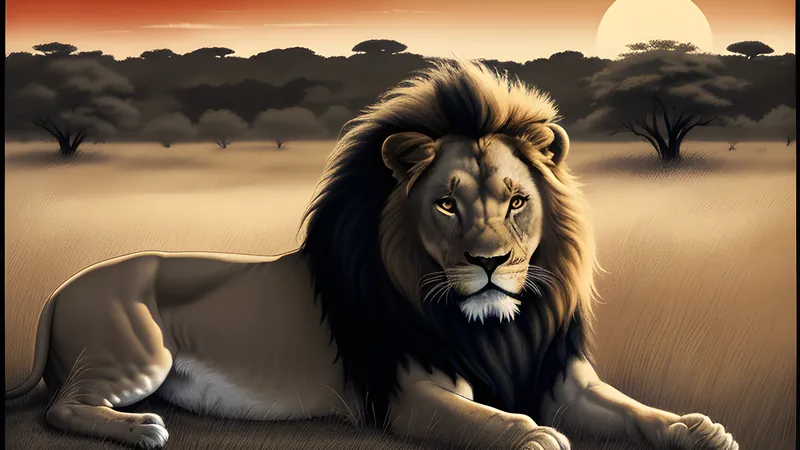
In 2013 two people who had spent decades pointing cameras at big cats decided the animal they loved best needed a day of its own. Dereck and Beverly Joubert, the Botswana-based filmmakers and National Geographic explorers-in-residence, co-founded World Lion Day and fixed it to 10 August. Their timing carried an argument. By the time the day was launched the number of wild lions in Africa had fallen to somewhere around twenty thousand, down from perhaps two hundred thousand a century earlier, and the species had already vanished from the great majority of its historic range. World Lion Day was conceived to make that quiet, gradual disappearance loud enough to register.
Origins
The Jouberts brought a rare combination to the cause. As documentary makers behind films such as Eye of the Leopard and The Last Lions, they had watched lion prides live and die at close range, and they founded the Big Cats Initiative with National Geographic in 2009 to fund conservation on the ground. World Lion Day grew out of that work, launched in 2013 in partnership with the organisation Big Cat Rescue in Florida. The aim was straightforward: a single fixed date, 10 August each year, on which zoos, sanctuaries, scientists and ordinary admirers of the animal could speak with one voice about its plight and its worth.
The day covers the lion in all its forms. The great majority of wild lions are African, spread across a patchwork of protected areas south of the Sahara, but a second population survives in Asia. The Asiatic lion, once found from the Mediterranean to India, now clings on in a single place, the Gir Forest of Gujarat, and World Lion Day was framed to hold both stories together.
History
The lion has loomed over human culture for as long as we have made images. The oldest known figurative sculpture, the Löwenmensch or Lion-Man of Hohlenstein-Stadel, carved from mammoth ivory in what is now Germany, is roughly forty thousand years old and depicts a figure with a lion’s head. Lions guarded the gates of ancient cities, adorned the thrones of pharaohs and kings, and gave heraldry one of its most enduring emblems. The animal ranged across Africa, the Middle East, south-eastern Europe and into India, and the phrase “throwing to the lions” entered European memory through the arenas of Rome.
That vast range shrank with terrible speed. Lions disappeared from Europe in antiquity and from most of the Middle East and North Africa over the following centuries. The Barbary lion of the Atlas Mountains, a large mane-heavy form long kept by North African rulers, was hunted out of the wild by the middle of the twentieth century, the last confirmed wild individuals shot in the 1940s. The Cape lion of southern Africa was gone by the 1860s. The Asiatic population came closest of all to oblivion: by the late nineteenth century hunting had reduced it to perhaps a couple of dozen animals in the Gir Forest, saved largely because the Nawab of Junagadh granted them protection. From that remnant the Gir population has recovered to several hundred, a genuine rescue from the brink, though its confinement to one forest leaves it exposed to a single disease outbreak or fire.
The African decline has been steadier and, in its own way, more alarming because it continues. Studies through the 2000s and 2010s estimated that lion numbers had roughly halved over about two decades in many regions, with populations in West and Central Africa faring worst. The species was assessed as Vulnerable on the IUCN Red List, and the West African lion in particular was recognised as critically endangered, reduced to a few hundred animals in scattered reserves.
Why It Matters
The pressures on lions are less spectacular than the ivory poaching that afflicts elephants, which is part of why the loss went unremarked for so long. Habitat is fragmented and shrinking as human populations and farmland expand. Prey animals are hunted out by the bushmeat trade, leaving lions without food. Where lion territory meets livestock, farmers retaliate against attacks on cattle, sometimes with poison that kills whole prides along with the scavengers that feed on the carcasses. Trophy hunting and a growing trade in lion bones, used as a substitute for tiger parts in some Asian markets, add further strain.
The lion also carries ecological weight as an apex predator, regulating the numbers of grazing animals and shaping the behaviour of entire ecosystems, much as rhinos do through their grazing, a role touched on in World Rhino Day. Remove the top predator and the effects cascade downward in ways that ripple through vegetation and smaller species alike. There is a human dimension too: lions anchor the wildlife tourism that funds conservation and supports communities across eastern and southern Africa, so their fate is bound up with livelihoods as well as landscapes.
Conservation has, however, produced some remarkable local successes to set against the losses. In India, the Asiatic lions of Gir have climbed from that late-nineteenth-century remnant of a couple of dozen animals to more than six hundred by the 2020s, so numerous that they have begun spilling out of the protected forest into surrounding farmland, creating fresh challenges of coexistence. In parts of southern Africa, fenced reserves and careful management have allowed lion numbers to hold or grow even as the continental total falls, and cross-border conservation areas linking reserves in several countries aim to give prides the room that a shrinking, fragmented landscape otherwise denies them. These pockets of recovery show that the downward trend, though real, is a consequence of specific pressures rather than an inevitability.
How It Is Celebrated
Zoos and wildlife parks form the backbone of the day’s public face, staging keeper talks, feeding demonstrations and fundraising drives on and around 10 August. Conservation charities release fresh survey figures and launch appeals, and schools build lessons around the animal. Online, the day generates a flood of imagery and shared hashtags, with organisations urging supporters to learn the difference between the lion’s real situation and its cartoonish reputation as an untroubled king. Money raised supports anti-poaching patrols, programmes that help farmers protect livestock without killing predators, and research that tracks prides across their shrinking ranges.
World Variations and Cultural Context
The lion’s symbolic pull gives the day an unusually broad cultural reach. Singapore’s very name derives from the Malay for lion city, and its Merlion is a national emblem. The lion dance is central to Lunar New Year celebrations across the Chinese diaspora, a connection explored in Lunar New Year, even though wild lions never lived in China; the beast entered Chinese art through trade and Buddhism from the west. In India the Asiatic lion appears on the national emblem, adapted from the Lion Capital of Ashoka carved in the third century BC. This tension, between a creature revered almost everywhere and protected almost nowhere it once lived, gives World Lion Day much of its point.
Fun Facts
A lion’s roar can be heard up to eight kilometres away, produced by specially shaped vocal folds and used to advertise territory and locate other members of the pride.
Lions are the only truly social cats, living in prides of related females with their cubs and a small coalition of males; every other big cat lives largely alone.
A male’s mane darkens and thickens with age and testosterone, and research in the Serengeti found that lionesses prefer darker-maned males while rival males are more wary of them.
Most of the hunting is done by the lionesses, working in coordinated groups, while males more often defend territory and cubs.
White lions are not albinos; they carry a rare recessive gene that pales their coat; they occur naturally in the Timbavati region of South Africa and feature in local Tsonga folklore.
Lions sleep for as much as twenty hours a day, conserving energy for the short, explosive bursts of speed a hunt demands; a charging lion can reach around fifty kilometres an hour but only over a very short distance.
Cubs are born with rosette markings that usually fade as they grow, a faint echo of a spotted ancestor shared with leopards and jaguars.
Lions were once the most widespread large land mammal after humans, ranging across three continents; they now occupy only a small fraction of that former territory, concentrated almost entirely in sub-Saharan Africa.
A Closing Reflection
There is an irony in devoting a day to the lion, an animal so thoroughly woven into human symbolism that most people carry a vivid mental image of it without ever having seen one in the wild, or knowing that so few remain. The lion decorates flags, sports crests and children’s stories, ruling an imaginary kingdom while its real one contracts year by year. The Jouberts understood that the danger lay precisely in that familiarity, in the assumption that so iconic a creature must surely be safe. World Lion Day works against that comfortable assumption, asking us to see past the emblem to the animal, and to notice that the king of beasts now depends, rather completely, on the goodwill of its subjects.
Related Content