World Laughter Day
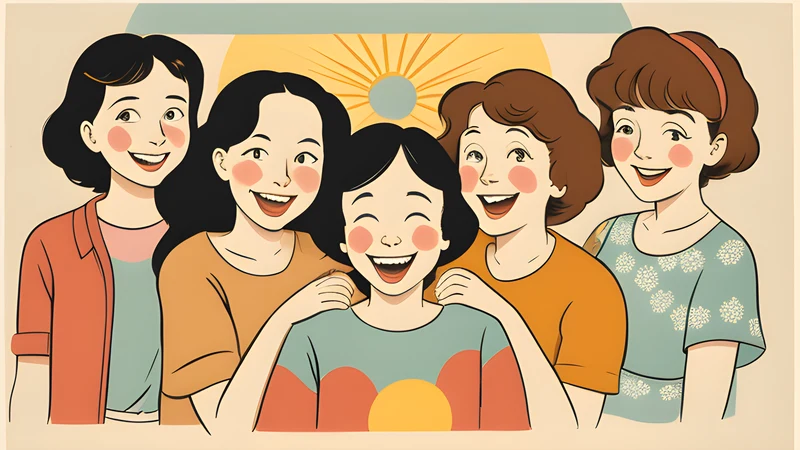
In March 1995, a physician in Mumbai stood in a public park with four strangers who had agreed to meet him at dawn, and together they told each other jokes and laughed. The doctor was Madan Kataria, and the gathering was the first laughter club, the seed of a movement that would spread to more than a hundred countries and eventually acquire its own global observance. World Laughter Day, held on the first Sunday of May, is the annual expression of Kataria’s conviction that laughter is a form of medicine, a bridge between strangers, and a small, practical instrument of peace. It is celebrated by people gathering in parks and squares to do the strangest of things on purpose: to laugh together, deliberately, for no reason at all.
The doctor who prescribed laughter
Madan Kataria was a family doctor writing an article for a health magazine, provisionally titled “Laughter is the Best Medicine”, when the research he gathered convinced him the cliché was literally true. Rather than simply publish, he decided to test it, and one morning in a park in the Mumbai suburb of Lokhandwala he persuaded a handful of people to join him in a laughter session built around jokes. The group grew quickly, but within a fortnight it hit a problem: the supply of clean, inoffensive jokes ran out, and some of the humour began to turn sour and mocking. Kataria needed a way for people to laugh that did not depend on comedy at all.
The solution came from an idea drawn from both physiology and yoga: that the body cannot easily tell the difference between laughter that is genuine and laughter that is simulated, and that the physical act of laughing produces its benefits either way. Kataria devised exercises in which participants laugh on cue, as a deliberate bodily practice, and found that forced laughter, especially in a group and with eye contact, reliably tips over into the real thing. His wife, Madhuri Kataria, a yoga teacher, added the element that gave the practice its name, blending the laughter exercises with the deep, rhythmic breathing of yogic pranayama. The result was Hasyayoga, or Laughter Yoga.
History of the day
From that first club of five, Laughter Yoga spread across India with remarkable speed, and then outward across the world as Kataria travelled and trained leaders. To give the growing movement a shared focus, he declared the first World Laughter Day, and it was celebrated on 10 January 1998 in Mumbai, where a reported twelve thousand people gathered to laugh together in a mass event. The observance was later moved to the first Sunday of May and made an annual fixture, chosen to fall on a weekend when the largest possible crowds could assemble in public spaces. Kataria framed the day around a goal far larger than personal wellbeing: a vision of global peace and brotherhood achieved, in part, through the simple shared human experience of laughter, which asks for no common language and respects no border.
The day quickly outgrew its origins in the Laughter Yoga clubs. It was taken up by hospitals, workplaces, schools and community groups drawn to its message of connection and health, and it now sits comfortably among the calendar’s other celebrations of kindness and human warmth, such as World Compliment Day and World Gratitude Day. All of them share a conviction that the small, positive gestures between people are worth deliberately cultivating.
The science of a good laugh
Kataria’s instinct that laughter is good for the body rests on a real, if sometimes overstated, body of research. The study of laughter even has its own name, gelotology, a field advanced from the 1960s by the Stanford psychiatrist William Fry, who investigated the physiological effects of mirth. Laughter has been shown to reduce levels of stress hormones such as cortisol, to trigger the release of endorphins, the body’s own feel-good chemicals, and to produce short-term improvements in mood and a sense of relaxation. It gives the diaphragm and the muscles of the chest and abdomen a genuine workout, and it briefly raises and then lowers the heart rate and blood pressure in a way some researchers compare to light exercise.
Perhaps most importantly, laughter is intensely social. The psychologist Robert Provine, who studied laughter in its natural settings, found that people are far more likely to laugh in company than alone, and that most everyday laughter follows ordinary conversation rather than jokes, functioning as a kind of social glue that signals goodwill and belonging. An earlier and influential champion of laughter’s healing power was the American writer Norman Cousins, whose 1979 book Anatomy of an Illness described how he used doses of comedy films to manage the pain of a serious illness, a personal account that helped push the idea of therapeutic laughter into the mainstream. The scientific picture is more modest than the boldest claims suggest, but the core finding, that laughter reduces stress and strengthens social bonds, is solid.
How it is celebrated
On the first Sunday of May, Laughter Yoga clubs and community groups gather in parks, plazas and public halls to laugh together, often forming large circles and moving through a sequence of laughter exercises led by a trained instructor. Participants might mime greeting each other with laughter, laugh while pretending to sip an imaginary drink, or simply make eye contact and let the contagion do its work. Flash-mob-style laughter events have become a popular way to mark the day in city centres, and hospitals, care homes and workplaces run their own sessions, valuing the way shared laughter lifts a room. The gatherings are open, free and non-religious, and part of their appeal is the sheer unselfconscious silliness of a crowd of adults laughing at nothing in the middle of a Sunday morning.
Laughter across cultures
Laughter is a human universal, one of a small set of expressions understood across every culture without translation, and traditions of laughter as celebration and even ritual run deep. Some cultures have long observed forms of holy laughter or festivals of foolery, from the medieval Feast of Fools to the Easter tradition in parts of Germany and central Europe once known as Risus Paschalis, the Easter laughter, in which priests would tell jokes from the pulpit to make their congregations laugh in celebration of the resurrection. India, where World Laughter Day began, has its own long tradition of humour woven through religious and folk life. This universality is exactly what Kataria hoped to harness, a common human capacity that could bring people together where words and beliefs divided them, a spirit it shares with the greeting-based warmth of World Hello Day.
A movement of clubs
What makes the Laughter Yoga story unusual is that it grew as a genuine grassroots network rather than a commercial enterprise. Kataria kept the practice free and non-commercial from the very outset, training thousands of volunteer leaders who went on to start their own clubs, and by the 2000s there were thousands of laughter clubs operating in scores of countries, from India and the United States to Iran, Germany, Australia and beyond. The clubs meet regularly, often early in the morning in public parks, and their members tend to speak of the sessions less as therapy than as a social ritual that leaves them lighter for the day ahead. The movement developed its own training structure, with certified leaders and teachers, and Kataria became a familiar figure at conferences and on television, the mustachioed doctor who had turned a magazine article into a global habit. World Laughter Day is the moment when this dispersed network becomes visible all at once, thousands of separate circles laughing on the same Sunday.
Why the day matters
Beyond its cheerful surface, the day carries a serious argument about wellbeing in stressful times. Laughter Yoga has found a particular foothold in settings where morale and mental health are under strain: care homes for the elderly, where it lifts isolated residents; hospitals and cancer support groups, where it offers relief without denying the seriousness of illness; and high-pressure workplaces, where employers have used it to reduce burnout and build teams. Practitioners are careful, at their best, not to oversell it as a cure, presenting it instead as a low-cost, accessible practice that helps people manage stress and feel less alone. That emphasis on connection and resilience places World Laughter Day in the same broad conversation as other observances devoted to mental and emotional health, and it explains why an idea born in a Mumbai park has been embraced by hospitals and offices far from its origins.
Fun facts
Human beings begin to laugh as babies, at around three to four months old, long before they can speak or understand a single joke, which suggests laughter is a form of communication older and more fundamental than language. Scientists distinguish between the genuine, involuntary laughter of real amusement, known as Duchenne laughter after the physiologist who studied facial expressions, and the more controlled social laughter people produce deliberately, and the two even sound subtly different. Laughter is also demonstrably contagious, which is why television comedies once relied on laugh tracks, and why a single giggler in a quiet room can set off everyone around them. And laughter is not unique to humans: researchers have recorded laughter-like vocalisations in chimpanzees, gorillas and even rats, which chirp at ultrasonic frequencies when tickled.
A closing reflection
There is a lovely audacity in the idea that the world’s troubles might be eased, even a little, by strangers meeting in a park to laugh on purpose. Madan Kataria never claimed laughter could solve anything on its own, only that it could soften people toward one another, lower the temperature of a stressed and divided world, and remind everyone of a shared humanity that runs deeper than argument. World Laughter Day, on the first Sunday of May, is an invitation to take that idea seriously enough to try it, to stand in a circle and laugh until the pretence becomes real, and to notice how quickly the barrier between strangers falls away when they are laughing together.
Related Content