World Jigsaw Puzzle Day
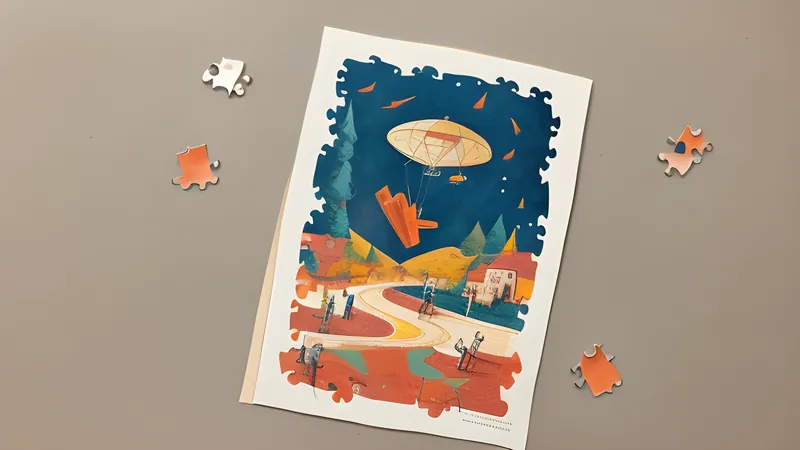
In 1766, a London engraver and mapmaker named John Spilsbury glued a printed map of the world onto a thin sheet of hardwood, took a fine marquetry saw, and cut carefully along the borders of the countries, separating England from Wales, France from Spain, one nation from the next. He called the result a “dissected map” and sold it as a geography teaching aid for the children of wealthy families, apprenticed as he was to Thomas Jefferys, the Royal Geographer to King George III. Spilsbury had, without especially meaning to, invented the jigsaw puzzle. World Jigsaw Puzzle Day, observed every 29 January, belongs specifically to the format he started: the particular pleasure of a picture that has been cut apart and handed back to you in pieces.
Where the day comes from
The day traces to Jodi Jill, an American journalist, syndicated newspaper puzzle-maker and professional quiz writer, who established a puzzle-focused observance on 29 January — variously dated to 1994 or 2002 depending on the source — as a way to draw attention to the mental exercise puzzles provide and to share her own career-long enthusiasm for them. Jill built classroom lesson plans around the date, encouraging teachers to use puzzles as an entry point into reasoning, vocabulary and patience, and the broader 29 January observance grew from there into the general “National Puzzle Day” now recognised across crosswords, sudoku and word searches as well as jigsaws. World Jigsaw Puzzle Day sits on the same calendar date but narrows the lens to a single format — cut, interlocking pieces reassembled into a picture — that predates every other puzzle type the day now shares its birthday with by more than a century.
From dissected maps to an interlocking industry
Spilsbury’s original puzzles were not interlocking at all. His dissected maps, and the wooden puzzles that copied his method for the following century and a half, were cut in simple, non-repeating shapes that held together only by the picture’s own logic and the flat surface beneath them, meaning a puzzle could be jostled apart by an careless elbow. The innovation that gave the format its modern grip — pieces cut with interlocking tabs and blanks that lock into their neighbours — did not become common until early in the twentieth century, arriving alongside a wave of figural pieces cut into recognisable shapes such as animals or letters, which began appearing around 1909 and turned puzzle-solving from pure picture-matching into a hunt for individually satisfying pieces.
The company most responsible for popularising interlocking jigsaws in America was Parker Brothers, whose “Pastime Puzzles” line, produced from 1908 to 1958, cut its wooden pieces along the picture’s own colour lines rather than in a mechanical grid, mixing straightforward representational shapes with abstract geometric ones so that no two puzzles ever felt quite the same to solve. Pastime Puzzles sold so well in their first year that Parker Brothers converted its entire factory to puzzle production in 1909, abandoning games altogether for a period to keep up with demand — a reversal remarkable for a company whose name is now most associated with board games like Monopoly.
The Great Depression’s unlikely boom industry
Jigsaw puzzles found their largest audience during hardship. As the Great Depression deepened after the 1929 stock market crash, puzzles became one of the cheapest, most durable and most shareable forms of entertainment available to families with little spare income: a single puzzle could be borrowed, swapped, rented from a lending library, and reassembled dozens of times by different households before it wore out. Demand peaked in early 1933, when American puzzle sales reached an estimated ten million units a week, a figure that dwarfed anything the format had produced before or has matched consistently since. Parker Brothers’ own Pastime department mirrored the boom directly: its staff of puzzle cutters grew from around two dozen workers in 1927 to more than one hundred by the early 1930s, hand-sawing wooden puzzles fast enough to meet a national appetite that no other toy or game category could satisfy at Depression-era prices.
The cardboard takeover
Wood dominated jigsaw manufacturing for well over a century, but it was always a slow, expensive process — each piece hand-sawn along its own unique cut line by a skilled worker — and profit margins on wooden puzzles stayed high enough that manufacturers had little incentive to switch materials even after cardboard alternatives appeared in the late 1880s. What changed the industry was die-cutting: by the 1930s, steel-rule cutting dies powerful enough to stamp out thousands of identical puzzles in a single run let manufacturers produce cardboard jigsaws at a fraction of the cost of a hand-cut wooden equivalent, with retail prices falling as low as ten cents apiece during the format’s Depression-era boom. Wooden puzzles never fully disappeared — they remain a durable niche product to this day — but rising post-war labour costs, combined with steadily improving lithography and cutting technology, pushed cardboard from a downmarket alternative to the industry’s default within a generation. Germany’s Ravensburger, now one of the format’s best-known names and the sponsor of the modern World Jigsaw Puzzle Championship, illustrates how completely the category’s centre of gravity shifted: founded in 1883 by the publisher Otto Robert Maier, the company spent its first eight decades in books and other games before entering the jigsaw puzzle business only in 1964, by which point cardboard had already made the format cheap enough for a mainstream publisher to enter at scale.
How it’s celebrated today
Puzzle retailers, libraries and hobbyist forums use the date to promote group solving events, timed challenges and swaps, treating the day as an invitation to clear a table and commit an afternoon to a single image. The format has also gone fully competitive: the World Jigsaw Puzzle Championship, held annually in Valladolid, Spain since its founding in 2019 and run in partnership with the German puzzle manufacturer Ravensburger, draws thousands of competitors from dozens of countries to solve identical puzzles against the clock, individually and in teams, in what organisers and participants alike describe as the format’s unofficial Olympics. The 2022 edition alone brought together 2,293 puzzlers from 44 countries at Valladolid’s Cúpula del Milenio, setting a Guinness World Record for the largest jigsaw puzzle competition ever staged, and a team of finalists at the 2023 championship completed a 2,000-piece panorama puzzle together in one hour, twenty-four minutes and four seconds, a mark still recognised as the fastest team time on record.
Fun facts
John Spilsbury died in 1769, only three years after inventing the format, at the age of thirty, and never lived to see dissected maps become anything more than a modest schoolroom product for wealthy families. The name “jigsaw puzzle” is itself a slight misnomer: Spilsbury’s originals were cut with a fine marquetry saw, since the powered jigsaw — a treadle-driven reciprocating saw invented in 1855 — did not exist yet; the “dissected maps” only picked up the jigsaw name around 1880, once fretsaws became the era’s cutting tool of choice, with the compound term “jigsaw puzzle” first recorded in 1906, roughly a century and a half after the format itself was invented. Interlocking pieces — the feature that defines a “jigsaw puzzle” in most people’s minds today — did not exist for roughly the format’s first century and a half; Spilsbury’s originals, and most puzzles made before the early 1900s, simply sat loose on their backing board. American puzzle sales hit an estimated ten million a week at the height of the Great Depression, a level of demand that turned puzzle-cutting from a craft trade into an industrial-scale operation almost overnight. And the current Guinness World Record for the largest commercially available jigsaw puzzle is deliberately restricted to just six colours plus black and white, a constraint added specifically so that the enormous image remains solvable by an ordinary household within about a year, rather than becoming a mathematically impossible wall of near-identical fragments.
A closing reflection
Spilsbury built his dissected maps to teach geography, and it is easy to forget, two and a half centuries and roughly ten million Depression-era units a week later, that the format’s entire appeal still rests on that original, almost childish premise: something whole gets taken apart on purpose, and the pleasure lies entirely in putting it back together with your own hands, at your own pace, with no reward at the end beyond the completed picture itself. Competitive solvers racing the clock in Valladolid and a family working the edges of a puzzle on a rainy Sunday are doing, structurally, the same thing Spilsbury’s pupils did in 1766: turning a scattered pile back into a coherent whole, one correct connection at a time, with the finished picture as the only prize on offer. For the wider observance this format shares its date with, see National Puzzle Day, and for another patient, hands-on craft with its own dedicated day, World Origami Day.
The appeal endures because a jigsaw asks for patience rather than speed, and rewards it with a small, complete picture at the end.
Related Content