World IoT Day
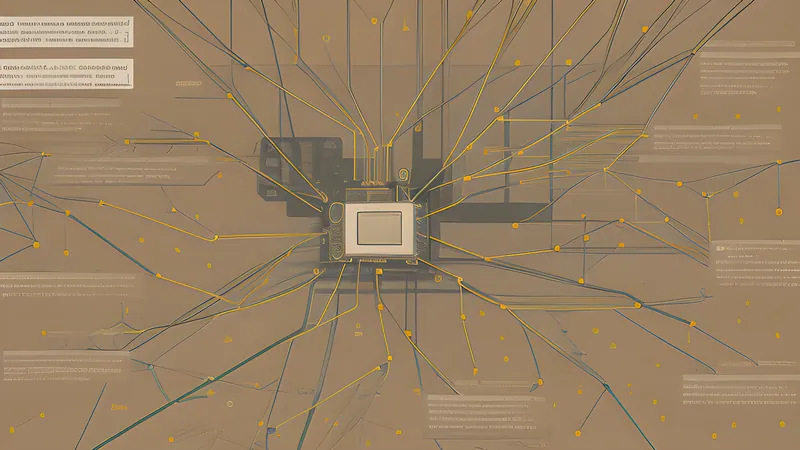
In 2010, a Belgian-based think tank called the IoT Council, founded the previous year in Brussels by the technologist Rob van Kranenburg, decided that the Internet of Things deserved a date of its own. They picked 9 April and began, modestly, by talking about connected objects in streets, apartments and parks rather than conference halls. That grassroots beginning still shapes the character of World IoT Day. It is not a public holiday or a corporate launch event but an open invitation, repeated each 9 April, to take stock of the sprawling web of sensors, appliances, vehicles and machines that now quietly talk to one another over the network, and to ask what kind of connected future is actually worth building.
Where the day comes from
The phrase “Internet of Things” is usually credited to the British technologist Kevin Ashton, who used it around 1999 while working on radio-frequency identification at the Auto-ID Center at the Massachusetts Institute of Technology. He wanted a way to describe a world in which computers could gather information about physical objects without depending on a human to type it in first. The dedicated day came a decade later and from a different quarter. Rob van Kranenburg had kickstarted the IoT Council in Brussels in 2009 as a think tank, news service and informal accelerator for connected-device projects, and in 2010 the Council launched 9 April as a recurring occasion for the field to gather and reflect. The date carries no grand anniversary behind it; it functions as a convenient annual rallying point, and the event has since spread from a handful of informal meetups to hundreds of gatherings worldwide.
History
Connected devices did not arrive overnight. One of the earliest documented examples sat in the Computer Science Department at Carnegie Mellon University in the early 1980s: a Coca-Cola vending machine wired to the network so that staff could check from their desks whether it was stocked and whether the bottles were cold. In 1990, the engineer John Romkey demonstrated a Sunbeam toaster connected to the internet at the Interop trade show, switching it on and off over the network as a deliberately whimsical proof of concept. Through the 2000s the serious infrastructure caught up with the jokes: sensor prices fell, wireless networking became ubiquitous, and cheap microcontrollers turned a curiosity into an industry. By the 2010s the vocabulary of “smart” everything, smart homes, smart cities, smart grids, had entered ordinary speech, and the IoT Council’s day gave this fast-moving, loosely organised field a fixed point on the calendar for talks, workshops and online discussion.
Why it matters
The Internet of Things has the peculiar quality of becoming invisible exactly as it becomes important. A thermostat that learns a household’s rhythms, a pacemaker that reports to a clinic, a shipping container that announces its own location, these are not gadgets so much as a new layer of infrastructure laid quietly over the old world. World IoT Day exists to make people look at that layer directly rather than through it. When billions of devices are collecting data, the questions of who owns that data, who can break into the devices, and what happens when they fail are not academic. Connected cameras have been hijacked into networks that knock major websites offline; medical devices have been recalled over security flaws. A day given over to the subject provides a regular, public hearing for concerns about privacy, security and dependence that the marketing of “smart” products tends to gloss over. The same impulse to examine an invisible system underlies observances such as UNESCO World Radio Day, which similarly asks people to notice an information technology so familiar it has become background noise.
How it is celebrated
Celebration tends to be informal and decentralised, in keeping with the day’s origins. Universities and maker spaces host hackathons where participants build small connected projects between morning and evening. Companies publish articles, run webinars and release tutorials. Online communities trade build logs, wiring diagrams and the occasional spectacular failure. Hobbyists frequently use the occasion to finish a half-built project at last: a garden-moisture sensor, a homemade weather station, a contraption that sends a message when the post arrives. The spirit is closer to a science fair than a festival, driven by curiosity and the small satisfaction of making an inert object do something useful. Because so much of the activity happens through reading, sharing and explaining, the day shares the educational temperament of literacy-minded observances like World Read Aloud Day, where the act of passing knowledge along is the point.
How the conversation differs by region
The technology lands differently depending on where you stand, and so does its day. In industrial regions the emphasis falls on manufacturing and logistics, the so-called Industrial Internet of Things, where connected machinery promises predictive maintenance and tighter efficiency. In cities wrestling with traffic, energy and water, the focus shifts to smart-city pilots, networked streetlights and metered grids; Barcelona’s much-studied sensor network for parking and irrigation became an early reference point for planners elsewhere. In agricultural areas, sensors buried in soil or strapped to livestock take centre stage. These divergent conversations are a useful reminder that “smart” means very different things to a factory engineer in Germany, a city planner in Singapore and a farmer in Kenya, and that the regulations, infrastructure and priorities surrounding the technology vary just as widely.
Language and access shape the field too, which is one reason the day has found common cause with observances about communication and learning. A connected sensor is only useful if the people around it can read what it reports and act on it, and the documentation, tutorials and community forums that make hobbyist IoT possible are overwhelmingly written in a handful of dominant languages. That uneven access mirrors the concerns of International Mother Language Day, which presses for knowledge to circulate in the tongues people actually speak rather than only in the languages of the technology’s first builders.
Symbols and tools
There is no flag, mascot or anthem, but certain motifs recur. Diagrams of glowing nodes joined by lines stand in for the invisible mesh of communication. The humble sensor, a temperature probe, a motion detector, a tiny camera, serves as the day’s quiet emblem. The single-board computer and the microcontroller kit, affordable and endlessly hackable, are the tools of choice, the Raspberry Pi and the Arduino board having become almost shorthand for the whole amateur side of the field. If the day has a ritual, it is the act of connecting something previously offline and watching its data appear on a screen for the first time.
Fun facts
- One of the first internet-connected appliances was a toaster, demonstrated by John Romkey at the Interop show in 1990; by the next year he had added a small crane to load the bread, automating the last manual step.
- A Coca-Cola machine at Carnegie Mellon University, wired up in the early 1980s, is often cited as the first internet-connected appliance, letting programmers check stock and temperature without leaving their desks.
- The number of connected devices is now widely estimated to exceed the human population by a large margin, though counts vary sharply depending on how a “device” is defined.
- The field maintains a long tradition of self-mockery about needlessly connected objects; the internet-enabled water bottle and the smart fork have become gentle bywords for connectivity pursued for its own sake.
- The day’s founder, Rob van Kranenburg, has spent his career arguing that the Internet of Things is less about gadgets than about who controls the data they generate, a theme the day has carried since 2010.
The security shadow
The recurring undercurrent of recent World IoT Days has been security, and for good reason. In October 2016 a piece of malware called Mirai recruited an army of poorly secured connected cameras and home routers, then turned them against the infrastructure firm Dyn, knocking large parts of the web offline across the eastern United States for hours. The attack was a turning point in public understanding: it demonstrated that a cheap device left on its factory password is not merely a private risk but a weapon that can be conscripted into a global assault. The economics of the problem are stubborn. A manufacturer selling a connected doorbell or thermostat has little commercial incentive to keep issuing security updates years after the sale, so devices linger online long after anyone is patching them. The day’s role here is partly to nag, reminding both buyers and makers that a thing worth connecting is a thing worth securing, and that the convenience of a networked object carries a cost that does not appear on the price tag.
A closing reflection
World IoT Day is, in the end, a day about attention. The connected objects multiplying around us are designed to recede into the background, asking nothing and demanding little, and yet they increasingly mediate how people live, work and move through the world. There is something worth preserving in the founders’ original instinct to discuss all this in streets and parks rather than boardrooms, because the question of what gets connected, and to whose benefit, belongs to everyone the technology touches. Setting aside one day a year to notice these objects, to admire their cleverness, question their reach and occasionally take one apart, is a modest habit, but it is better than entering a future of constant machine chatter with a shrug.
Related Content