World Hippo Day
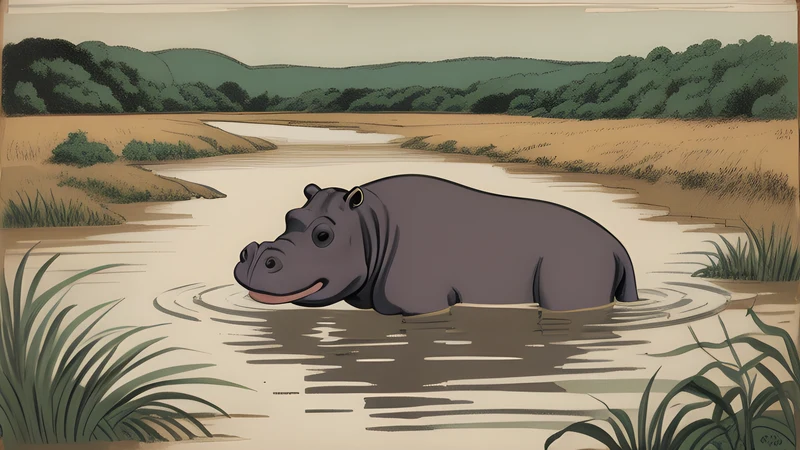
Every 15 February, conservationists and zoos mark World Hippo Day for an animal that manages to be both one of the most instantly recognisable creatures on earth and one of the most misunderstood. The hippopotamus looks comic, barrel-bodied and yawning, and it appears on children’s toys and cartoon logos the world over. It is also, by a wide margin, one of the most dangerous large animals in Africa, and its numbers are quietly falling. World Hippo Day sits in that gap between the cuddly image and the formidable reality.
The animal behind the cartoon
The name comes from the ancient Greek for “river horse”, yet the hippo’s closest living relatives are whales and dolphins. The two lineages split from a common ancestor around fifty-five million years ago, and the hippo’s semi-aquatic life is a distant echo of that shared past. There are two living species: the common hippopotamus, the great river-dwelling giant of sub-Saharan Africa, and the far smaller, forest-dwelling pygmy hippo of the West African rainforests, a shy and endangered animal that few people ever see.
The common hippo is the third-largest land mammal alive, after the elephant and the rhinoceros, with big males weighing well over one and a half tonnes. It spends its days submerged in rivers and lakes to keep its enormous body cool and its thin, sunburn-prone skin out of the harsh light, then hauls out at dusk to graze, walking several kilometres overnight and cropping grass with lips nearly half a metre wide. Despite living in water, a hippo cannot really swim. It moves through deep water by pushing off the bottom in a slow-motion gallop, and it can hold its breath for around five minutes, surfacing to breathe even while asleep through a reflex that needs no waking.
Perhaps the strangest feature is what looks like blood. Hippos secrete a thick reddish fluid, once called “blood sweat”, from glands in their skin. It is neither blood nor sweat but a natural secretion containing hipposudoric acid, which acts at once as a sunscreen, an insect repellent and an antibiotic that keeps the many wounds hippos inflict on one another from becoming infected. An animal that fights as much as a hippo needs its own first-aid kit built in.
History
Human fascination with the hippo is ancient. In Egypt the animal was both feared and revered: the goddess Taweret, protector of childbirth and fertility, was depicted as a pregnant hippo standing upright, while the male hippo was associated with the chaos-god Set and hunted in ritual to symbolise the triumph of order. Hippo-hunting scenes decorate tomb walls thousands of years old, and small blue faience hippo figurines, glazed the colour of the Nile, were placed in Egyptian graves; one such figure, nicknamed “William”, became an unofficial mascot of New York’s Metropolitan Museum of Art.
Hippos were once far more widespread, ranging across the Nile as far as its delta and beyond, and fossil relatives lived in Europe and Asia during warmer ages, including dwarf hippos on Mediterranean islands such as Cyprus and Crete, which vanished after humans arrived. The animal disappeared from the lower Nile within recorded history, hunted and squeezed out as human populations grew. Modern conservation concern is more recent still: the common hippo is now listed as vulnerable, with an estimated one hundred and fifteen thousand to one hundred and thirty thousand left, threatened by habitat loss and by hunting for meat and for the ivory in their large canine teeth, which became a target as elephant-ivory controls tightened.
The exact origin of World Hippo Day itself is modestly documented, having grown up among zoos and wildlife charities as one of the many single-species awareness days that now fill the calendar, but the choice of a fixed February date has given it a steady annual foothold.
Why it matters
Hippos are ecosystem engineers. Their nightly grazing trails and the deep channels they carve moving between water and pasture reshape the physical structure of rivers and wetlands, creating pools and pathways that countless other species use. Their dung, deposited in vast quantities into the water, fertilises river systems and feeds the fish and insects at the base of the aquatic food web, though in dammed or shrinking rivers that same nutrient load can tip into harmful overload. Remove the hippos and the whole rhythm of a river changes.
They are also dangerous, and honesty about that is part of the day’s purpose. Hippos are fiercely territorial in water and protective on land, and they are responsible for a significant number of human deaths in Africa each year, more than lions or crocodiles. Respecting the animal means neither sentimentalising it nor demonising it.
How it is marked
Zoos and safari parks build World Hippo Day around their resident hippos, offering keeper talks, special feeds of fruit and vegetables floated in the pool, and behind-the-scenes explanations of how such a large aquatic animal is cared for. Conservation charities use the day to raise funds and to explain the pressures facing wild populations. Online, the day tends to be carried along by the hippo’s enduring internet popularity, from famous zoo-born calves to the sheer visual comedy of a two-tonne animal doing a underwater tiptoe.
The day belongs to the same family of animal-focused observances as the wider conservation calendar, sitting comfortably beside other African-megafauna days such as World Giraffe Day and World Zebra Day, all of which use a single well-loved species to draw attention to the broader story of habitat loss across the continent.
A strange chapter: the cocaine hippos
One of the oddest hippo stories of modern times unfolds in Colombia, far from the animal’s African home. In the 1980s the drug lord Pablo Escobar kept a private zoo at his Hacienda Nápoles estate, and among the animals were four hippos. After his death the estate was abandoned, but the hippos were left behind and, finding the warm Colombian rivers to their liking, they bred. The population has since grown into the largest group of hippos outside Africa, wandering the Magdalena river basin and posing a genuine ecological puzzle, an invasive megaherbivore in a country that never had one. Their fate is now the subject of court cases, sterilisation programmes and heated debate, a reminder of how far an animal can travel when human ambition sets it loose.
The forgotten cousin
Any honest hippo day has to make room for the pygmy hippo, the common species’ small and secretive relative. It weighs a tenth as much as its famous cousin, stands about the height of a large pig, and lives alone in the dense rainforests and swamps of West Africa, chiefly in Liberia, with smaller numbers in Sierra Leone, Guinea and the Ivory Coast. Unlike the gregarious common hippo it is a solitary, nocturnal forest animal, spending less time in open water and more in the cover of vegetation. It is endangered, with perhaps only a couple of thousand left in the wild, threatened by logging and the clearing of forest for farmland. Most people know it only from zoos, where its calves, such as the internet-famous Moo Deng in Thailand, occasionally become global celebrities. The pygmy hippo is a reminder that behind every well-known animal there is often a shyer relative slipping quietly towards extinction while no one is looking.
Around the world
Hippos hold a place in cultures far beyond the rivers where they live. They appear in African folklore across the continent, often as symbols of strength and of the hidden dangers of the water; some traditions cast the hippo as a creature that begged the creator to live in the rivers and promised, in return, to scatter its dung so that it could prove it had eaten no fish. In the West the hippo has become a figure of gentle comedy, from the tutu-wearing ballerinas of Disney’s Fantasia to the countless plush toys and cartoon mascots that soften a genuinely formidable animal into a nursery favourite. That softening is exactly the double image World Hippo Day works with.
Fun facts
A hippo can open its mouth to an angle of around a hundred and fifty degrees, a gape wide enough to swallow a small child whole and used mainly to threaten rivals. Baby hippos are often born underwater and must swim up to take their first breath, and they can suckle underwater too. A hippo’s skin secretion is so effective as a sunscreen that researchers have studied it in the hope of copying its chemistry. And though it looks slow and lumbering, a hippo can outrun a human over short distances on land, reaching speeds of around thirty kilometres an hour despite weighing as much as a small lorry.
A closing reflection
The hippo is a lesson in the danger of judging an animal by its outline. The rounded body and the wide, sleepy yawn read to us as gentle, even clownish, and so the hippo has been drafted into a thousand harmless cartoons. Beneath that image is a powerful, territorial, ecologically vital animal that shapes the rivers it lives in and demands to be taken seriously. World Hippo Day, landing quietly in mid-February, asks us to hold both truths at once: to enjoy the comedy of the river horse, and to respect the weight of the animal actually standing in the water.
Related Content