World Hello Day
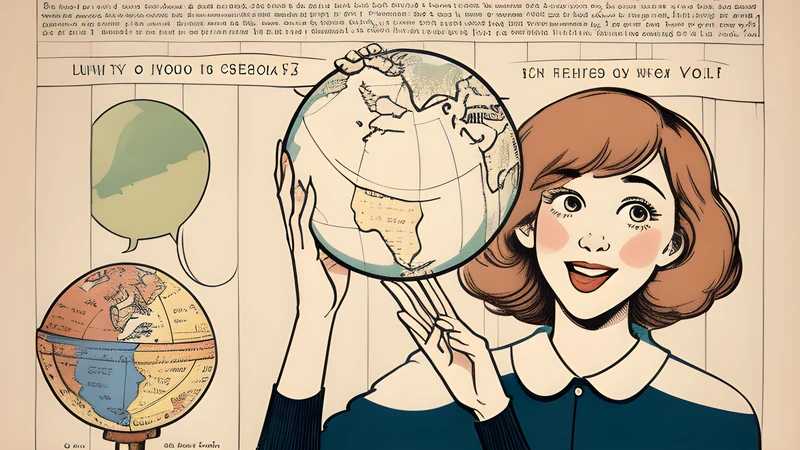
In the autumn of 1973, with the Middle East still smouldering from the October war between Israel and its neighbours, two American brothers decided that the antidote to conflict might be something as small as a greeting. Brian McCormack, then a doctoral student at Harvard, and his brother Michael, a graduate of Arizona State University, launched World Hello Day and fixed it to 21 November. Their instruction was disarmingly modest: greet ten people, and in doing so demonstrate that communication matters more than force. More than fifty years later the day is observed in around 180 countries, still run by the brothers, still asking for nothing but a hello.
A day born from a ceasefire
The timing was deliberate. The Yom Kippur War had erupted on 6 October 1973 and dragged the superpowers to the edge of direct confrontation before the guns fell quiet. The McCormacks held no diplomatic or political office; they were two ordinary men who felt the helplessness that ordinary people feel when the world lurches toward catastrophe. Their response was to build the smallest possible act of peace and make it universal, a gesture any person could perform without permission, funding or organisation.
Origin: two brothers and a mailing campaign
World Hello Day began, fittingly, as an act of communication. The brothers wrote letters, thousands of them, to heads of state, prominent figures and anyone they thought might amplify the idea. They sent explanations of the day in seven languages to governments around the world, framing it as a demonstration that global problems are better solved by talking than by fighting. The response astonished them. Leaders wrote back. Over the following years the day gathered endorsements from public figures across the political spectrum, and it acquired a roster of Nobel Peace Prize laureates who lent their names in support.
The rules the brothers set have never changed, and their genius lies in the lack of ambition. To observe World Hello Day, a person simply greets ten other people. There is no march, no fundraising target, no membership. The act is complete the moment it is performed, which means the day cannot fail in the way that grander campaigns fail. Nobody can be too poor, too busy or too far away to say hello ten times.
History: from Cold War gesture to global fixture
The 1970s were a good moment for an idea like this. The decade was thick with anxiety about nuclear war, and a great deal of grassroots peace activism ran on the belief that ordinary human contact could soften the machinery of confrontation. World Hello Day fitted that mood exactly, and it survived where flashier campaigns burned out precisely because it demanded so little. There was nothing to sustain, no infrastructure to fund, only a date to remember.
Over the decades the day spread through schools, community groups and, eventually, the internet, which suited it perfectly. Teachers found it a natural fit for lessons about other cultures, and children took easily to the challenge of greeting strangers. The McCormacks continued to run the observance from the United States, keeping its website spare and its message unchanged. By its fiftieth anniversary the day had shed most of its Cold War specificity and become a general celebration of greeting itself, though its founders never forgot that it began as a plea against war.
Why a greeting is not a small thing
A greeting looks trivial, and that is exactly why it is powerful. It is the first move, the opening bid in every human interaction, and it carries information far beyond its literal content. To greet someone is to acknowledge their existence, to signal that you see them and mean them no harm. Anthropologists have long noted that greeting rituals exist in every known human society, which suggests they answer a deep need: the need to convert a stranger into someone with whom communication is possible.
The absence of a greeting is equally telling. To pass someone without acknowledgement, to be blanked, registers as a small wound because it withholds that basic recognition. World Hello Day works on the theory that entire relationships between peoples, like relationships between individuals, begin with the willingness to make the first move. A war, in this reading, is what happens when nobody says hello.
How the day is marked
The observance is celebrated most enthusiastically in schools, where it dovetails with lessons on language and geography. Classrooms learn to say hello in a dozen tongues, map the countries the words come from, and practise greeting one another across the usual social divides. Community organisations use the day to encourage neighbours to acknowledge people they normally ignore, and workplaces occasionally adopt it as a prompt to break the silence of the lift and the corridor.
For most people the celebration is invisible and personal, which is the point. Greeting ten strangers over the course of a day sounds simple until you try it, at which point the small resistances become obvious: the fear of seeming odd, the habit of avoiding eye contact, the assumption that the other person would rather be left alone. Pushing past those resistances, even once, tends to leave people slightly changed, and that is the quiet work the day is designed to do.
Greetings around the world
Part of what makes the day rich is the variety of the greetings it celebrates. The Māori hongi presses noses and foreheads together so that two people share the same breath, the breath of life. The Indian namaste joins the palms and bows the head, a gesture that acknowledges the other person without touch. The Tibetan custom of sticking out the tongue in greeting reputedly began as a way of proving one was not the reincarnation of a cruel, black-tongued king. Across the Arab world a hand placed over the heart softens a spoken greeting into something warmer.
These forms are worth knowing because they reveal how much a culture packs into its first move. Some greetings emphasise touch, others deliberately avoid it; some invoke health, others peace, others the divine. World Hello Day, which sits comfortably alongside observances such as World Compliment Day and World Gratitude Day, draws attention to this diversity and treats it as something to celebrate rather than smooth over.
Symbols and traditions
The day has never developed elaborate symbolism, and its founders seem to prefer it that way. What ritual it has clusters around language: lists of the word “hello” in as many tongues as possible, printed on posters and classroom walls, and the friendly wave that needs no translation at all. The number ten, the target of greetings, is the closest thing the day has to a fixed emblem, a reminder that the observance is measured in individual human contacts rather than crowds or budgets.
Some participants extend the greeting to the written form, sending a letter or message to someone they have lost touch with, which echoes the mailing campaign the brothers used to launch the day in the first place. That symmetry, a day founded on letters that still occasionally travels by letter, is a small pleasure for anyone who knows the history.
The etiquette of the first move
Who greets whom, and how, is one of the most tightly governed pieces of social etiquette in any culture, which is why the simple instruction to greet ten people can feel more loaded than it sounds. In much of the world age and status dictate the order: the younger or junior person greets first, and to reverse that can read as either charming or presumptuous depending on the room. In parts of West Africa the exchange of greetings is a genuine ceremony, a back-and-forth of enquiries about family, health and work that can run for a minute or more before any actual business begins, and to skip it is a real rudeness.
English-speaking cultures have compressed the ritual almost to vanishing point, to the point where “how are you” functions as a greeting rather than a question and expects no honest answer. World Hello Day gently pushes against that compression. When it asks for ten greetings it is asking, in a small way, for ten moments of actual attention rather than ten reflexes, and the difference between a mumbled hello and a real one is exactly the difference the McCormack brothers hoped their day might teach.
Fun facts
The word “hello” is younger than most people assume. It spread into common use only in the late nineteenth century, and Thomas Edison is often credited with pushing it as the standard telephone greeting, over Alexander Graham Bell’s preferred “ahoy”. Its ancestors were older attention-getting calls such as “hollo” and “halloo”, shouts used to summon hounds or hail a ferryman across water. World Hello Day is observed in roughly 180 countries, an extraordinary reach for a day with no headquarters and no budget. And among the many endorsements the McCormack brothers gathered over the years were letters from dozens of Nobel Peace Prize laureates, making a homemade observance one of the more decorated peace initiatives ever run out of a private house.
A closing reflection
There is something almost stubborn about World Hello Day, a refusal to accept that peace has to be complicated. The McCormack brothers looked at a war that had nearly set the world alight and concluded that the smallest human act, repeated by enough people, was worth trying. They may have been naive, but half a century of observance suggests the idea answered something real. A hello does not end a war. It does, however, insist on the one thing war denies, which is that the person in front of you is worth acknowledging, and days like this exist to keep that insistence alive.
Related Content