World Hedgehog Day
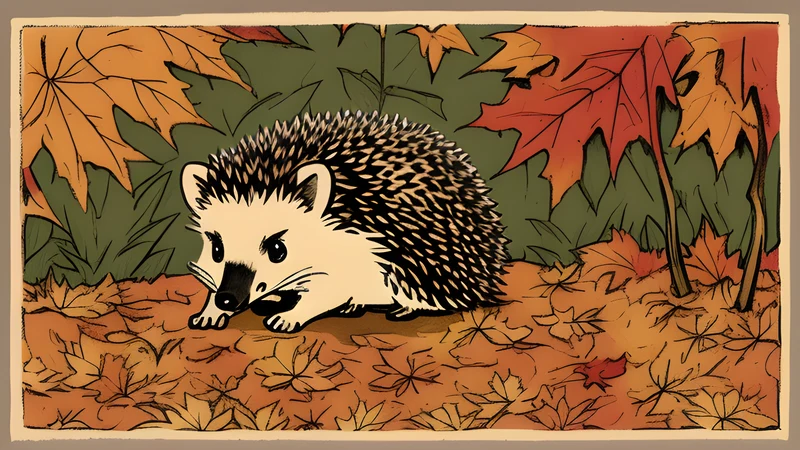
World Hedgehog Day is held on 2 February, a date chosen with more history behind it than most people realise, since it is the same day that eventually became Groundhog Day in North America. The modern observance is driven by conservation groups, above all the British Hedgehog Preservation Society, founded in Ludlow in 1982, and its purpose is urgent: the spiny, snuffling animal that once defined the British hedgerow is vanishing, and the day exists to persuade people to make room for it before it disappears entirely.
An ancient weather prophet
The 2 February date reaches back to Candlemas, the old European cross-quarter day marking the midpoint of winter, long associated with weather prophecy. German folklore held that if a hedgehog emerged from hibernation on Candlemas and saw its shadow in bright sun, a second winter of six more weeks would follow, whereas cloud meant spring was near. When German immigrants settled in Pennsylvania in the eighteenth and nineteenth centuries they found no native hedgehogs and transferred the tradition to the local groundhog, and Groundhog Day, first recorded at Punxsutawney in 1887, is the direct descendant of a hedgehog superstition. The animal being celebrated on 2 February is, in a real sense, the original of the more famous American ceremony.
What a hedgehog actually is
The European hedgehog, Erinaceus europaeus, is a small insectivore whose most obvious feature is its coat of spines, of which an adult carries somewhere between 5,000 and 7,000. Those spines are modified hairs stiffened with keratin, hollow and springy rather than barbed like a porcupine’s quills, and they are not shed as weapons. The hedgehog’s defence is to curl into a tight ball using a powerful circular muscle around the edge of its body, tucking its vulnerable face, belly and legs inside a bristling sphere that few predators will trouble. The English name is plainly descriptive, combining “hedge”, where the animal forages and nests, with “hog”, for the piglike grunting and snuffling it makes as it roots through leaf litter for food.
There are seventeen species spread across Europe, Africa and Asia, all sharing the same body plan. Hedgehogs are largely nocturnal, travelling remarkable distances of a mile or more in a single night’s foraging, and they eat beetles, caterpillars, earthworms, slugs and snails, which is precisely why gardeners have always welcomed them. A resident hedgehog is a natural form of pest control.
Strange and useful biology
Hedgehogs possess a genuinely peculiar behaviour called self-anointing. On encountering a strong or unfamiliar smell, the animal will chew at the source, work up a frothy saliva, and then contort itself to spread the foam across its own spines. Naturalists have debated the purpose for over a century, with theories ranging from scent camouflage to parasite control, and no explanation is fully settled. Hedgehogs are also unusually resistant to certain toxins, including some snake venoms, thanks to a protein in their blood that neutralises the poison, allowing them to tackle adders and other prey that would kill an animal of similar size.
In Britain and other cool climates the hedgehog is one of only three native mammals that truly hibernates, building a nest of leaves called a hibernaculum and dropping its body temperature close to the surrounding air from around November until March. A common and fatal mistake is to offer a hedgehog bread and milk; hedgehogs are lactose intolerant, and milk makes them seriously ill. Fresh water and a little meat-based cat or dog food are the correct kindness.
Why the day matters
The British hedgehog is in steep decline. Estimates suggest the population fell from perhaps 30 million in the 1950s to well under a million today, with rural numbers dropping by around half since the turn of the century. The causes are the familiar machinery of modern land use: busy roads, the loss of hedgerows and rough field margins, tidy sealed gardens that a hedgehog cannot enter, slug pellets that poison their food supply, and strimmers that kill nesting animals. The species was added to Britain’s official red list of mammals at risk of extinction in 2020, a shock to a nation that had always assumed the hedgehog would simply always be there.
World Hedgehog Day channels that alarm into practical action. The headline campaign is the “Hedgehog Highway”, the simple idea of cutting a 13-centimetre gap at the base of garden fences so that hedgehogs can roam between gardens across their nightly range, since a single garden is far too small to sustain one. It sits among a wider family of wildlife observances such as World Wombat Day, World Otter Day, World Frog Day and World Numbat Day, each pleading the case for a small, overlooked animal squeezed by human expansion.
The hedgehog in culture
Few small mammals have made such a mark on the imagination. Beatrix Potter gave the world Mrs Tiggy-Winkle in 1905, the hedgehog washerwoman who became one of the best-loved characters in children’s literature. Sega turned the animal into a global icon with Sonic the Hedgehog in 1991, a blue, ball-rolling sprinter whose spines were an obvious visual joke on the real creature’s defence. Older still is the line attributed to the Greek poet Archilochus, “the fox knows many things, but the hedgehog knows one big thing”, which the philosopher Isaiah Berlin borrowed for his famous 1953 essay dividing thinkers into cunning foxes and single-minded hedgehogs. The philosopher Arthur Schopenhauer even coined the “hedgehog’s dilemma” to describe how creatures that need warmth must also keep their distance to avoid hurting one another with their spines. In 2013 a BBC Wildlife magazine poll voted the hedgehog Britain’s favourite natural emblem, comfortably beating the badger and the red squirrel.
Surprising facts
Hedgehogs were introduced to New Zealand by homesick British settlers and there became an ecological menace, raiding the nests of ground-nesting birds and endangered insects that evolved with no defence against them, a reminder that a beloved animal in one place can be a pest in another. Baby hedgehogs, called hoglets, are born with their spines already present but soft and hidden beneath the skin, emerging within hours of birth. A group of hedgehogs is delightfully known as an “array”, though the animals are so solitary that an array in the wild is a rare sight. And despite their reputation for slowness, hedgehogs can run at a respectable pace when alarmed and are surprisingly strong swimmers and climbers.
A year in a hedgehog’s life
The hedgehog year is a tight race against the calendar. Adults wake from hibernation in March or April, thin and hungry, and the males begin a slow, circling courtship that country people call the “hedgehog carousel”. Litters of four or five hoglets arrive from around June, blind and pink, and stay in the nest for several weeks before following their mother out to forage. A second, later litter is possible, and here the danger lies: hoglets born in autumn have very little time to reach the roughly 450 to 600 grams of body weight they need to survive hibernation. These undersized “autumn juveniles” are the animals most often found out in daylight in October and November, and a wildlife rescue can overwinter them indoors until spring. Through the cold months the hibernating adult burns its fat reserves so slowly that its heartbeat can fall from nearly 200 beats a minute to fewer than 20, a suspended state from which a mild spell may briefly wake it to shift nests.
How to help a hedgehog
Helping is mostly a matter of small mercies. A shallow dish of fresh water saves lives in dry weather, and a little meaty cat or dog food left out at dusk supplements a poor foraging night, while bread and milk must never be offered. A wild corner with a log pile gives shelter and breeds the beetles and worms that hedgehogs eat, and leaving fallen leaves for nesting material costs nothing. The real killers are avoidable: slug pellets poison the food chain, so beer traps and hand-picking are kinder alternatives; strimmers and mowers should be checked over first, since a curled hedgehog will not flee the blade; bonfires must be moved or checked before lighting, because an unlit pile is a tempting nest; and garden ponds need a sloped edge or a ramp so a hedgehog that falls in can climb out. Above all, that 13-centimetre gap in the fence reconnects the fragmented gardens a hedgehog needs to survive, turning a street of sealed plots back into the continuous territory it once roamed freely.
A closing reflection
The hedgehog asks for very little: a gap in a fence, a corner of long grass, a garden left slightly wild at the edges, and a world without poison in the flowerbeds. Its decline is a quiet verdict on how thoroughly people have tidied and paved the countryside, and its possible recovery is one of the few conservation stories where an ordinary householder can genuinely make the difference by doing less rather than more. World Hedgehog Day is an invitation to share space with a creature that has been rooting through British hedgerows since long before the hedges had names, and to notice, before it is too late, an animal so familiar that most people never thought it could be lost.
Related Content