World Goat Day
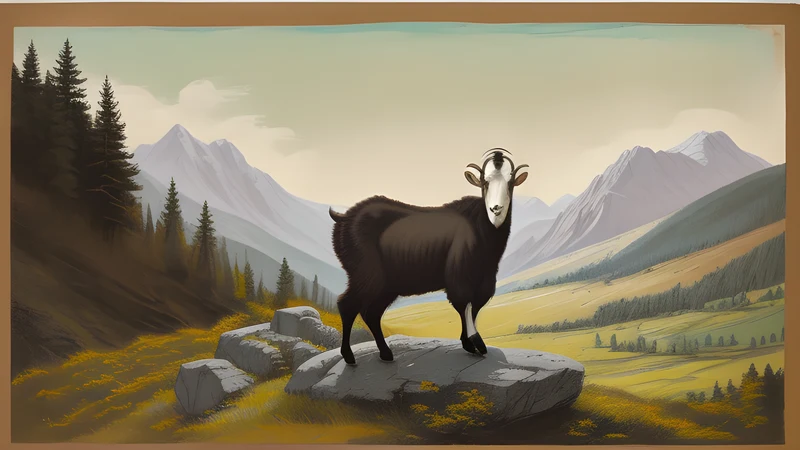
Around eleven thousand years ago, in the Zagros mountains of what is now western Iran, human beings took a wild, cliff-dwelling ibex called the bezoar and began to keep it, and in doing so tamed one of the first livestock animals in history. World Goat Day, held every year on 2 October, honours that ancient partnership and the animal at its heart — a creature so useful, so adaptable and so faintly comic that it has followed humanity into nearly every landscape on earth. The goat gives milk, meat, hair, hide and companionship; it thrives on scrubland where a cow would starve; and it does all this while retaining an air of mischief and independence that has made it, across ten millennia, both indispensable and impossible to fully domesticate. The day is a chance to look past the caricature and appreciate one of civilisation’s oldest and most quietly important companions.
What World Goat Day Marks
World Goat Day is an awareness observance celebrating the domestic goat, Capra hircus, and its contribution to human life across the world. It was established in 2014 by two American goat enthusiasts and educators, and it has since been picked up by farmers, smallholders, sanctuaries and dairy producers internationally. The day serves to recognise the goat’s importance to food security, especially in the developing world, and to overturn the animal’s reputation as a mere nuisance that eats tin cans and butts fences. Goats are among the most numerous livestock animals on the planet, with a global population running into the billions, and for hundreds of millions of the world’s poorest people they are the most valuable asset a household can own.
History
The goat’s domestication was one of the founding events of the Neolithic revolution, the moment when humans stopped merely hunting animals and began to keep them. Archaeological and genetic evidence places the taming of the goat in the Fertile Crescent, and particularly the Zagros mountains, around 10,000 to 11,000 years ago, making it roughly contemporary with the domestication of sheep and slightly earlier than cattle or pigs. The wild ancestor was the bezoar ibex, an agile mountain goat with great sweeping horns, and the early herders selected over generations for tamer temperament, smaller horns and reliable milk. Goat bones and dung layers at some of the earliest farming sites show that the animal was present almost from the first villages, a mobile larder that could be driven from pasture to pasture and slaughtered when needed.
From that Near Eastern cradle the goat spread with astonishing speed and reach, precisely because it was so portable and so undemanding. It moved with early farmers into Europe, across North Africa and throughout Asia, and it appears everywhere in the mythology and religion of the ancient world. The Greeks told that the infant Zeus was suckled by the goat Amaltheia, whose broken horn became the cornucopia, the horn of plenty; the god Pan was half goat; and the goat was among the most common of sacrificial animals across the Mediterranean. The English word “tragedy” descends from the Greek tragoidia, literally “goat-song”, though scholars still argue over exactly why. When Europeans set out across the oceans, goats went aboard the ships as living provisions and were deliberately released on remote islands to breed and provide meat for future sailors — a practice that seeded feral goat populations, and considerable ecological havoc, from the Galápagos to the Scottish isles.
The goat’s role in later history is easy to overlook because it belonged mostly to the poor. It was the cow of the smallholder and the cottager, the animal a family could keep on common land or a roadside verge, the source of milk for households that could not afford cattle. In the Alps and the Mediterranean, goat’s-milk cheeses became a cuisine in their own right; in the Middle East, Africa and South Asia, goat meat remained the everyday meat of celebration and sustenance where pork was forbidden and beef too costly. The Angora and Cashmere goats built entire luxury textile industries on the strength of their hair — mohair from the Angora of Turkey, and the impossibly soft cashmere combed from the undercoat of goats on the high plateaux of Central Asia and the Himalaya, an economy that connects the goat to hardy highland animals such as the International Day of the Yak.
Why It Matters
The modern case for the goat is a development case as much as an agricultural one. The goat is often called the poor person’s cow, and the phrase captures a real economic truth: a goat is cheap to buy, small enough for a woman or a child to manage, and able to convert marginal scrub, weeds and crop residues into milk and meat on land that would support nothing larger. Charities that fight rural poverty give goats to families precisely because a single doe can transform a household’s nutrition and income, providing milk daily and kids that can be sold or bred. This resilience gives the goat outsized importance in a world of drought and degraded land, and World Goat Day exists partly to make that visible, in the same way that awareness days for other essential working animals such as the World Donkey Day and the World Camel Day honour the quiet economies they sustain.
The Many Kinds of Goat
Ten thousand years of breeding have produced hundreds of goat breeds, each shaped to a purpose and a place, and the day is a fine excuse to notice the variety hidden behind the single word. The dairy breeds are the aristocrats of the milking parlour: the Swiss Saanen, large and white and the most productive of all; the Alpine and Toggenburg from the same mountains; the Anglo-Nubian with its long lop ears and Roman nose, prized for the richness of its milk. The meat breeds are led by the Boer, developed in South Africa into a heavy, fast-growing animal that now dominates commercial goat farming worldwide. The fibre breeds are a story in themselves — the Angora, whose lustrous ringlets are shorn twice a year as mohair, and the cashmere-producing goats of the high cold deserts, whose downy winter undercoat is combed out by hand each spring in quantities so small that a single scarf may take the yield of several animals.
Then there are the curiosities: the Nigerian Dwarf and the Pygmy, miniature goats barely knee-high that have become popular as pets and therapy animals; the Damascus goat of the Middle East, bred for a face so exaggerated it wins beauty contests and baffles outsiders; and the many hardy landrace breeds, unimproved and unglamorous, that survive on marginal land across Africa and Asia and quietly do the bulk of the world’s goat-keeping. That range, from a champion Saanen in a spotless European dairy to a scrub goat browsing a Sahelian thorn bush, is the measure of just how thoroughly this one animal has adapted itself to human need.
How It’s Celebrated
World Goat Day is marked on farms, at dairies and in the growing world of goat sanctuaries. Cheese-makers and dairies use it to promote goat’s-milk products; farms hold open days with the perennial crowd-pleaser of baby goats; and animal sanctuaries share the stories of rescued animals. Social media plays an outsized part, unsurprisingly for a creature that has become one of the internet’s favourite animals — clips of goats fainting, climbing improbable surfaces and screaming like people circulate in vast numbers. Educational organisations use the day to teach children where milk and cheese come from and to explain the goat’s role in feeding the world.
Traditions and Symbols
The goat carries a heavy and contradictory symbolic load. It is the cornucopia and the nurturing Amaltheia, but it is also the scapegoat of the Hebrew Bible, the animal onto which the community’s sins were symbolically laid before it was driven into the wilderness — the origin of the word and the idea. In the Chinese zodiac the goat, or ram, is a sign of gentleness and calm. Its association with Pan and later with the horned imagery of the Devil gave the goat a darker cast in European folklore. Two symbols recur: the horns, which became the horn of plenty, and the beard, which lends the goat its air of solemn, faintly sardonic wisdom.
Fun Facts
Goats have rectangular pupils, a horizontal slit that gives them a field of vision of well over three hundred degrees and lets them watch for predators in almost every direction without moving their heads. The “fainting” goats of a well-known American breed never actually lose consciousness. They have a genetic condition called myotonia that briefly stiffens their muscles when startled, so they topple over stiff-legged and fully conscious. Goats are strong swimmers and famously agile climbers, and in Morocco they are known to climb high into argan trees to eat the fruit, a sight so improbable it draws tourists. And goats are genuinely clever and curious, capable of solving simple puzzles to reach food and of remembering the solution for years, which is one reason no fence ever quite holds them.
A Closing Reflection
The goat has been at humanity’s side almost since the beginning of settled life, and yet it has never entirely surrendered its wildness. It remains curious, wilful and inventive, forever testing the fence, forever a little ahead of its keepers — and perhaps that is exactly why the partnership has lasted eleven thousand years without wearing thin. World Goat Day invites a second look at an animal too easily dismissed as a joke or a pest, and rewards it with the recognition that this small, stubborn, resourceful creature fed the first farmers, feeds the poorest households still, and will very likely outlast a good many of the grander animals we prefer to celebrate.
Related Content