World Gin Day
In June 2009, a gin enthusiast named Neil Houston invited a handful of friends into his garden in Birmingham to drink gin together. That was the whole event. There was no committee, no sponsor, no plan beyond an afternoon of good spirit and good company. From that small gathering grew World Gin Day, now held on the second Saturday of June and observed in over thirty countries, with its message reaching hundreds of millions through the drinks trade and social media. Because it is fixed to a weekday rather than a date, it always lands on a Saturday — which is, by design, exactly when most people are free to raise a glass.
Where the day comes from
Houston conceived the day for no grander reason than that he loved gin and wanted an excuse to share it. In 2010 a London gin writer, Emma Stokes — known in drinks circles as “Gin Monkey” — brought the celebration to the capital, hosting friends at a small Soho bar called Graphic. By 2013, with Houston’s work commitments pulling him away, Stokes formally took charge of the day and steered its growth into a genuinely international occasion. The choice of the second Saturday of June places it in early summer, the season when a cold gin drink feels most at home, and the informal, sociable character of that first Birmingham garden has never really left it.
The history of the spirit itself
Gin’s own story is far older and a great deal more turbulent. Its ancestor is the Dutch jenever, a juniper-flavoured spirit refined in the Low Countries; physicians there, including figures associated with the University of Leiden, prescribed juniper distillates as medicine well before anyone drank them for pleasure. English soldiers fighting in the Low Countries in the seventeenth century are widely credited with bringing the taste home — the phrase “Dutch courage” is traditionally traced to troops steadying their nerves with jenever before battle.
The spirit’s most notorious chapter came in eighteenth-century London. After the Crown encouraged domestic distilling and slashed the controls on it, cheap gin flooded the city, and consumption reached ruinous levels — by some estimates Londoners were drinking tens of millions of gallons a year. The resulting social crisis, the “Gin Craze,” prompted a series of Gin Acts between 1729 and 1751 to bring it under control, and inspired William Hogarth’s savage 1751 print Gin Lane, with its image of a drunken mother letting her child fall. The invention of the continuous column still, patented by Aeneas Coffey in 1830, transformed the spirit’s reputation by allowing a far cleaner distillate, and gave rise to the refined “London dry” style. After languishing as an old-fashioned drink for much of the twentieth century, gin underwent a dramatic craft revival in the 2000s — the same decade Houston started his garden party.
The revival was not purely a matter of taste. In Britain it was unlocked in part by law. Until 2009 the rules effectively required a distiller to operate a still of at least 1,800 litres, a threshold that kept production in the hands of a few large houses. When the City of London Distillery and others pushed back, the regime loosened, and the arrival of Sipsmith in 2009 — the first new copper-pot gin distillery in London in nearly two centuries — opened the door to the small-batch boom that followed. That regulatory shift is the unglamorous reason a single county can now hold dozens of distilleries, and it is no coincidence that World Gin Day was born in the same year the legal logjam broke.
What is actually in the bottle
Part of what the day quietly celebrates is a definition that is stricter than most drinkers realise. Under European and British rules, gin must be made from a neutral spirit and flavoured so that juniper is the predominant taste; a “distilled gin” is redistilled with its botanicals, while the prized “London dry” designation forbids the addition of any flavouring or colouring after distillation and caps added sweetening at a trace. Within those constraints, distillers reach for a familiar palette of supporting botanicals — coriander seed, angelica root, orris, citrus peel, cardamom, liquorice — each tilting the spirit toward citrus, earth, spice or floral notes. The art lies in balance rather than novelty: a gin overloaded with fashionable botanicals can lose the juniper that legally and aromatically defines it. This is the tension the day’s tastings expose, as drinkers move between a classic juniper-forward London dry and the softer, more perfumed contemporary styles and discover, often for the first time, how wide a single category can stretch. The contrast with a deliberately characterless spirit such as vodka, marked on its own National Vodka Day, is instructive: gin is defined by what it tastes of, vodka by what it does not.
How it is celebrated
World Gin Day is marked by tastings, distillery tours, cocktail events and gatherings in bars and at home. Distilleries open their doors and release special editions; bars build menus around inventive serves; enthusiasts trade recommendations across social channels. Because the day falls on a Saturday, it lends itself to relaxed, unhurried celebration rather than a rushed weeknight toast. The occasion is, by Emma Stokes’s own design, an excuse to venture beyond a familiar bottle and sample the wildly different botanical profiles that distillers now produce.
Stokes kept the day deliberately open-source rather than turning it into a trademarked brand event. There is no central ticketing, no single sponsor dictating how the day must be observed, and no licence required to run a World Gin Day tasting — a bar in Manchester, a distillery in Melbourne and a kitchen table in Toronto can all claim the date on equal terms. That looseness is the direct inheritance of the Birmingham garden, and it is why the day spread so quickly through the trade: a publican needs no permission to put a gin flight on the menu for the second Saturday of June, and a distiller needs only an open door. The result each year is less a single event than a loose, simultaneous swarm of small ones, coordinated by little more than a shared date and a hashtag.
Traditions and symbols
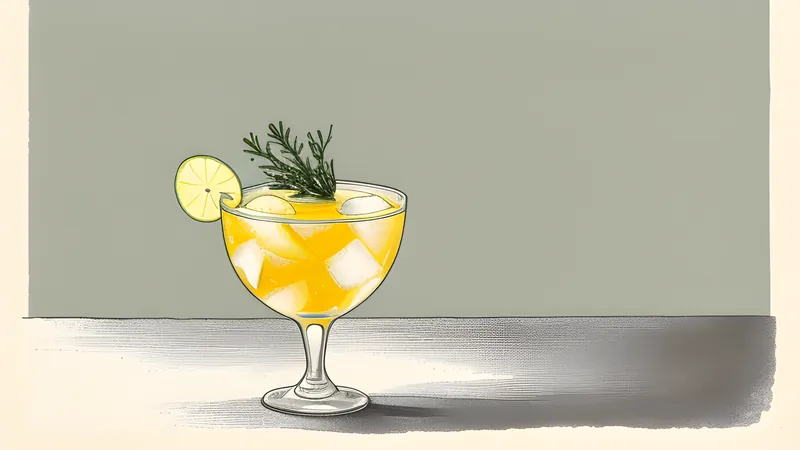
The defining serve across much of the world is the gin and tonic, a pairing born of empire and practicality: British colonial administrators and soldiers in India took quinine-laced tonic water against malaria, and gin made the bitter quinine far more palatable. The garnish has since become an art in its own right, with citrus peel, cucumber, herbs and spices chosen to flatter a particular gin’s botanicals. The Martini and the Negroni rank among gin’s most celebrated cocktails. One rule, though, is non-negotiable: juniper is the legal and aromatic heart of the spirit, and without its piney, resinous note a drink simply cannot be called gin.
Around the world
Though gin’s modern identity is strongly British, its revival has been thoroughly global. Spain embraced the gin-tonic with particular fervour, serving it in great balloon glasses heaped with garnishes. Distillers across Europe, North America, Japan and Australia now make distinctive gins flavoured with local botanicals — native Australian shrubs such as lemon myrtle, Japanese yuzu and sakura, Nordic foraged herbs. That diversity is much of what the day celebrates: one defined spirit endlessly reinterpreted through the plants and tastes of different places. The Spanish enthusiasm runs deeper than the balloon glass alone — Spain overtook Britain as Europe’s largest gin market during the boom, and bars there treat the choice of tonic, garnish and ice as seriously as the choice of gin itself, building the gin-tonic into a small ritual. The shift in where gin is drunk matters as much as where it is made: a spirit once associated almost entirely with Britain and its former empire is now produced and prized on every inhabited continent, and the second Saturday of June has become the moment that scattered scene briefly acts in concert. Gin sits naturally within a broader calendar of drinks observances, alongside the likes of National Vodka Day and the dedicated Gin Day, each marking a spirit with its own history and partisans.
Fun facts
- World Gin Day began in 2009 as Neil Houston and a few friends drinking gin in a Birmingham garden; it now runs in over thirty countries.
- The “Gin Craze” of eighteenth-century London was alarming enough to inspire Hogarth’s 1751 print Gin Lane and a run of Gin Acts to curb it.
- The term “Dutch courage” is traditionally traced to English soldiers fortifying themselves with Dutch jenever before battle in the Low Countries.
- The gin and tonic owes its existence to malaria: tonic water once carried quinine as a preventative, and gin made the bitter medicine drinkable.
A closing reflection
There is a pleasing symmetry between the day and the drink. Gin is a spirit of reinterpretation — the same juniper backbone bent toward a thousand different recipes, from a centuries-old London dry to a bottle flavoured with Tasmanian pepperberry. The day shares that quality: a single afternoon in a Birmingham garden, reinterpreted by enthusiasts into something celebrated from Soho to Sydney. Both began with juniper and good company, and both have proved that the simplest ideas travel furthest.
Related Content