World Fish Migration Day
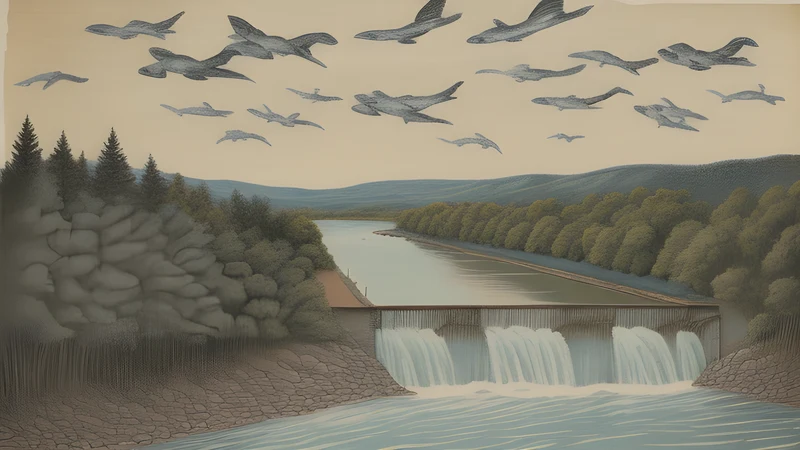
On 24 May 2014, more than two hundred and fifty events took place on the same day in over fifty countries, all of them organised around a single, simple idea: that fish need to move, and that the rivers of the world have been chopped into pieces by dams and weirs that stop them. That first coordinated global effort was World Fish Migration Day, an initiative of the World Fish Migration Foundation based in the Netherlands. It has been held roughly every two years since, each edition built around the slogan “Connecting Fish, Rivers and People”, and it has grown into the largest single day of advocacy for one of the least visible environmental crises on the planet.
Introduction
Migratory fish are among the most remarkable and least appreciated animals on earth. Salmon that return from the open ocean to the exact stream where they hatched, eels that drift thousands of kilometres from the Sargasso Sea to European rivers, sturgeon that have outlasted the dinosaurs, all of them depend on being able to travel freely between the sea and the headwaters. World Fish Migration Day exists to explain why that freedom of movement matters, why it has been lost across most of the world’s rivers, and what can be done to restore it. It is coordinated globally but delivered locally, by conservation groups, anglers, scientists, schools and river authorities.
The problem of the fragmented river
To understand the day you have to understand what a dam does to a river from a fish’s point of view. Many of the world’s most important food and wildlife fish are diadromous, meaning they migrate between salt and fresh water at different stages of their lives. Anadromous fish such as salmon, shad and lamprey are born in rivers, grow up at sea, and return upstream to spawn. Catadromous fish, most famously the eel, do the reverse, living in fresh water and migrating out to the ocean to breed. Either way, the journey is not optional. A salmon that cannot reach its spawning gravels does not reproduce, and a river cut off by a wall of concrete is, for these species, a dead end.
The scale of the fragmentation is staggering. Europe alone has well over a million barriers on its rivers, the great majority of them small, forgotten weirs, culverts and mill dams that no longer serve any purpose. Globally the number runs into the millions. Each one is a hurdle, and a river with a dozen dams presents a fish with a dozen obstacles it must somehow surmount, in each direction, at exactly the right time of year. The cumulative effect has been catastrophic. A landmark 2020 assessment, the first global Living Planet Index for migratory freshwater fishes, found that monitored populations had declined on average by around three-quarters between 1970 and 2016, one of the steepest falls recorded for any group of animals.
History of the day
The World Fish Migration Foundation grew out of the work of fish-passage scientists and river ecologists, particularly in the Netherlands, a country whose entire existence is bound up with the management of water. The founders recognised that the plight of migratory fish was technically well understood by specialists yet almost invisible to the public and to policymakers, and that a coordinated global day might change that. The first World Fish Migration Day in 2014 exceeded expectations, and the biennial rhythm was chosen deliberately to give organisers time to plan ambitious events rather than repeat a thin annual ritual.
Each edition has had a growing reach, with events on every inhabited continent, from dam-removal celebrations in the United States and Europe to fish-release ceremonies in Asia and river clean-ups in Africa and South America. The day has become a fixed point around which the wider “open rivers” movement organises itself, and it has helped push river connectivity onto the agenda of governments and international bodies.
Why the day matters
The argument for free-flowing rivers is not only about the fish, though the fish are reason enough. Migratory fish are a keystone in freshwater and coastal ecosystems, feeding everything from birds to bears, and carrying nutrients from the ocean deep inland when they die after spawning. They are also food and livelihood for millions of people, and the collapse of once-vast runs of salmon, sturgeon and eel has taken whole fishing cultures with it. The European eel, once so abundant it was a staple of the poor, is now classified as critically endangered.
There is a hopeful side to the day, because the damage is often reversible. Removing an obsolete dam can reopen hundreds of kilometres of habitat almost overnight, and the results can be dramatic: fish return to rivers they have been absent from for a century within a single season. Where removal is not possible, well-designed fish passes and ladders can restore some movement. The day is built around this optimism, showcasing successful restorations to argue that the fragmented river is a fixable problem.
How it is celebrated
Because the day is delivered locally, its events are wonderfully varied: guided walks to watch salmon leaping at a weir, the ceremonial removal or opening of a redundant barrier, school projects tagging and releasing young fish, art installations, river clean-ups, and scientific open days where the public can see electrofishing surveys and fish-counting technology at work. Anglers’ clubs, often among the most committed river conservationists, play a large part. The common thread is bringing people physically to the water to see the animals and the barriers for themselves.
The day sits naturally alongside the other observances that ask people to care about the parts of the natural world they rarely see. The health of a river ends at the coast, where it meets the concerns of World Seagrass Day and World Reef Awareness Day, and the great oceanic migrations of fish are echoed by those of the largest marine animals marked on World Whale Day.
World variations
The species at the centre of the day change entirely depending on where you are. In the Pacific Northwest of North America it is all about salmon, whose runs underpin ecosystems, economies and Indigenous cultures that have depended on them for thousands of years. In much of Europe the flagship species is the critically endangered eel, alongside efforts to bring back Atlantic salmon and sturgeon to rivers they were driven from generations ago. In the Mekong basin of Southeast Asia, home to some of the most productive inland fisheries on earth, the day highlights the threat that large hydropower dams pose to migratory catfish and to the food security of tens of millions of people. In South America the Amazon’s giant migratory catfish, which travel thousands of kilometres across the basin, take centre stage.
These local emphases matter because the politics of rivers are always local. A dam that generates electricity for a growing city is a far harder case than a derelict mill weir, and World Fish Migration Day has to make room for genuine trade-offs as well as easy wins. The strength of a globally coordinated day is that it lets a small river group in one country point to a successful removal on the other side of the world, turning isolated efforts into a movement with momentum behind it.
Notable restorations
Some of the day’s most powerful stories come from the growing movement to tear down obsolete dams. In 2024 the largest dam-removal project in history was completed on the Klamath River on the border of Oregon and California, taking out four hydroelectric dams and reopening hundreds of kilometres of river to salmon for the first time in over a century. In France the removal of dams on the Sélune river has become a landmark European example. Europe’s Open Rivers Programme has set out to remove thousands of small barriers across the continent. These projects, once unthinkable, are increasingly routine, and World Fish Migration Day has been one of the platforms that made them speakable.
Fun facts
The European eel’s life story was one of the great mysteries of natural history: no one could find eel eggs or larvae, and Aristotle concluded eels simply arose spontaneously from mud. It was only in the twentieth century that the Danish scientist Johannes Schmidt traced their spawning ground to the Sargasso Sea, thousands of kilometres from the European rivers where they grow up. Salmon navigate back to their birth stream partly by smell, detecting the unique chemical signature of their home waters. Sturgeon are living fossils, little changed for over a hundred million years, and some species can live for a century and grow to the length of a small car. And a well-fed Atlantic salmon can leap more than three metres straight up a waterfall, propelling itself with a flick of its whole body against the falling water. Lampreys, among the most ancient of all migratory fish, are jawless creatures that predate true fish by tens of millions of years, and in some cultures their return upriver was once a prized delicacy served at royal tables.
A closing reflection
The quiet tragedy of the fragmented river is that most of its barriers are pointless. Vast numbers of the dams and weirs blocking the world’s rivers are derelict, serving no mill, no reservoir, no purpose except inertia, and yet they go on severing the ancient journeys of fish that have made them for millions of years. World Fish Migration Day turns that fact into an argument for action. It asks people to stand at a weir on a spring evening, watch a fish hurl itself again and again at an obstacle it cannot see the reason for, and consider that the obstacle could simply be taken away.
Related Content