World Engineering Day
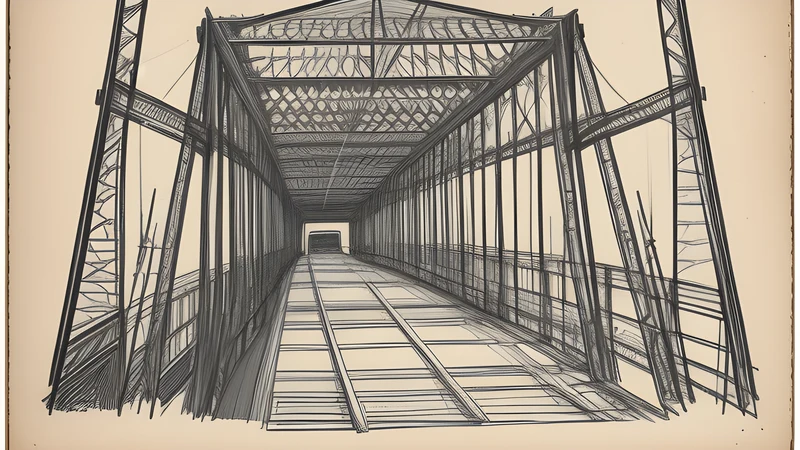
On 4 March 1968, delegates from engineering bodies across the world met in Paris under the auspices of UNESCO and founded the World Federation of Engineering Organizations. Fifty-one years later, on 27 November 2019, the UNESCO General Conference formally proclaimed that same date, 4 March, as World Engineering Day for Sustainable Development. The first was held on 4 March 2020, and the day has been observed annually since, tying the profession that builds the modern world to the specific problem of building it without wrecking the planet in the process.
What the day is for
The full title matters: World Engineering Day for Sustainable Development. The framing was deliberate. UNESCO and the World Federation of Engineering Organizations, known as WFEO, wanted a day that did more than congratulate engineers. They anchored it to the United Nations Sustainable Development Goals adopted in 2015 — the seventeen targets covering clean water, affordable energy, resilient infrastructure, sustainable cities and climate action, most of which cannot be met without engineering.
The reasoning is blunt when you lay it out. Roughly two billion people still lack safely managed drinking water. Hundreds of millions have no reliable electricity. Bridges, sewers, flood defences and power grids age and fail, often invisibly, until the day they do not. Every one of those problems is, at bottom, an engineering problem, and the day exists to make that visible and to press governments to invest in the technical capacity to solve them rather than treating engineering as an afterthought to policy.
The history: an old profession, a young holiday
Engineering as an organised discipline is far older than its international day. The word itself descends from the Latin ingenium, meaning cleverness or native talent, and the earliest engineers were military — the builders of siege engines, catapults and fortifications. The distinction of “civil” engineering, coined in eighteenth-century Britain to mean engineering for peaceful public works, gave the profession its modern shape. Britain’s Institution of Civil Engineers, chartered in 1828, was the first professional engineering body of its kind, and its charter defined engineering memorably as “the art of directing the great sources of power in nature for the use and convenience of man”. The man who drafted that definition, Thomas Tredgold, gave the profession a self-image it has never quite abandoned.
The nineteenth century turned that self-image into concrete and iron. Isambard Kingdom Brunel drove railways, tunnels and steamships through what had seemed physical impossibilities; Joseph Bazalgette’s London sewer network, built in the 1860s, ended the cholera epidemics that had killed tens of thousands. In every industrialising nation, engineers reshaped the landscape faster than any generation before them, and national engineering institutions multiplied to organise and license the work.
Yet those bodies operated in isolation from one another. The founding of WFEO in 1968 was an attempt to give the profession a single international voice, gathering national institutions from dozens of countries into one federation headquartered in Paris. For decades WFEO worked quietly on standards, ethics and capacity-building in developing nations, largely out of public view. The 2019 UNESCO proclamation, driven largely by WFEO’s own advocacy, finally gave that work a public face and a fixed date on the calendar.
Why it matters
The day matters because engineering suffers from a peculiar invisibility. A working bridge, a clean water supply or a reliable power grid attracts no attention precisely when it is doing its job; it becomes news only when it fails. That invisibility feeds a chronic under-appreciation of the technical workforce and, in many countries, a shortage of engineers entering the profession at exactly the moment the world most needs them for the energy transition and climate adaptation.
There is a demographic argument threaded through the day as well. Engineering remains heavily skewed by gender in most of the world, with women making up a small minority of practising engineers in most nations, and the pipeline of young talent is uneven between rich and poor countries. WFEO uses the day to push for engineering education, for diversity in the field, and for the recognition that the Sustainable Development Goals are unreachable without a far larger and broader engineering workforce than currently exists. The effort connects naturally to the campaign behind the International Day of Girls in ICT, which tackles the same imbalance one field over.
How it is celebrated
Each year WFEO sets a theme, and engineering institutions worldwide organise conferences, competitions, school outreach and public lectures around it. Past themes have addressed engineering for a healthy planet, the role of engineers in achieving the Sustainable Development Goals, and building resilience after the pandemic. Universities run design challenges, professional bodies hold awards for sustainable projects, and social-media campaigns spotlight engineers whose work rarely reaches the public eye. UNESCO and WFEO co-host a flagship event, often livestreamed, that gathers ministers, academics and practising engineers to mark the occasion.
Much of the celebration is aimed squarely at the young. Schools host visits from working engineers, hands-on workshops let children build bridges from spaghetti or purify dirty water with simple filters, and mentorship schemes pair students with professionals. The theory is straightforward: a teenager who has never met an engineer is unlikely to become one, so the day works to put engineers in front of the next generation while career choices are still open.
Variations and global context
Because engineering is a global profession with strong national institutions, the day looks different from country to country. Nations with their own long-standing engineers’ days sometimes fold the international observance into existing celebrations. India, for instance, marks its own Engineers’ Day on 15 September, the birthday of the celebrated engineer Sir M. Visvesvaraya, and treats 4 March as a complementary international occasion. Italy, Bangladesh, Iran, Argentina and Turkey all keep their own national engineers’ days, each honouring a local figure or founding institution.
The sustainability framing also lands differently depending on local pressures. In low-income and climate-vulnerable countries, the day’s emphasis on clean water, sanitation and resilient infrastructure speaks to immediate needs. In wealthier nations, it tends to focus on decarbonising energy systems, retrofitting ageing infrastructure and training the workforce for the green transition. The day connects to the broader environmental calendar as well, sharing concerns with occasions like the International Day of Clean Air for Blue Skies and the wider push to build cities that consume less and waste less.
Traditions and symbols
Engineering has no single universal emblem, but the day borrows the profession’s familiar iconography: the gear or cogwheel, the drafting compass and set square, the hard hat, the blueprint. WFEO’s own visual campaigns lean on images of the Sustainable Development Goals rendered in engineering terms — wind turbines, water treatment plants, earthquake-resistant buildings. In several countries engineers wear a symbolic iron or stainless-steel ring, a tradition begun in Canada in 1925 with the Ritual of the Calling of an Engineer, worn on the working hand as a reminder of professional humility and responsibility.
Fun facts
The Canadian iron ring worn on the working hand was, according to enduring legend, originally forged from the wreckage of a collapsed bridge to remind engineers of the human cost of failure. The story is almost certainly apocryphal — the two Quebec Bridge disasters of 1907 and 1916 are usually invoked — but the ritual, whose obligation was written by the poet Rudyard Kipling, is entirely real and still binds new graduates today.
The word “engineer” and the word “ingenious” share the same Latin root, ingenium — a linguistic reminder that the profession was named for cleverness long before it was named for machines.
WFEO represents national engineering institutions from around a hundred countries, meaning the federation behind the day speaks, at least nominally, for tens of millions of engineers across every inhabited continent.
The Institution of Civil Engineers coined the term “civil engineering” specifically to distinguish peaceful public works from the older military engineering — making civil engineers, in a literal sense, the ones who build for peace.
The first World Engineering Day in March 2020 was almost immediately overshadowed by the onset of the pandemic, and much of its planned programme moved online — an accidental demonstration of the digital infrastructure that engineers had spent decades quietly building.
The engineers behind the invisible systems
Some of the day’s advocacy is simply the work of naming names. The sanitary engineers who designed municipal water treatment in the early twentieth century are credited by public-health historians with saving more lives than almost any single medical breakthrough, yet scarcely any are remembered. The structural engineers who codified earthquake-resistant design after disasters in Japan, California and Chile turned each catastrophe into a revised building code that quietly protects millions of people who will never know their names. The day exists in part to attach human faces to these anonymous systems, and to argue that the next generation of them — carbon-free power grids, flood defences for rising seas, water networks for cities swelling past ten million residents — will demand a workforce that does not yet exist. WFEO’s repeated message is that the shortfall is a shortage of trained people as much as of money, and that training them is itself a design problem with a deadline.
A closing reflection
Engineering is the least visible of the great human endeavours precisely because it works. The water arrives, the lights come on, the bridge holds, and no one thinks of the calculations underneath. World Engineering Day asks for a single day’s exception to that silence: a moment to notice the designed world holding steady around us, and to remember that keeping it standing, cleanly and fairly, for a fuller and warmer planet is the largest engineering problem anyone has ever been handed.
Related Content