World Duck Day
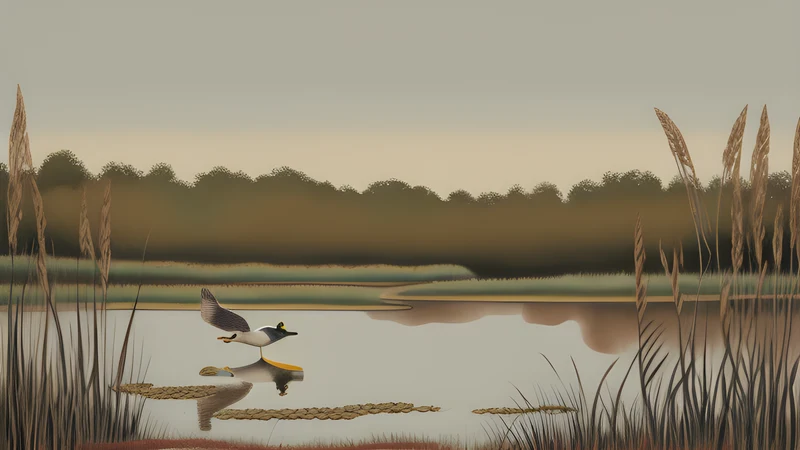
The duck is so familiar that we forget how strange it is: a bird that swims, dives, flies vast distances, walks on land and feeds at the surface of the water, wrapped in a coat so waterproof that it climbs out of a pond bone dry. World Duck Day, marked on 19 January and also kept as National Duck Day, sets aside a moment for this most companionable of wild birds and its many domestic descendants. Ducks live on every continent except Antarctica, turn up in the earliest children’s stories and the oldest farmyards alike, and quietly feed a large share of humanity through the paddy-field duck-farming of Asia. Behind the comic waddle and the cheerful quack is one of the most successful and adaptable groups of birds on the planet, and a day well spent looking at them repays the attention.
What World Duck Day Marks
World Duck Day is an awareness observance celebrating ducks in all their variety — the wild dabbling and diving ducks of the world’s wetlands, and the domestic breeds kept for eggs, meat and feathers. Ducks belong to the family Anatidae, which they share with geese and swans, and the true ducks number well over a hundred species spread across the globe. The day is used by wildlife charities, wetland trusts and smallholders to celebrate the birds, to draw attention to the wetlands they depend on, and to encourage people to look more closely at animals they usually only glimpse from a park bench with a bag of bread. It is a light-hearted observance with a serious edge, because the health of duck populations is one of the clearest measures of the health of the world’s fresh waters.
History
The domestic duck has one of the longest and most useful relationships with humanity of any bird after the chicken, and it descends from two separate wild ancestors on two different continents. Almost every domestic duck breed in the world — the white Aylesbury and Pekin, the upright Indian Runner, the Khaki Campbell bred for eggs — traces back to the mallard, Anas platyrhynchos, the familiar green-headed drake of ponds across the northern hemisphere. The one great exception is the Muscovy duck, a large, red-faced bird domesticated independently in tropical South and Central America long before European contact, and still kept as a distinct farm animal today. The mallard was probably first domesticated in East Asia, with China as the likeliest centre, several thousand years ago, and duck-keeping became fundamental to Chinese agriculture in a way it never quite did in the West.
That Chinese tradition produced two of the most influential foodways on earth. The Pekin duck, bred near the imperial capital, became the ancestor of most commercial meat ducks in the world and the basis of the celebrated dish of Peking roast duck, refined in the imperial kitchens over centuries. Just as important, and far less visible, was the practice of herding ducks through flooded rice paddies, where the birds ate insects, snails and weeds, fertilised the water with their droppings and were fattened at no cost to the farmer — an elegant piece of integrated agriculture recorded in China for well over a thousand years and still practised across South and South-East Asia. In the West the duck occupied a humbler niche as a farmyard bird, though English breeders in towns such as Aylesbury built a thriving nineteenth-century trade fattening ducklings for the London market.
The wild duck, meanwhile, has shaped human culture as quarry, as muse and as scientific subject. Duck hunting is ancient — the birds appear in Egyptian tomb paintings being netted in the marshes of the Nile four thousand years ago — and the pursuit of wildfowl drove the creation of some of the earliest bird conservation movements, as hunters realised that the wetlands they depended on were being drained out of existence. The mallard’s cheerful ordinariness has made it a fixture of art and story from ancient times to the modern picture book, and its habit of imprinting on the first thing it sees after hatching made it central to the twentieth-century study of animal behaviour, when the Austrian scientist Konrad Lorenz famously had greylag geese and ducklings follow him as their mother, work that helped earn him a Nobel Prize.
Why It Matters
Ducks matter to people in two very different registers, and the day speaks to both. In much of Asia the duck is a serious food animal: the world raises well over a billion ducks a year, the great majority of them in China, for meat and for eggs, and duck rearing in flooded fields remains a low-cost, sustainable source of protein for millions of smallholders. In the West and increasingly worldwide, the duck matters more as a wild indicator species. Because ducks depend absolutely on wetlands, and because wetlands are among the most rapidly disappearing habitats on earth, the rise and fall of duck numbers is a barometer of the state of the world’s marshes, lakes and estuaries. Conservation of wildfowl and their wetlands protects a vast web of other life, which is why the duck belongs in the same conversation as the migratory-water observances that honour animals such as those celebrated on World Shorebirds Day and other creatures of pond and wetland like the World Frog Day.
Dabblers, Divers and Sea Ducks
Birdwatchers divide the true ducks into groups by the way they feed, and the distinction is worth knowing because it changes how you see any pond. The dabbling ducks — the mallard, teal, wigeon, gadwall, pintail and the show-off shoveler with its outsized bill — feed at or near the surface, upending so that their tails point at the sky while they sieve the shallow water and mud beneath. They can spring almost vertically off the water into flight, an escape trick that suits the small ponds and flooded fields they favour. The diving ducks — pochard, tufted duck, scaup, goldeneye — sit lower in the water and vanish beneath it entirely to feed on the bottom, needing a running take-off across the surface before they can get airborne. Beyond both lie the sea ducks, the eiders, scoters and long-tailed ducks that ride the winter swell of northern coasts and dive to remarkable depths for shellfish, and the mergansers, fish-hunting ducks with saw-edged bills for gripping slippery prey.
The variety within the family is genuinely dazzling once you look. The mandarin drake of East Asia and the North American wood duck are among the most spectacularly coloured birds in the world; the humble eider produces the softest down known, once gathered from wild nests in Iceland for the finest quilts; and the torrent ducks of the Andes live their whole lives in white-water mountain rivers that would drown most waterfowl. To celebrate the duck is to celebrate a family that has colonised almost every kind of water on earth, from an Arctic sea to a suburban puddle.
How It’s Celebrated
World Duck Day is celebrated informally and cheerfully. Wetland reserves and wildfowl trusts encourage visits and duck-watching; smallholders and hobby keepers share their flocks; and families are gently steered away from feeding ducks white bread, which does the birds little good, toward better offerings such as oats, peas, sweetcorn and proper duck pellets. Online, the day becomes a flood of duck photographs and duck facts. Some celebrate a whimsical companion tradition on 13 January, National Rubber Ducky Day, which honours the bathtub toy rather than the bird but often gets swept into the same week of duck appreciation.
Traditions and Symbols
The duck’s cultural presence is enormous for so unassuming a bird. It is the ugly duckling of Hans Christian Andersen, the whole moral of the tale turning on a misjudged waterbird; it is Donald and Daffy, Jemima Puddle-Duck and the rubber duck of a million bathtubs. The mallard drake’s iridescent green head is one of the most recognisable pieces of plumage in the natural world, and the word “quack” is so bound up with the bird that it lends its name, oddly, to fraudulent doctors. Water, of course, is the duck’s element and its emblem, and the phrase “like water off a duck’s back” pays tribute to the extraordinary oiled feathers that keep the bird dry.
Fun Facts
The old belief that a duck’s quack does not echo is simply false, thoroughly tested by acoustics researchers, though the soft, fading quality of the sound makes the echo genuinely hard to hear. Ducks can sleep with one eye open and one half of the brain awake, a trick called unihemispheric sleep that lets a bird on the edge of the flock keep watch for predators while the birds in the safe middle sleep with both eyes shut. A duck’s feet have almost no nerves or blood vessels in the webbing, so it can stand on ice and paddle in freezing water without feeling the cold or losing much body heat. And a duckling will follow, and bond for life with, the first moving thing it sees after hatching, an instinct called imprinting that has occasionally left ducklings devotedly trailing a dog, a person or a passing tractor.
A Closing Reflection
There is a temptation to treat the duck as a joke, a waddling, quacking piece of comic relief on the surface of the pond, and the day gently resists it. This is a bird that crosses continents on migration, sleeps with half its brain, feeds a billion people and reads the health of the water it lives on with a sensitivity no instrument matches. To pay attention to ducks is, in the end, to pay attention to wetlands, and to the fragile, dwindling waters on which a great deal more than ducks depends. The bird that seems to ask for nothing more than a crust of bread turns out, on a longer look, to be telling us something worth hearing about the state of the world’s ponds.
Related Content