World Dream Day
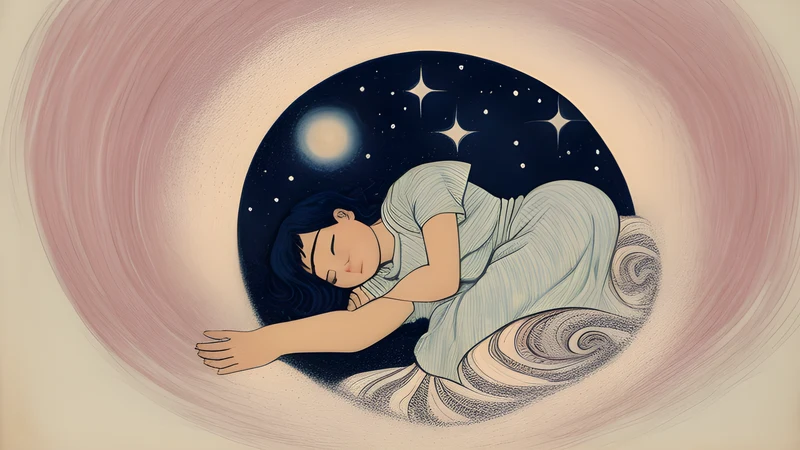
World Dream Day, observed every 25 September, was founded in 2012 by the educator and transformational strategist Ozioma Egwuonwu during a session at Columbia University in New York. Her idea was disarmingly simple: set aside one day a year on which people across the world are encouraged to name a dream out loud, whether personal, professional or collective, and take a single concrete step towards it. The dream in question is the waking kind, the aspiration and the goal, and the day treats the act of declaring one as the first and hardest part of achieving it.
The founder and the idea
Ozioma Egwuonwu conceived World Dream Day as a way to “heal and inspire humanity”, framing dreaming as a discipline rather than a daydream. A speaker, strategist and academic who has lectured at institutions including the United Nations, she designed the day around the belief that unspoken ambitions tend to die quietly, and that the act of articulating a goal, sharing it, and committing to a first action dramatically raises the odds of following through. In 2013 the initiative became an official partner of the United Nations MY World survey, a global consultation that invited millions of ordinary people to vote on the development priorities that mattered most to them, tying individual dreams to a shared vision of the future.
The chosen date sits meaningfully within the calendar of global aspiration. Late September is when world leaders gather for the opening of the United Nations General Assembly in New York, and on 25 September 2015 the UN adopted the Sustainable Development Goals, a set of seventeen ambitions for the planet by 2030. World Dream Day, which predates that vote by three years, has come to resonate with it, since both rest on the same premise that a stated goal is the beginning of a plan.
Dreams as a driving force in history
The language of the dream has powered some of history’s most consequential moments. When Martin Luther King Jr stood before the Lincoln Memorial on 28 August 1963 and departed from his prepared text to improvise the words “I have a dream”, he gave the American civil rights movement its defining phrase and demonstrated the peculiar power of a publicly declared vision to move a nation. Across cultures and centuries, reformers, inventors and explorers have described their guiding purpose as a dream, using the word to mean something more binding than a wish and more imaginative than a mere plan. World Dream Day draws directly on that tradition, treating the naming of an aspiration as an act with real consequences.
Why the day matters
The value of World Dream Day lies in its focus on a documented psychological truth: goals that are specific, written down and shared are far more likely to be met than vague intentions kept private. Research into goal-setting, particularly the work of psychologists Edwin Locke and Gary Latham, has consistently shown that clear, committed goals outperform loose aspirations, and that public accountability strengthens follow-through. By encouraging people to declare a dream and take one small step, the day converts a fuzzy longing into a concrete beginning. It is a low-cost, universally accessible prompt to do the one thing most people postpone indefinitely, which is to admit what they actually want.
How it is celebrated
World Dream Day is marked with an informality that suits its spirit. Schools run “dream declaration” sessions in which pupils write and share an ambition; workplaces hold visioning workshops; individuals post their dreams on social media under shared hashtags; and community groups organise gatherings where people speak their goals aloud to supportive strangers. Coaches, mentors and non-profits use the day to launch programmes, and some participants build “dream boards” or write letters to their future selves. The day sits comfortably beside other reflective and celebratory observances such as World Gratitude Day, World Compliment Day and World Hello Day, all of which share a belief in small deliberate acts of human encouragement.
The other kind of dreaming
The day celebrates waking ambition, yet the word inevitably carries its night-time meaning, and the two are more entangled than they seem. Modern dream science began in 1953, when Eugene Aserinsky and Nathaniel Kleitman at the University of Chicago identified rapid eye movement sleep and connected it to vivid dreaming, opening the study of the sleeping mind to the laboratory for the first time. Half a century earlier, Sigmund Freud had published The Interpretation of Dreams, dating it symbolically to 1900, arguing that dreams were the “royal road to the unconscious”, a theory later scientists largely set aside but which shaped the entire twentieth century’s fascination with the inner life. Researchers today explore lucid dreaming, in which sleepers become aware that they are dreaming and can sometimes steer the experience, and the growing evidence that sleep and dreaming help consolidate memory and process emotion. It is a neat coincidence that the same word covers both the aspirations we chase by day and the strange theatre the brain stages by night, and World Dream Day tends to gather a little of that mystery to itself.
Dreams across cultures
Almost every human culture has treated dreams as meaningful. The Aboriginal peoples of Australia describe the Dreaming, or Dreamtime, a profound concept of the creative era in which ancestral beings shaped the land and law, a framework of belief with no real equivalent in European thought. Ancient Mesopotamians, Egyptians and Greeks kept dream oracles and manuals of interpretation, and pilgrims slept in temples hoping for a healing or prophetic vision in a practice called incubation. Many Indigenous traditions of the Americas regard dreams as guidance from the spirit world. Against that long backdrop, the modern World Dream Day is a secular, optimistic descendant, stripping away prophecy and keeping the older intuition that a dream, taken seriously, has the power to change a life.
Surprising facts
Studies of goal achievement suggest that simply writing a goal down can raise the likelihood of reaching it by a substantial margin, which is why the day’s emphasis on declaration is more than symbolic. World Dream Day’s partnership with the UN MY World survey helped feed into a consultation that gathered the views of nearly ten million people worldwide. The founder deliberately timed the observance to the season of the UN General Assembly, aligning personal dreaming with the world’s largest gathering of collective ambition. And the day has spread organically, without a governing body or commercial sponsor, growing chiefly through educators and community leaders who adopt it because it costs nothing and asks only for honesty about what people want.
Turning a dream into a plan
What separates World Dream Day from a mere pep talk is its insistence on a first step, and there is a small science to taking one well. The most durable advice, drawn from decades of goal-setting research, is to make a dream specific and time-bound rather than grand and vague: “write three pages a week” beats “become a writer”, because the mind can act on the first and only admire the second. Breaking a large ambition into its smallest sensible action lowers the barrier to starting, and starting is where most dreams stall. Naming a date, however soft, converts intention into commitment. Telling one trusted person and asking them to check in adds the gentle pressure of accountability that solitary resolutions lack.
Practitioners of the day often pair the declaration with a visible reminder, whether a written note kept where it will be seen daily, a “dream board” of images, or a letter addressed to the writer’s future self and opened a year later. The mechanism behind all of these is the same: keeping the goal in view so that daily choices bend, even slightly, towards it. None of this guarantees success, and the day is honest about that. What it offers instead is the reliable finding that people who articulate and record their goals, and who take a concrete first action while the resolve is fresh, achieve them far more often than those who wait for the perfect moment that rarely arrives.
A closing reflection
There is a gentle courage in the premise of World Dream Day. Naming a dream means risking the possibility of failing at it, which is why so many people keep their real ambitions unspoken, safe and unattempted. The day counters that instinct with the smallest possible demand: not that anyone achieve a dream, only that they say it and take one step. Whether the dream is to learn a language, mend a friendship, start a business or change a community, the act of declaring it in the open turns a private wish into a public intention, and intentions, once spoken, have a way of becoming plans. On the last full week of a September evening, that is a modest and rather beautiful thing to ask of the world.
Related Content