World Dracula Day
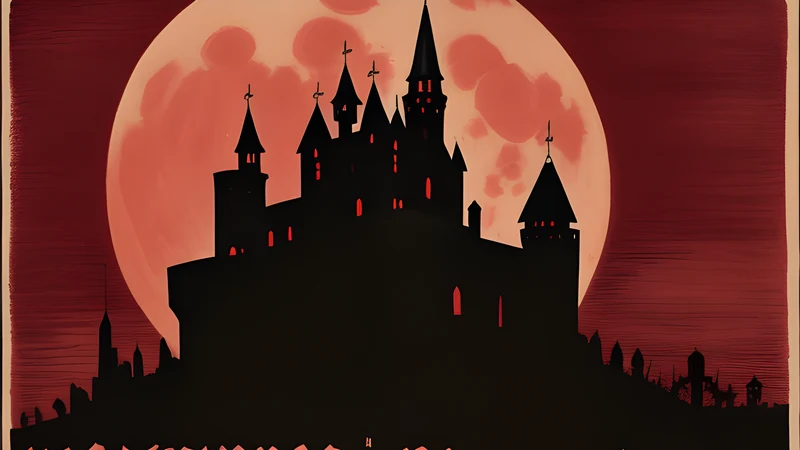
On 26 May 1897, a London publisher named Archibald Constable and Company released a novel by the business manager of the Lyceum Theatre, a genial Dubliner called Bram Stoker. It was priced at six shillings, bound in yellow cloth, and titled simply Dracula. Nobody at the launch could have guessed that the Transylvanian count inside would outlive every reviewer, every rival author, and Stoker himself many times over. World Dracula Day marks that publication anniversary, and it belongs as much to the seaside town of Whitby as it does to the Carpathians.
Introduction
World Dracula Day is observed each year on 26 May, the date printed Dracula first went on sale. It is a young commemoration wrapped around a very old fear. The day celebrates the single most influential vampire story ever written, the character it launched, and the extraordinary afterlife that character has enjoyed on stage, on screen, and in the imagination of readers across more than a century.
Origin
The day was formally established in 2012 by the Whitby Dracula Society 1897, a group named for both the novel’s publication year and the North Yorkshire town where much of the story’s English action unfolds. Whitby has a genuine claim on the legend. Stoker holidayed there in the summer of 1890, and it was in the town’s public library that he copied out a single word from an obscure travel book that would change literature.
That book was William Wilkinson’s An Account of the Principalities of Wallachia and Moldavia, published in 1820. In a footnote, Wilkinson noted that “Dracula in the Wallachian language means Devil.” Stoker had until then been calling his villain “Count Wampyr” in his working notes. He crossed the name out and wrote “Dracula” instead. The society chose 26 May because it wanted to honour the object itself, the printed book, rather than any one adaptation.
There is a second, quieter anniversary tucked eight days earlier. On 18 May 1897, Stoker staged a marathon reading of the script at the Lyceum, billed as Dracula, or The Un-Dead, purely to register dramatic copyright before the book appeared. The reading ran close to four hours, drew a scattering of theatre staff, and prompted Henry Irving, the great actor-manager Stoker served, to pronounce it “Dreadful” from the wings. That single word ensured no authorised stage Dracula appeared in Stoker’s lifetime.
History
The historical roots run far deeper than 1897. The name Dracula belonged to a real dynasty. Vlad III, voivode of Wallachia, born around 1431 and killed in battle near Bucharest in the winter of 1476 to 1477, was known as Vlad Dracula, “son of the dragon,” after his father Vlad II Dracul, who had been inducted into the chivalric Order of the Dragon by the Holy Roman Emperor Sigismund in 1431. Vlad III earned a second and grimmer epithet, Țepeș, “the Impaler,” for the manner in which he executed enemies and criminals. As a boy he and his younger brother Radu were handed to the Ottoman court as political hostages, an experience that shaped both his tactics and his hatreds. German pamphlets printed in the 1480s and 1490s spread lurid accounts of his cruelty across Europe, making him one of the first figures in history to become notorious through the newly invented printing press.
Stoker borrowed the name and a scrap of geography, but very little else. He never travelled to Transylvania or Romania. He built his count from library research, chiefly from Emily Gerard’s 1885 essay “Transylvanian Superstitions,” written while she lived in the region as the wife of a Hungarian cavalry officer, which gave him the word nosferatu and a wealth of folk belief about the undead. He wrote the novel across roughly seven years, keeping meticulous notes now held at the Rosenbach Museum in Philadelphia. His working titles included The Un-Dead and The Dead Un-Dead before the single surname won out. An entire opening chapter, set near Munich and cut before publication, survived to be printed by his widow in 1914 as the short story “Dracula’s Guest.”
The book’s construction is one reason it endures. Dracula is epistolary, assembled from journal entries, letters, ship’s logs, newspaper clippings, and phonograph transcriptions, so the reader pieces the horror together from fragments the characters themselves cannot yet understand. Reviews in 1897 were respectful and the sales were steady rather than spectacular; the Daily Mail reached for Frankenstein, Wuthering Heights and Poe’s “Fall of the House of Usher” to find anything comparable. The true explosion came later, through the theatre and then the cinema, and it began with an act of piracy. In 1922 the German director F. W. Murnau made Nosferatu, an unauthorised adaptation with names changed. Stoker’s widow Florence sued and won, and a court ordered every print destroyed. A handful survived, which is the only reason the film exists today. The authorised stage version reached Broadway in 1927 with Bela Lugosi, whose Hungarian accent and 1931 Universal film performance fixed the count’s image for the twentieth century, an image later reshaped again by Christopher Lee across nine Hammer films.
The count never stopped mutating. Werner Herzog remade Murnau’s film in 1979 with Klaus Kinski in the lead; Francis Ford Coppola returned closely to Stoker’s text in 1992 and put the author’s name in the title as Bram Stoker’s Dracula; and by one widely cited count Dracula is the most-portrayed literary character in cinema history, with only Sherlock Holmes ahead of him. Each new version keeps the cloak and the accent while quietly swapping the meaning underneath, from Cold War contagion to sexual liberation to grief.
Why It Matters
Dracula gave shape to a fear that had drifted through European folklore for centuries without a face. Before Stoker, the vampire of legend was a bloated, ruddy peasant revenant. After him, the vampire became an aristocrat: charming, foreign, ancient, and sexually magnetic. Almost every vampire in modern fiction descends from that one book, which means the day quietly celebrates the birth of an entire genre. It also marks something about how stories travel. A footnote copied in a Whitby library became a global icon precisely because the printed word could carry it, the same technology that had made Vlad III infamous four hundred years earlier.
How It Is Marked
Whitby remains the beating heart of the observance. The town hosts vast goth gatherings twice a year, a tradition begun in 1994 by a local fan named Jo Hampshire and now drawing thousands in Victorian mourning dress up the 199 steps to St Mary’s churchyard and the ruined abbey that inspired Stoker’s cliff-top scenes. Elsewhere, readers hold marathon read-alouds of the novel, libraries mount displays, and cinemas screen the Lugosi and Lee films back to back. Enthusiasts organise blood-donation drives, turning the vampire’s appetite toward something useful. Cape-wearing is, unsurprisingly, encouraged.
Around the World
Romania has a complicated relationship with its most famous export. Bran Castle in Transylvania, built by the Saxon burghers of Brașov from 1377 as a customs and defensive fort, is marketed as “Dracula’s Castle,” though Vlad III likely never lived there and the fictional count’s home is described quite differently in the novel. The country receives waves of literary tourists each year, some baffled to learn that most Romanians grew up with Vlad Țepeș as a national defender against the Ottomans, celebrated for his daring night raid on Sultan Mehmed II’s camp near Târgoviște in June 1462, rather than as a monster. In Ireland, Stoker’s Dublin birthplace is increasingly celebrated, and the Bram Stoker Festival each October fills the city with living-dead theatre. For readers who enjoy tracing folklore back to its unsettling roots, the day pairs naturally with International Bat Night and the older European fire-and-spirit rites of Walpurgis Night.
Traditions and Symbols
The furniture of the legend is largely Stoker’s invention, mixed with folk belief. Garlic, the crucifix, the wooden stake, and the aversion to sunlight all appear or are strengthened in the novel, though the idea that daylight destroys a vampire owes more to Nosferatu than to Stoker’s text, in which the count merely loses his powers by day. The cape with its high collar is a stagecraft flourish, added so that an actor could turn his back to the audience and appear to vanish. The count’s bloodless pallor, his hairy palms, and his rank breath are all in the book, details later adaptations quietly dropped.
Fun Facts
The shipwreck that carries Dracula to England, the Demeter, was inspired by a real event Stoker witnessed evidence of in Whitby: the Russian schooner Dmitry ran aground in the harbour in October 1885, and its cargo of silver sand became the count’s boxes of Transylvanian earth. Stoker gave the doomed ship a Greek name and let the rest follow.
Vlad III was briefly a folk hero to Romanians for a reputation that horrified everyone else. Estimates of the number he impaled run into the tens of thousands, and one German account claims he dined calmly among the dying.
The word nosferatu, so central to vampire lore, may be a mistake. Emily Gerard presented it as Romanian for “the undead,” but linguists have never confidently traced it, and it appears in no standard Romanian dictionary.
Stoker’s original typescript, long thought lost, resurfaced in a Pennsylvania barn in the 1980s. Its first page still bore the crossed-out working title and a handwritten correction, physical proof of how close the world came to fearing “Count Wampyr” instead.
A Closing Reflection
There is something fitting in a day that honours a book rather than a birthday. Vlad III has a death date and a battlefield; the count has neither, which is rather the point of him. What Stoker actually created on 26 May 1897 was a way of talking about desire, disease, foreignness, and death that each generation refits to its own anxieties. Every age gets the Dracula it needs, and the crag, the moon, and the wheeling bats are simply the frame we hang that reflection in.
Related Content