World Coconut Day
On 2 September 1969, in the years after several newly independent Asian and Pacific nations were searching for ways to coordinate their export economies, representatives gathered to establish the Asian and Pacific Coconut Community. That intergovernmental body, now headquartered in Jakarta, chose the anniversary of its own founding as the date for World Coconut Day. Observed each 2 September, the day is less carnival than working occasion — a moment when agriculture ministries, researchers and the smallholders who actually climb the palms turn attention to a single tree that feeds, employs and shelters millions across the tropics.
Where the day comes from
The day’s authorship is, unusually, well documented. The Asian and Pacific Coconut Community — an organisation under the auspices of the United Nations Economic and Social Commission for Asia and the Pacific — was founded on 2 September 1969, and it later adopted that date as World Coconut Day. The first observance is generally placed in 2009, four decades after the community’s founding, when the body sought a fixed annual platform to promote the crop’s economic and nutritional value and to lobby for the welfare of growers. Each year the community announces a theme, typically built around sustainability, processing or farmer income, which gives the day its focus.
A history carried on the tide
The coconut palm, Cocos nucifera, has accompanied human movement across the tropics for thousands of years, and it is one of the few major crops that can disperse itself without help. The fibrous, buoyant, salt-tolerant fruit floats on seawater for weeks and germinates on distant shores, which is how coconuts colonised remote Pacific atolls long before any boat reached them. Genetic studies published in 2011 by Kenneth Olsen and colleagues identified two distinct domestication origins — one in the Indian Ocean basin, one in the Pacific — and traced how human seafaring later mixed the two populations, with Austronesian voyagers and later Arab and European traders carrying the nut along their routes.
For coastal peoples the palm was never a single crop but an entire toolkit, which is why Pacific and South Asian cultures gave it titles such as the “tree of life” and “tree of a thousand uses”. The modern, more bureaucratic chapter began in the late 1960s, when producing nations facing volatile copra prices and ageing plantations sought to pool research and bargaining power — the cooperative impulse from which the community, and eventually its day, grew.
Why it matters
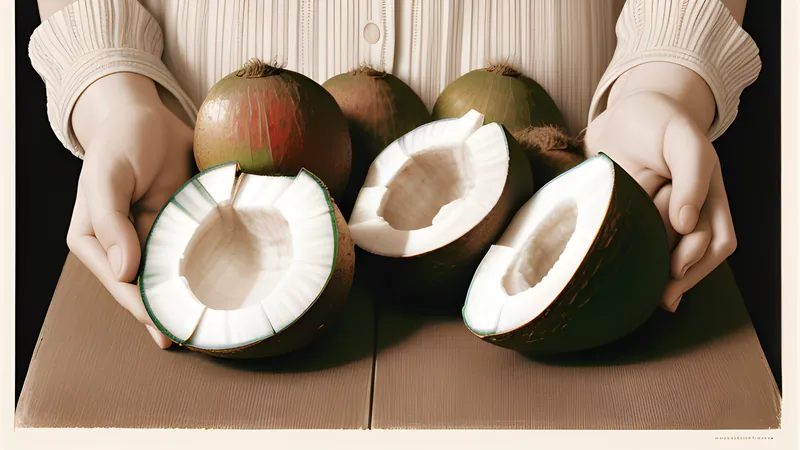
For a great many tropical households the coconut is not a luxury but a staple, and the day exists to keep that fact visible. The water inside a young green nut is a clean, sterile drink; the white flesh is eaten fresh, dried into copra, or pressed for oil; the milk forms the base of countless curries and sweets. Beyond the kitchen, the husk yields coir for ropes, matting and potting compost, the hard shell becomes charcoal and activated carbon, and the trunk and fronds provide timber and thatch.
That versatility comes with real fragility, which the observance is designed to confront. A large share of the world’s palms are decades old and well past peak yield; smallholders earn little and lack the capital to replant; and diseases such as lethal yellowing and pests like the rhinoceros beetle can devastate groves. World Coconut Day functions partly as advocacy — a lever for replanting schemes, fairer prices and investment in higher-value products such as virgin coconut oil rather than raw copra.
The economics behind that advocacy are sobering. The overwhelming majority of the world’s coconuts are grown not on plantations but by smallholders working a few hectares each, many of whom sell raw copra — the dried flesh — at prices set far down a chain they have no power to influence. Because a newly planted palm takes six or seven years to bear its first fruit and longer still to reach full yield, a farmer who replants is gambling on a market half a decade away, a risk few can afford without support. This is the unglamorous core of the day: behind the cheerful image of milk and oil and beach-fringing palms lies a question of whether the people who tend the trees can make a living doing so, and whether the next generation of palms will be planted at all.
How it is celebrated
The day is marked chiefly through conferences, seminars and trade events run by agriculture ministries, research institutes and industry associations across the producing nations. The Asian and Pacific Coconut Community itself convenes the central programme, often hosted in rotation among member states such as the Philippines, Indonesia, India and Sri Lanka, where officials and exporters debate prices, replanting targets and the push toward higher-value goods. Universities and agricultural colleges in producing regions hold open days and student competitions, and development agencies use the date to publicise schemes aimed at lifting smallholder incomes. Farmers’ fairs showcase new processing techniques and finished goods, from cold-pressed oils to coir-based products, while scientists present advances in cultivation and disease control. In some communities the occasion turns more festive, with cookery demonstrations and tastings that put the fruit’s culinary range on display — and with the inevitable contests in which climbers race up the trunks.
In the kitchen
Few ingredients move so easily between savoury and sweet. Coconut milk lends body and gentle sweetness to the curries of Thailand, Sri Lanka and southern India, and grated flesh enriches chutneys, rice dishes and innumerable puddings. In Jamaica it cooks the national dish of rice and peas; in Brazil it perfumes the fish stew moqueca. Desiccated coconut tops cakes and biscuits worldwide, and toasted flakes add fragrance and crunch. The day pairs naturally with the dessert-focused observances elsewhere on the calendar — the coconut torte and the coconut cream pie both put the fruit centre stage. The water sealed inside a green nut is prized as a natural refreshment, while the pressed oil, with its high smoke point and long shelf life, has become a fixture in both frying and baking.
Cultural variations
Indonesia, the Philippines and India consistently rank among the largest producers, but the coconut’s cultural weight extends well beyond economics. In Hindu ritual the fruit is offered at temples and broken at the start of ceremonies as a symbol of purity and the ego surrendered to the divine; the festival of Nariyal Purnima on the west coast of India marks the end of the monsoon by casting coconuts into the sea to calm the waters before the fishing season. In the Pacific islands the palm underpins traditional diet, craft and ceremony alike. This breadth means World Coconut Day resonates differently from place to place — a matter of trade policy in one capital, a thread of heritage and faith in another.
Symbols and traditions
The palm itself, leaning over a beach, is the day’s most recognisable image, but the whole fruit carries the meaning. Its very name records a human reaction to it: Portuguese sailors called it coco, “grinning face” or “grimace”, after the three germination pores at its base that resemble a small face. The act of offering or breaking a coconut, central to ritual across South Asia, captures the fruit’s standing as something both ordinary and sacred — a daily food that is also, at the temple door, an emblem of purity. The palm frond carries its own weight of meaning in the wider tropics: woven into mats, baskets, brooms and the thatched roofs of countless coastal homes, it stands for the self-sufficiency of communities that have long built their material lives almost entirely from a single tree, taking food, drink, fuel, fibre and shelter from the same trunk.
Fun facts
- The coconut is botanically a drupe, not a true nut — the same fruit category as a peach or an olive.
- The water inside an unopened green coconut is naturally sterile, and field reports from the Pacific theatre of the Second World War describe it being used in emergencies as an improvised intravenous fluid.
- A 2011 genetic study found the coconut was domesticated twice, independently, in the Indian and Pacific Ocean basins before human voyagers mixed the two lineages.
- The name “coconut” comes from the Portuguese coco, meaning a grinning face, inspired by the three dark pores at the base of the shell.
- A single palm can keep bearing fruit for sixty to eighty years, producing dozens of nuts a year throughout.
A closing reflection
World Coconut Day asks for something rare in food culture: gratitude for the ordinary. The coconut is so casually present in shops and recipes — a tin of milk, a bag of flakes, a bottle of oil — that the work and the ecosystems behind it slip out of view entirely. To pause on 2 September is to notice the climber who fetched the nut, the resilience of a plant that crossed oceans under its own power, and the quiet generosity of a single fruit that asks little of the soil and gives back almost everything it has.
Related Content