World Cocktail Day
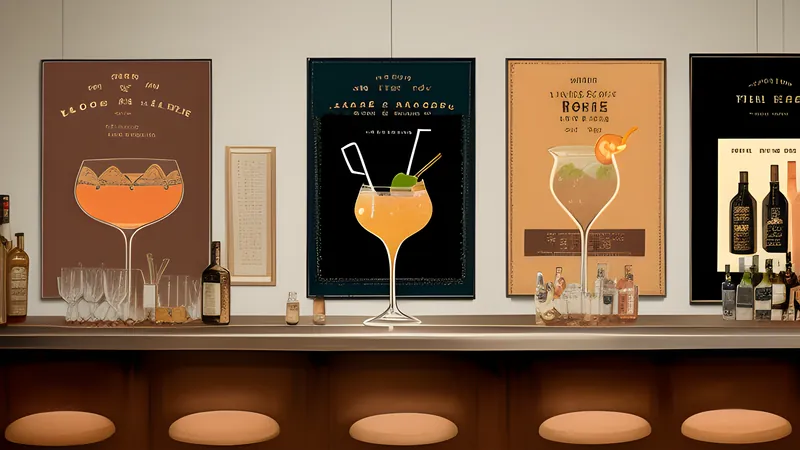
On 13 May 1806, a reader of a small newspaper in Hudson, New York, wrote in to ask what exactly the editor had meant by the word “cocktail”, which had appeared in a satirical election report the previous week. The reply, printed in The Balance and Columbian Repository, became the first known definition of the term in print: a cocktail, the editor explained, was “a stimulating liquor composed of spirits of any kind, sugar, water, and bitters”. That sentence is the reason 13 May is now World Cocktail Day — an annual nod to the drinks themselves, the people who mix them, and the two centuries of refinement that separate a thoughtfully built drink from a careless one.
Where the day comes from
The day takes its date directly from that 1806 newspaper definition, which the modern drinks world treats as the cocktail’s documented birth certificate. The observance is largely a creation of the contemporary bar trade and drinks industry rather than any government or founding committee, and it gained traction in the early twenty-first century alongside the broader revival of classic bartending. The deeper etymology of the word itself remains genuinely unsettled — theories range from the docked “cock tails” of mixed-breed horses to the French coquetier egg-cup said to have served early New Orleans drinks — and none is firmly proven. That uncertainty is part of the term’s charm: we can date the word’s first definition to the day, but not its true origin.
A history of the mixed drink
Mixed drinks long predate the word. Punches — a blend of spirit, citrus, sugar, water and spice whose name may derive from the Hindi panch, “five”, for its five ingredients — reached England via East India Company traders in the seventeenth century. Slings, juleps and toddies circulated in taverns on both sides of the Atlantic well before 1806.
The nineteenth century gave the cocktail its golden age, and it had a founding professional: Jerry Thomas, an American bartender whose 1862 volume How to Mix Drinks; or, The Bon Vivant’s Companion was the first cocktail book to codify recipes in print. Thomas was a showman — his flaming Blue Blazer, a stream of burning whisky poured between two mugs, was as much performance as drink — and he did more than anyone to establish bartending as a craft with standards.
Two upheavals reshaped what followed. American Prohibition, from 1920 to 1933, drove drinking underground into speakeasies and, paradoxically, exported the craft: skilled bartenders such as Harry Craddock left for London, where his 1930 Savoy Cocktail Book became a bible of the trade, while Havana and Paris absorbed others. The mid-to-late twentieth century then saw the craft slump into a fog of sour mixes and sugary novelties, before a determined revival — led by figures such as Dale DeGroff at New York’s Rainbow Room in the late 1980s — reinstated fresh juice, quality ice and proper technique. By the early 2000s the “craft cocktail” movement was global.
Why it matters
A day for cocktails is, at its best, a day for craft rather than consumption. A genuinely good drink is an exercise in balance and precision, and the contrast between a Daiquiri made with fresh-squeezed lime and one made with bottled sour mix is the difference between a finished dish and a microwaved one. Marking the day pushes drinkers — and bars — toward the careful version. The observance is pointedly about appreciation, not excess, and the modern bar world increasingly pairs it with a serious low- and no-alcohol movement that applies the same technique to drinks with little or no spirit.
The day also carries a small piece of social history worth recovering. For much of the twentieth century the cocktail was bound up with the rituals of hospitality — the host’s drinks trolley, the welcome before dinner, the round bought at the end of a working week — and the act of building a drink for someone else was understood as a form of care. The craft revival of the past two decades has in some ways restored that meaning, returning attention from the brand on the bottle to the hand that measures, stirs and serves. A cocktail is one of the few foods or drinks that is almost never made for oneself alone; it is, by its nature, a thing offered to company, and a day that honours the making of it is quietly a day about conviviality as much as about spirits.
How it is celebrated
World Cocktail Day lives mostly within the hospitality trade and among enthusiasts. Bars run menus that revisit historic recipes, host tastings and masterclasses, and use the date to spotlight the skill of their staff. Cocktail competitions are frequently timed to coincide with it, and bartending bodies use the occasion to recognise excellence in a profession that spent much of the last century treated as unskilled labour. Drinks brands, inevitably, treat the day as a marketing fixture, seeding recipes and sponsored events — a commercial reality that sits a little awkwardly beside the day’s stated emphasis on craft over consumption, and one worth naming honestly rather than pretending otherwise. Distillers and drinks brands time launches to it. At home, the day works as a prompt to mix one classic properly — to discover what a fresh citrus juice, a measured pour and good ice actually do to a drink. It sits naturally beside the spirit-focused dates elsewhere on the calendar, from National Cocktail Day in March to the single-spirit observances such as National Vodka Day.
Anatomy of a cocktail
The classic structure pairs a base spirit with elements that modify it: something sweet, something sour, sometimes something bitter or aromatic. The Daiquiri — white rum, lime, sugar — is the textbook demonstration of that trinity, and the Margarita, Whisky Sour and Sidecar are all variations on the same sour template. Technique matters as much as recipe: shaking aerates and chills a drink while diluting it quickly, which suits citrus drinks, whereas stirring keeps a spirit-forward drink like a Martini or Manhattan clear and silky. The quality and shape of the ice govern both chill and dilution, the choice of glass shapes temperature and aroma, and a twist of peel expressed over the surface sprays citrus oils that perfume the very first sip.
Cultural variations
Cocktail culture is now thoroughly international, and the canon reads like a world map. Cuba gave us the Mojito and the Daiquiri, the latter named after a mining town near Santiago and popularised by the engineer Jennings Cox. Italy contributed the Negroni — said to have been created in Florence around 1919 when Count Camillo Negroni asked for his Americano fortified with gin — and the Aperol spritz. The Manhattan and the Martini are New York icons. Japan, from the 1920s onward, developed a meticulous, almost ceremonial school of bartending, prizing hand-carved ice and exact measurement; the technique of “hard shaking” and the diamond ice ball are Japanese contributions now copied worldwide. London’s bars are repeatedly ranked among the best on the annual “World’s 50 Best Bars” list, which has itself become a global conversation about where the craft is being pushed furthest.
Symbols and traditions
The coupe, the shaker and the lime twist are the day’s natural emblems, but the truest symbol is the dash of bitters that the 1806 definition insisted upon. Bitters — concentrated aromatic infusions like Angostura, created in Venezuela in 1824 by the German physician Johann Siegert as a stomach tonic — began life as medicine before becoming a bartender’s essential seasoning. Their survival in the recipe links every modern Old Fashioned directly to that two-hundred-year-old newspaper sentence.
Fun facts
- The Old Fashioned is essentially the 1806 definition built in a glass — spirit, sugar, water and bitters — and is among the oldest cocktails still ordered by name today.
- Angostura bitters were invented in 1824 as a medicinal tonic by Dr Johann Siegert, a surgeon in Simón Bolívar’s army, in the Venezuelan town of Angostura.
- The Martini has generated more argument than perhaps any drink — gin or vodka, shaken or stirred, and how little vermouth counts as “dry” — yet no single original recipe is documented.
- The word “cocktail” first appeared in print in 1803, but its first definition came three years later, on the date the day now celebrates.
- Jerry Thomas reputedly mixed drinks wearing diamond jewellery and earned more than the US Vice-President of his day, a measure of how prized a star bartender had become by the 1860s.
A closing reflection
The pleasure of a cocktail is easy to take at face value — a cold glass, a good evening — but the day quietly rewards a little curiosity about what is in the hand. Two centuries of refinement, a scattering of disputed origin stories, and the steady work of bartenders who treated mixing as a discipline all sit behind the simplest Daiquiri. To raise a well-balanced glass on 13 May is to acknowledge that care, applied to something as small as a drink, is its own modest form of art.
Related Content