World Choral Day
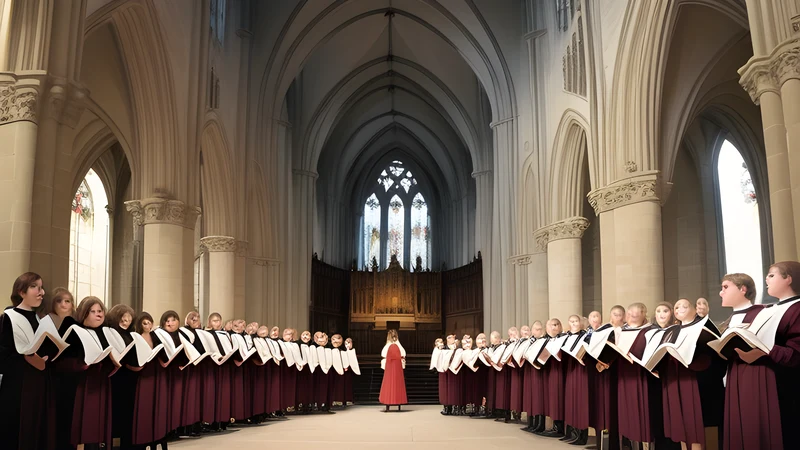
In August 1990 the General Assembly of the International Federation for Choral Music met in Helsinki and adopted a proposal from the Venezuelan composer and conductor Alberto Grau: a single day each year on which choirs everywhere would sing at the same time, in the same spirit, for the values of solidarity, peace and mutual understanding. World Choral Day has fallen on the second Sunday of December ever since, and on that Sunday millions of singers on every inhabited continent lift their voices in concerts, sing-alongs and “days of friendship” linked by nothing more than a shared date and a shared idea.
Origin
Grau’s proposal answered a simple observation: choral singing is one of the most widely practised of all musical activities, involving amateurs far more than professionals, yet it had no common global occasion. The International Federation for Choral Music, itself founded only in 1982 to connect the world’s choral organisations, was the natural body to declare one. Each year an honorary committee of distinguished musicians composes a short message that is read aloud at participating concerts, translated into dozens of languages, so that a village choir in Estonia and a school choir in Argentina open their programmes with the same words. The day has no governing ceremony and no fixed repertoire; its only rule is participation, which is precisely what has let it spread across the world without any central budget or authority.
History
The tradition the day celebrates is far older than the day itself. Group singing is among the most ancient of human arts, but the Western choral tradition as we recognise it took shape in the monasteries of medieval Europe, where the unaccompanied plainchant later called Gregorian gave the liturgy a single melodic line sung in unison. From that foundation grew polyphony — several independent voices woven together — perfected in the Renaissance by composers such as Josquin des Prez and Giovanni Pierluigi da Palestrina, whose interlocking lines set a standard of clarity that choirs still measure themselves against. The Reformation then pushed singing out of the choir stalls and into the congregation, giving Protestant Europe the hymn and the chorale, forms that Johann Sebastian Bach would raise to their summit in his Passions and cantatas in the early eighteenth century.
The oratorio carried choral music out of the church and into the concert hall. When George Frideric Handel’s Messiah had its premiere in Dublin in 1742, its “Hallelujah” chorus gave the English-speaking world a piece that ordinary singers could and did learn by heart, and the great choral societies of the nineteenth century were built to perform it. In 1824 Ludwig van Beethoven took the still more radical step of writing a chorus into the finale of his Ninth Symphony, setting Friedrich Schiller’s “Ode to Joy” and turning massed voices into the climax of an orchestral work — a gesture so influential that the melody now serves as the anthem of Europe. Across the Atlantic, the spirituals sung by enslaved African Americans grew into the gospel tradition, one of the most powerful choral forms of the twentieth century, while barbershop harmony and the vast amateur choir movements of Wales and the Baltic gave the art deep roots in ordinary life.
Nowhere did choral singing carry greater political weight than in the Baltic states. Estonia’s Song Festival, the Laulupidu, first held in 1869, gathered tens of thousands of singers into a single choir, and in the late 1980s those festivals became the heart of what history now calls the Singing Revolution, when Estonians, Latvians and Lithuanians sang forbidden national songs as a peaceful protest that helped end Soviet rule. That a repertoire of folk hymns could stand in for an army is the strongest possible argument for the values Alberto Grau wrote into World Choral Day.
The twentieth century did not slow the tradition; it multiplied it. Composers such as Ralph Vaughan Williams and Benjamin Britten wrote major works for amateur choirs as readily as for professionals, and a later generation, from John Rutter’s carols to Eric Whitacre’s shimmering close harmonies, produced music that community and school choirs across the world took up almost the moment it was published. Alongside the concert repertoire, the unaccompanied close-harmony movement — vocal jazz ensembles, a cappella groups, gospel choirs — carried choral singing into pop culture, and the sudden ubiquity of choirs in film scores gave the massed human voice a new life as the sound of awe itself.
Why it matters
Choral singing is one of the few art forms in which the amateur is central rather than marginal. A person who would never dare play a violin in public will happily join forty others in a choir, hidden and supported within the sound, and the experience of blending one voice into a larger whole is unlike any solo pursuit. Research into group singing has repeatedly found that it synchronises breathing and even heart rates among participants, lowers stress and builds a strong sense of belonging, which helps explain why choirs form in workplaces, hospitals, prisons and refugee camps as readily as in cathedrals. World Choral Day exists to honour that accessibility and to remind the singing world that its scattered local traditions are part of a single global family.
How it is celebrated
Because the day falls in the second week of December, in the northern hemisphere it coincides with the season of Advent and Christmas concerts, and many choirs simply dedicate an existing seasonal performance to World Choral Day, opening with the year’s official message. Others organise “days of friendship”, inviting neighbouring choirs to sing together, or stage open rehearsals and come-and-sing events at which anyone may join for an afternoon. In the southern hemisphere, where December is high summer, the celebrations spill outdoors into parks and squares. The International Federation for Choral Music collects reports and photographs from around the world, and in recent years live streaming has let choirs in different time zones share their performances across the internet, approximating the founder’s dream of the whole world singing at once.
Choral traditions around the world
The word “choir” contains a startling variety of sounds. In the valleys of south Wales the male voice choir, born among miners and chapel congregations, still fills rugby stadiums with four-part hymns. In the Republic of Georgia, whose polyphony is recognised by UNESCO, singers layer three independent lines into harmonies unlike anything in Western tradition, some of them older than written music. Bulgaria’s female choirs, popularised worldwide under the name Le Mystère des Voix Bulgares, use a piercing open-throated tone and deliberate dissonances that Western ears find both strange and thrilling. In South Africa the isicathamiya style, carried to global fame by Ladysmith Black Mambazo, grew out of the hostels of migrant mine workers and blends Zulu harmony with soft, swaying footwork. Russian Orthodox choirs prize the deep oktavist basses that seem to come up through the floor, while gospel choirs of the American South drive their harmonies with hand-clapping and call-and-response. Each of these is a full tradition in its own right, and World Choral Day gathers them under one date without asking any of them to sound like the others.
Traditions and symbols
The defining symbol of the day is the annual message, a short text on the theme of peace and human fellowship, read in the language of each host community so that a single set of ideas circles the globe in translation. Beyond that the day deliberately imposes no uniform, no anthem and no required music, trusting each choir to bring its own tradition — a Latvian folk arrangement, an American spiritual, a Palestrina motet, a newly commissioned work — to the common cause. That openness is itself the tradition, an insistence that unity need not mean sameness.
Fun facts
Estonia’s Laulupidu song festival stage in Tallinn is built to hold a choir of more than thirty thousand singers, and the combined audience and performers can approach a significant fraction of the entire country’s population, making it arguably the largest amateur choral gathering on earth. Sweden is often cited as having one of the highest rates of choral participation in the world, with a striking share of adults singing regularly in a choir. Handel’s Messiah is performed so widely each December that “Messiah sing-alongs”, where the audience is handed scores and becomes the chorus, have become a fixture of the season in Britain and North America. The largest single choir ever assembled numbered well over a hundred thousand singers at a gathering in India, a scale that turns the very idea of a choir into a kind of national event. And the melody of Beethoven’s “Ode to Joy” is one of the very few pieces of music to serve officially as an anthem for an entire continent, sung in concert halls and stadiums far beyond any single nation. Those who enjoy the older acoustic traditions of communal sound might also explore World Accordion Day and National Barbershop Quartet Day, two more corners of the same human impulse to make music together.
A Closing Reflection
There is something quietly radical in a day whose only instruction is to sing, and to sing at the same moment as strangers you will never meet. Alberto Grau understood that the choir is a small model of the society we would like to have: many distinct voices, each needed, none allowed to drown out the rest, held together by listening. On the second Sunday of December that model is scaled up to the size of the planet for a few hours, and for once the harmony is literal. The singing revolutions of history suggest it is not a naive hope, and World Choral Day asks only that we keep rehearsing it.
Related Content