World Camel Day
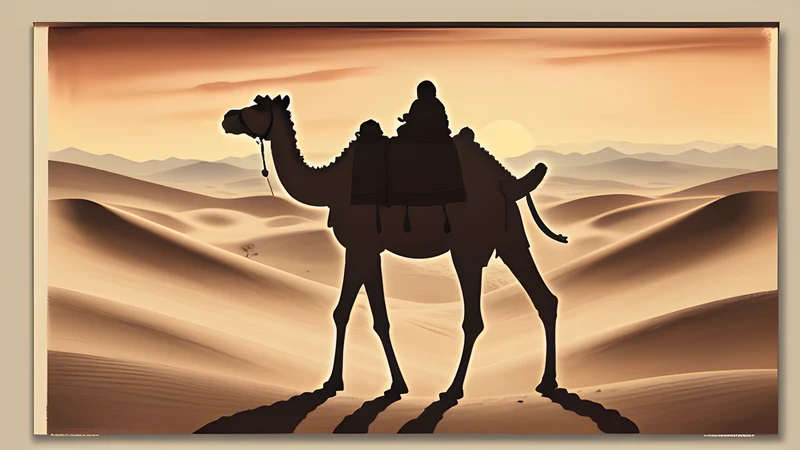
In 2009, a Pakistani camel scientist named Dr Abdul Raziq Kakar decided that the most useful animal in the driest places on Earth deserved a date of its own, and he founded World Camel Day. He fixed it on 22 June, and the reasoning was precise. The longest, hottest day in the camel’s northern homelands falls around 21 June, the summer solstice, which would have made a fitting symbol of the animal’s mastery of heat, but that date was already crowded with observances, including Father’s Day across much of the Arab world. So Kakar nudged the celebration one day later, to 22 June, which is barely a heartbeat shorter than the solstice and belongs to the camel alone.
One name, several animals
Say “camel” and most people picture a single hump against a dune, but there are three living species. The dromedary, Camelus dromedarius, with its single hump, accounts for around ninety-four per cent of the world’s camels and dominates Arabia, North Africa and the Horn. The Bactrian camel, Camelus bactrianus, carries two humps and shrugs off the bitter winters of Central Asia, from Mongolia to the steppes. Rarest of all is the wild Bactrian, Camelus ferus, a genetically distinct species that survives in perhaps a thousand animals in the Gobi Desert and ranks among the most endangered large mammals alive, able to drink water saltier than the sea because fresh water is simply not on offer where it lives.
Between them these species number roughly 35 million animals, and the population is climbing rather than falling, driven by demand for camel milk and by the resilience that makes the camel more useful as drylands expand. Somalia alone keeps something in the region of seven million, the largest national herd on the planet, and the animal is central to pastoral life across a belt of dry country stretching from the Sahara to the Thar.
The desert made flesh
The camel is a catalogue of adaptations so complete that it can seem designed. The hump stores fat rather than water, and metabolising that fat releases energy and moisture when food and drink run out; a well-fed camel can go for a week or more without drinking, then take on a hundred litres or more in a matter of minutes, rehydrating faster than almost any other mammal could survive. Its red blood cells are oval rather than round, so they keep flowing when the blood thickens with dehydration and do not burst when water floods back in. The animal lets its own body temperature swing by several degrees through the day, warming up in the sun instead of sweating the heat away, and only cooling at night, a trick that saves precious water.
The defences against sand are just as thorough. A camel closes its nostrils, blinks a translucent third eyelid across each eye, and screens the rest with two rows of long lashes. Thick, leathery lips let it graze thorny desert scrub that would shred a softer mouth, and broad, splayed, two-toed feet spread its weight so it walks on sand rather than sinking into it. Even its knees and chest carry hard pads so it can kneel on scorching ground. The result is an animal that turns the hardest landscapes on Earth into pasture.
A history carried on caravans
Humans domesticated the dromedary in Arabia around three thousand years BCE and the Bactrian in Central Asia somewhat earlier, and in doing so they unlocked the deserts. The camel became the engine of long-distance trade where no other animal could go, and whole economies of history rode on its back. The trans-Saharan gold and salt routes, the incense roads of Arabia, and above all the Silk Road threaded together distant civilisations because the camel could cross the waterless gaps between oases carrying heavy loads for days on end. Caravans of thousands of animals moved goods, ideas, faiths and languages across continents, and the camel drivers who guided them were among the great connective tissue of the pre-modern world.
The animal shaped military history too, from the camel corps of ancient armies to the desert campaigns of the twentieth century, and it shaped culture wherever it went, becoming a measure of wealth, a bride price, a subject of poetry and a companion whose moods pastoralists learned to read as closely as any shepherd reads a flock.
Why the day matters now
World Camel Day is partly a celebration and partly an argument. As climate change dries out grazing land and makes cattle and sheep harder to keep, the camel’s tolerance of heat, drought and poor forage turns it from a symbol of the past into a resource for the future. Camel milk sits at the centre of that case: it is drunk across the drylands as a food-security staple, keeps far better than cow’s milk in the heat, is comparatively low in fat, and carries notably high levels of vitamin C and other nutrients in places where fresh produce is scarce. Kakar and the researchers who mark the day press governments and development agencies to invest in camel dairying, veterinary care and the pastoral communities whose knowledge keeps the herds alive.
The day also raises the alarm for the wild Bactrian, whose tiny Gobi population is squeezed by hunting, mining and competition with domestic stock, a reminder that the camel family includes one of the rarest big mammals in existence.
How it is celebrated
Observance is warmest across the camel belt, in Pakistan, the Gulf states, the Horn of Africa, Rajasthan and Central Asia. Communities hold camel races, beauty contests judged on the elegance of a well-bred animal, milk festivals and markets, while researchers and veterinary schools run seminars on camel science and health. In the Gulf, camel racing has become a high-technology sport in which lightweight robot jockeys, radio-controlled from a car racing alongside the track, have replaced the child riders once used, and prize animals change hands for enormous sums. Elsewhere the day travels through pastoral associations and online campaigns that share the animal’s biology and its place in dryland livelihoods.
The camel in culture and belief
Few animals are so deeply braided into the culture of a region as the camel is into that of Arabia and the wider Islamic world. Pre-Islamic Arabic poetry lavished some of its finest lines on the she-camel, describing her strength and beauty at length as the poet’s companion across the desert, and the animal carries a place of honour in Islamic tradition, where a camel is remembered as choosing the site of an early mosque in Medina. Camel husbandry gave Arabic one of the richest animal vocabularies in any language, with dozens of words distinguishing a camel by age, colour, gait and temperament, a lexical density that only a culture living intimately alongside an animal ever produces.
Across the drylands the camel remained a walking measure of wealth and a currency of social life, offered as a bride price, paid in compensation to settle disputes, and slaughtered to honour a guest. In Central Asia the two-humped Bactrian pulls the same weight of meaning, appearing in Mongolian folk song and in the spring rituals that coax a reluctant mother camel to accept her calf, a ceremony of music and coaxing that has been filmed and celebrated as one of the tender scenes of pastoral life. Wherever the animal goes, it tends to end up revered as much as it is used.
Fun facts
A camel can lose a quarter or more of its body water and keep working, a level of dehydration that would kill most mammals, then restore it in a single long drink. The founder of World Camel Day, Dr Abdul Raziq Kakar, later created World Donkey Day as well, giving two of the world’s great working animals their own dates within a few years of each other. The camel’s gestation runs to thirteen or fourteen months, among the longest of any land mammal outside the elephants and rhinos. The much-repeated idea that camels store water in their humps is a myth; the humps are fat reserves, and a starving camel’s hump goes soft and flops to one side. And camel-hair brushes, prized by artists, are usually made from squirrel or other soft fur rather than camel; the name attached itself long ago and never let go.
A closing reflection
The camel earns its day by making the uninhabitable habitable, by being the animal that goes where the map turns blank and comes back. It has been dismissed as ungainly and bad-tempered, but that reputation says more about people who tried to use it like a horse than about the animal itself, which is superbly fitted to a world that is, in many regions, spreading rather than shrinking. To celebrate the camel is to celebrate resilience with a practical edge, the quality of thriving on exactly what defeats everything else. The same admiration for animals that carry human life across hard country runs through World Donkey Day, International Day of the Yak and the Andean pastures of World Alpaca Day.
Related Content