World Bread Day
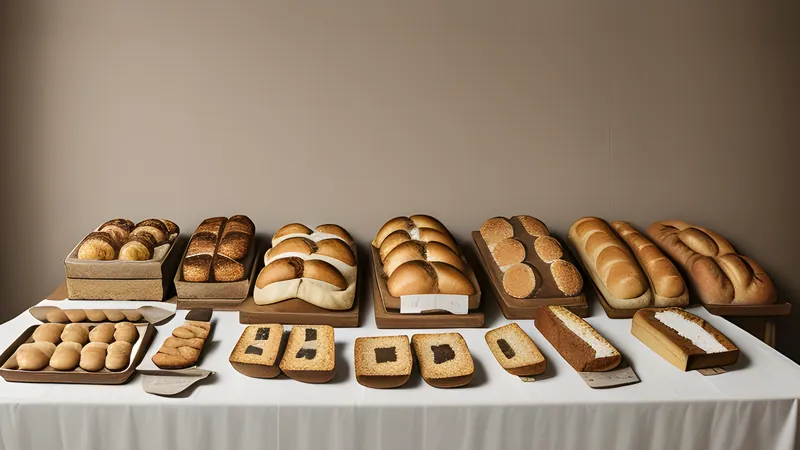
When archaeologists sifted the floor of a 14,400-year-old hearth at Shubayqa in north-eastern Jordan, they found charred crumbs of flatbread, baked from wild cereals and tubers thousands of years before anyone planted a field. The find, published in 2018 by researchers from Copenhagen, London and Cambridge, upended a long-held assumption: bread did not follow farming, it may instead have helped provoke it, the appetite for it perhaps nudging hunter-gatherers towards cultivating the grasses they had been gathering wild. World Bread Day, kept each 16 October, celebrates that ancient and consequential food, the staple whose name is shorthand for sustenance itself.
Where the day comes from
World Bread Day was established in 2006 by the International Union of Bakers and Confectioners, the UIBC, a trade body representing the baking profession across many countries. The choice of 16 October was not arbitrary. It is the anniversary of the founding, in 1945, of the Food and Agriculture Organization of the United Nations, and the date the UN already keeps as World Food Day.
The FAO’s Latin motto makes the link almost too neat: Fiat panis, “Let there be bread”. By pinning their celebration to the FAO’s birthday, the bakers tied the pleasure of a fresh loaf to the harder business of food security, the question of whether everyone has enough to eat at all. The day is a young observance honouring an old food, and the deliberate overlap with World Food Day keeps it from drifting into mere nostalgia for the bakery.
The history beneath the crust
The Shubayqa crumbs pushed the documented origins of bread back well before the Neolithic. Once grain was deliberately cultivated, settled communities could flourish, and somewhere along the way leavening arrived, almost certainly by accident, when a dough left standing caught wild yeasts and lactic bacteria from the air and the flour and rose of its own accord.
Egypt turned that accident into an industry. By the third millennium BCE, Egyptian bakers were producing leavened loaves at scale, and bread became so central that it served as wages and as an offering to the dead. In Rome, the price and supply of bread were matters of state; the satirist Juvenal coined panem et circenses, “bread and circuses”, to mock a populace kept docile by free grain and games. The Roman state ran a cura annonae, a grain dole that at its height fed a substantial share of the city’s population, because a hungry capital was a dangerous one.
Bread riots punctuated European history whenever the loaf grew dear, and the cry over the price of bread runs straight through the French Revolution; the market women who marched on Versailles in October 1789 did so over bread, and the loaf’s price tracked the unrest with grim precision. England legislated for it too: the Assize of Bread, in force from the thirteenth century, fixed the weight and price of a loaf for some six hundred years, and bakers who shorted their customers risked the pillory, which is one plausible origin of the “baker’s dozen”, the thirteenth loaf thrown in to stay safely on the right side of the law. A food this basic was never merely food.
Why it matters
Bread feeds the world in the most literal sense, forming the dietary backbone of a great many cultures from the wheat belts to the rye lands. The day points at two things at once: the craft of making it well, and the seriousness of access to it. For a large share of the planet a loaf is not a given but a daily calculation, which is exactly why the bakers anchored their celebration to the FAO rather than to a purely culinary date.
It also honours a chain of labour that is easy to forget while buttering a slice: the farmers who grow the grain, the millers who turn it to flour, the bakers who coax it into something risen and crusted. The same respect for everyday staples and the work behind them connects the day to humbler bread observances such as Homemade Bread Day and the revival of long-fermented loaves marked on Sourdough Bread Day.
How it is made
Bread is gloriously simple and endlessly variable. Flour meets water and usually salt, then rises either on commercial yeast or on a sourdough culture kept alive over days, years, sometimes decades. Kneading develops gluten, the protein network that traps gas and gives a loaf its chew; the rise, or fermentation, fills the dough with bubbles; the oven sets the crumb and crisps the crust through the browning reactions that give bread its smell and colour. Within those few steps lies the whole spectrum, from enriched, buttery brioche to a lean, wild-fermented sourdough prized for its tang.
The chemistry rewards patience. A long, cool fermentation lets enzymes break starches into sugars and gives the dough’s bacteria time to produce the acids and aromatic compounds that flavour a good loaf, which is why an overnight rise in the fridge tastes of more than a rushed one on the counter. The crust’s colour and smell come from the Maillard reaction and from caramelisation, two separate browning processes triggered by heat, and the loud crackle of a baguette cooling is the crust contracting and fracturing as steam escapes. None of this requires equipment more elaborate than a bowl, a hot oven and time, which is much of why bread has been made in every settled society that grew grain.
Around the world
Few foods are as varied, and the day naturally becomes a tour of the world’s tables. There is the spongy, sour injera of Ethiopia, fermented from teff; the naan and roti of South Asia; the pita of the eastern Mediterranean, puffed by steam into a pocket; the dense, dark rye breads of Scandinavia and the Baltic, kept moist for weeks; the maize tortillas of Mexico, made from nixtamalised corn; and the sourdoughs that have enjoyed a worldwide revival. Each reflects its local grain, climate and history, and together they show how a single idea, flour bound by water and lightened by ferment, has been reinvented to suit every region’s needs and tastes.
Traditions and symbols
Bread carries unusual symbolic weight. In Slavic countries a karavay loaf with salt welcomes guests of honour and newlyweds; in Christian, Jewish and many other traditions, bread stands at the centre of ritual meals. The English word “companion” comes from the Latin com panis, “with bread”, literally one with whom you share a loaf, a reminder of how deeply the food is bound up with fellowship.
On the day itself, the celebration is largely a global show-and-tell. Home bakers and professionals post their loaves, recipes and crumb shots online; bakeries run demonstrations or open their doors; and schools sometimes use the occasion to teach children where their daily bread actually begins, in a field of grain rather than on a supermarket shelf. The UIBC and national baking associations often time competitions and trade events to the date, and food banks use the overlap with World Food Day to highlight the gap between the abundance on a supermarket shelf and the empty cupboard a few streets away. The juxtaposition is the point: a day that celebrates the loaf without acknowledging who goes without it would miss the reason the bakers chose this particular date.
Fun facts
- The oldest known bread predates agriculture: the 14,400-year-old flatbread crumbs from Shubayqa in Jordan, published in 2018, were baked by hunter-gatherers from wild cereals.
- The word “lady” descends from the Old English hlǣfdige, “loaf-kneader”, and “lord” from hlāfweard, “loaf-keeper”; household rank was once defined by who controlled the bread.
- Sourdough’s tang comes from lactic and acetic acid produced by bacteria, mainly Lactobacillus, living in partnership with wild yeasts in the starter; the yeast does the lifting, the bacteria do the flavour.
- The FAO chose its motto Fiat panis, “Let there be bread”, at its founding in 1945, and World Bread Day quietly borrows the same date and the same wish.
A closing reflection
Bread is one of the few things we make by managing decay rather than preventing it; the baker invites microbes in, feeds them, and times their work to the minute, then halts it with heat at the exact moment of greatest lift. It is a collaboration with organisms we cannot see, conducted by instinct long before anyone could name them. That a handful of crushed grain and water, left to the air, becomes something fragrant and risen still seems faintly improbable on close inspection. To keep a day for it is to pause over the loaf on the table long enough to notice the field, the ferment and the long human habit of turning the most basic ingredients into a reason to gather. The same crust that fed a Roman crowd and a revolutionary mob still comes out of the oven each morning, smelling exactly as it always has, which may be the quiet point of a day that links the humblest food to the question of who gets to eat at all.
Related Content