World Braille Day
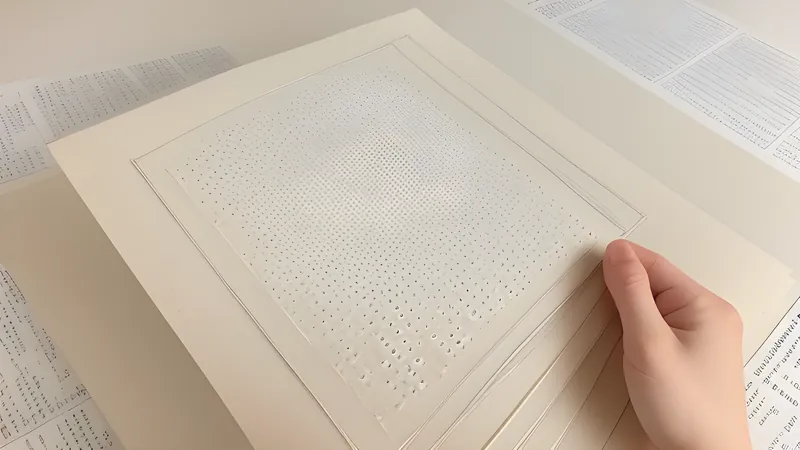
A French army captain wanted his soldiers to read orders in the dark without striking a light that would betray them to the enemy. His clumsy system of raised dots, devised for the battlefield, was demonstrated at a Paris school for blind children in the early 1820s, where a pupil barely into his teens saw what the soldier had missed. That pupil was Louis Braille, and the code he built from the captain’s idea is now read by fingertip across the world. World Braille Day, kept every 4 January, marks his birthday and the writing system that bears his name.
Where the day comes from
World Braille Day was proclaimed by the United Nations General Assembly in 2018 and first observed on 4 January 2019. The date is Louis Braille’s birthday: he was born on 4 January 1809 in Coupvray, a village east of Paris. The UN’s framing was deliberate. Rather than treating braille as a relic to be commemorated, the resolution presented accessibility as a matter of human rights, tying the day to the Convention on the Rights of Persons with Disabilities and to the argument that information in a form blind people can actually read is an entitlement, not a kindness.
Louis Braille and Charles Barbier
Braille lost his sight as a small child after an accident in his father’s leather workshop, where a stitching awl slipped; an infection spread to both eyes. Sent to the Royal Institute for Blind Youth in Paris, he met the embossed-print books of the day, which were heavy, slow to read and almost impossible to write by hand.
The breakthrough came from outside. Charles Barbier, an artillery officer, had devised a tactile code he called “night writing”, a grid of up to twelve raised dots representing sounds, so soldiers could pass messages silently in darkness. Barbier brought it to the Institute. The young Braille grasped both its promise and its flaws: twelve dots were too many to feel under a single fingertip, and coding sounds rather than letters made accurate spelling and punctuation impossible. By around 1824 he had halved the cell to six dots, two columns of three, and recast it to represent letters directly. He published the system in 1829, in a book whose title set out its scope: a method for writing words, music and plainsong by means of dots. Crucially, he acknowledged his debt to Barbier even as he replaced him.
The six-dot cell yields sixty-four possible patterns, enough for the alphabet, numerals, punctuation and a full notation for music. Its elegance is that the whole thing fits beneath one resting fingertip, so a reader can move along a line without lifting and searching.
Recognition did not come easily, and the story of braille is partly a story of institutional resistance. The sighted teachers at Braille’s own Institute were slow to adopt his code; the embossed Roman letters they had invested in were easier for them to read, even though they were far harder for blind students to write. For a time after Braille’s death the system was actively discouraged at the school, and it took the persistence of blind pupils, who kept using it among themselves, to keep it alive. France formally adopted braille in 1854, two years after its inventor had died, and it spread through Europe and then the wider world over the following decades. The “war of the dots” between competing tactile systems rumbled on into the early twentieth century, with rival codes vying for adoption, before braille’s advantages settled the matter.
Why braille matters
It is tempting to assume that audio and screen-readers have made braille obsolete, and that assumption has quietly starved braille teaching in many places. It is also wrong. Listening is not reading. Braille gives its users direct access to spelling, grammar, capitalisation and the architecture of a sentence, the things you absorb only by encountering text yourself rather than hearing it performed.
The link to outcomes is well documented: blind people who are literate in braille show markedly higher rates of employment than those who rely on audio alone. It underpins ordinary independence too, from reading the dosage on a medicine box to checking a lift button or a bank statement without asking anyone. For its readers, braille is not an aid bolted onto literacy; it is literacy. The same insistence that access is a right, not an afterthought, animates related observances such as the International Day of Education and the celebration of women and girls in science, where the question is always who gets to take part on equal terms.
How it is marked
The day runs on demonstrations and advocacy rather than parades. Schools and libraries lay out braille so that sighted visitors can try, often failing, to read a line by touch; the standard humbling experience is to discover how undifferentiated the dots feel to an untrained finger, and how much sensitivity a lifelong reader brings to them. Organisations for the blind press publishers, transport authorities and software firms for more accessible signage, packaging and digital design. Museums occasionally display the slate-and-stylus and the Perkins Brailler, the heavy mechanical writer that made braille faster to produce. Above all the day turns the microphone towards blind and partially sighted people themselves, asking what would actually make daily life more navigable.
Braille around the world
Because braille is a code rather than a language, it bends to almost any script. It has been adapted to French, English and Spanish, and to Arabic, Hindi, Mandarin and many more, with specialised forms for mathematics, chemistry and music that let students tackle advanced subjects on equal footing. Contracted braille, which abbreviates common words and letter clusters, speeds reading and shrinks the bulk of books that would otherwise run to many heavy volumes.
The reach is real but the access is not even. In much of the world braille books, refreshable braille displays and, above all, trained teachers remain scarce, so a child’s chance of becoming braille-literate can depend heavily on where they are born. That gap is precisely what an awareness day is meant to narrow.
Technology has lately changed what braille can be. The refreshable braille display, a strip of small plastic pins that rise and fall under software control, lets a blind person read a screen line by line in dots, turning email, code and the web into something a fingertip can follow. Paired with a smartphone, such displays have made braille portable in a way the bound volume never was. Yet the same digital wave that helped also threatens: cheap, ubiquitous text-to-speech has tempted some educators to treat braille as optional, and literacy specialists warn that a generation taught only to listen risks losing the direct grasp of spelling and structure that reading by touch provides. The tension between convenience and genuine literacy is one the day’s advocates raise pointedly.
Symbols and traditions
The enduring emblem is the six-dot cell itself, the small grid from which an entire literature is assembled, and the fingertip travelling across the page as a picture of knowledge taken in through touch. Celebrations tend to stress dignity and autonomy, presenting braille not as a sad substitute for sight but as a precise and powerful tool with its own history and its own inventor to honour. The village of Coupvray keeps the family house as a museum, its workshop and the awl that blinded its most famous son preserved, and the day often draws pilgrims there as well as to the Panthéon in Paris.
Fun facts
- Skilled readers can move through braille at well over a hundred words a minute, reading with one or both hands and often using one hand to find the next line while the other finishes the current one.
- Braille has been embossed onto playing cards, board games, banknotes, medicine cartons, and the keypads of cash machines that sighted users press without ever noticing the dots.
- Louis Braille was an accomplished organist and cellist, which is why his system includes a complete method for writing music, a notation still used by blind musicians today.
- He died of tuberculosis in 1852 at forty-three, largely unrecognised; a century later, in 1952, France exhumed his body and reinterred him in the Panthéon in Paris, leaving his hands behind as relics in the Coupvray churchyard.
A closing reflection
There is a particular injustice in literacy that has to be fought for, and braille is the record of one such fight won by a teenager who refused to accept that books were closed to him. The captain’s night-writing was meant to keep soldiers in the dark from being seen; Braille turned the same dots into a way of bringing people out of it, repurposing a tool of concealment into one of revelation. To mark the day is to notice how much of the built world still assumes everyone reads with their eyes, and how readily that assumption could be loosened, one patient dot at a time.
Related Content