World Bicycle Day
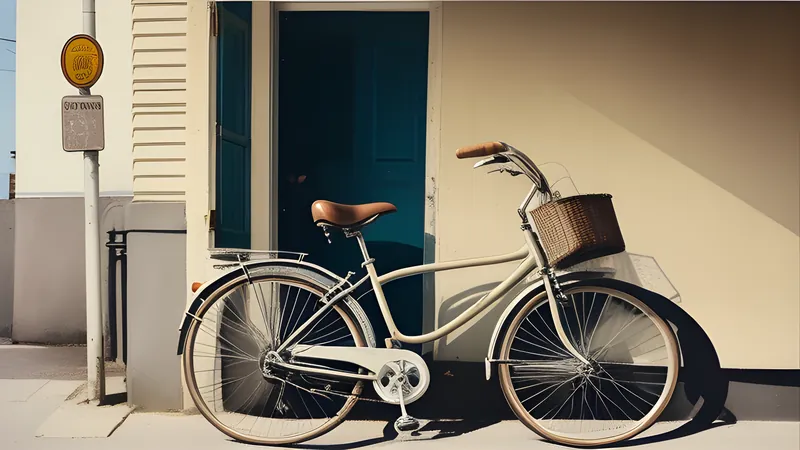
The campaign that gave the bicycle its own day on the United Nations calendar began in a sociology classroom. Professor Leszek Sibilski, a Polish-born academic teaching in the United States, set his students a project on the role of the bicycle in development, and the project grew into a years-long advocacy effort. Late in 2017 he persuaded Turkmenistan’s permanent mission to the UN to sponsor a resolution, and on 12 April 2018 all 193 member states adopted General Assembly resolution 72/272, declaring 3 June World Bicycle Day. It is a date that honours one of the most quietly transformative machines ever built: cheap, clean, near-silent and capable of carrying a farmer to market, a child to school or an adventurer across a continent.
Origins
The resolution behind the day was sponsored by Turkmenistan and co-sponsored by some 56 other countries, an unusually broad coalition for so modest an object. Sibilski’s campaign, backed by the World Bank’s Sustainable Mobility for All initiative, argued that the bicycle had been overlooked precisely because it was ordinary, and that its contribution to sustainable development, public health and social equality deserved formal acknowledgement. The General Assembly’s text duly praised the bicycle’s longevity, versatility, affordability and reliability, an official tribute to a device most people last thought hard about as children.
History
The bicycle’s own story is older than the day by a century and a half. It descends from the Laufmaschine or “running machine” patented by the German baron Karl von Drais in 1817, a wooden two-wheeler with no pedals that the rider pushed along with their feet. Pedals arrived in the 1860s on the boneshaking vélocipède, followed by the perilous high-wheeled penny-farthing of the 1870s. The decisive leap was the “safety bicycle” of the 1880s, with two equal wheels and a chain driving the rear, a design pioneered in England by John Kemp Starley with his Rover of 1885. It made cycling stable and accessible to ordinary riders and set off a craze that swept Europe and North America in the 1890s.
That craze had consequences far beyond leisure. The bicycle widened the world of anyone who could not afford a horse, and it became entangled with the early movement for women’s emancipation: the American campaigner Susan B. Anthony declared in 1896 that cycling had “done more to emancipate women than anything else in the world”, because a woman on a bicycle could go where she chose, unchaperoned, under her own power. The machine’s link to language and identity ran deep too, much as everyday objects and customs carry cultural weight in the way that International Mother Language Day treats speech itself as heritage worth defending.
Why It Matters
The bicycle is among the most energy-efficient forms of transport ever devised, converting a meal’s worth of human effort into miles of travel while producing no emissions and consuming no fuel. In congested cities it eases gridlock and clears the air; in rural districts and developing regions it transforms access to schools, clinics, water and markets, often halving the time a journey on foot would take. As a public-health measure it folds exercise into the ordinary business of getting somewhere, rather than demanding a separate trip to a gym; large cohort studies, including a widely cited 2017 analysis of British commuters published in the BMJ, have linked regular cycle-commuting to markedly lower rates of cardiovascular disease and early death. A day dedicated to it gives campaigners a platform to press governments for protected cycle lanes and to coax individuals out of their cars for the short trips that make up most of any city’s traffic.
The economic case is quietly compelling too. A bicycle costs a fraction of a car to buy, demands almost nothing to run, and imposes none of the road wear, parking pressure or air pollution that motor traffic forces onto a city’s budget. For the poorest, that gap is decisive: a bicycle can be the difference between a child reaching a school several miles off and not reaching it at all, or between a smallholder carrying produce to market and watching it spoil at the roadside. The development economists who backed Sibilski’s campaign made exactly this argument, that the bicycle is less a leisure good than a piece of basic infrastructure for those who can afford no other.
How It Is Celebrated
The day is marked with rides of every description, from organised mass cycles and charity events to solitary journeys taken for nothing but pleasure. Cities host group rides, festivals and free repair workshops; advocacy groups use the occasion to lobby for safer infrastructure and bike-friendly policy; and schools teach road safety and basic maintenance. Plenty of riders mark it more simply, by wheeling a neglected bicycle out of the shed, pumping up the tyres and rediscovering a route they had half forgotten. The spirit is deliberately inclusive: any bicycle, any rider.
Cities with established cycling cultures often go further. Amsterdam and Utrecht stage events around their vast bike-parking facilities; Bogotá folds the day into its weekly Ciclovía, the Sunday closure of major roads to motor traffic that has run since the 1970s and now reclaims more than a hundred kilometres of street for cyclists and pedestrians. London, Paris and New York time policy announcements and infrastructure openings to the date, knowing the attention guarantees coverage. The common thread is that the day works best where it is used as a lever, a fixed moment to extract a concrete commitment, rather than as mere celebration.
Traditions and Symbols
The bicycle itself is the day’s symbol in all its variety, the upright city roadster, the lean racer, the rugged mountain bike and the sturdy cargo cycle. The wheel, perpetually turning, stands easily for progress and momentum. Group rides and the cheerful ringing of bells have become informal customs, as has the small rite of teaching a child to ride: the wobble, the fall, and the sudden gliding freedom that captures the bicycle’s whole promise in a single afternoon.
Around the World
Cycling cultures differ enormously by place. The Netherlands and Denmark have woven the bicycle so deeply into daily life that Copenhagen and Amsterdam carry more bikes than residents, and protected lanes make cycling the obvious choice for short trips. Across much of Asia and Africa the bicycle remains an indispensable workhorse, hauling goods and passengers where motor vehicles are scarce or unaffordable, and organisations such as World Bicycle Relief distribute rugged bikes to rural students and health workers for exactly that reason. Elsewhere, cycling is enjoying a revival as cities confront pollution and congestion. World Bicycle Day holds these very different settings under one shared regard for a machine that serves rich and poor alike.
World Bicycle Relief, founded in 2005 by the cycling-industry figure F.K. Day in response to the Indian Ocean tsunami, has since distributed hundreds of thousands of purpose-built Buffalo bicycles across sub-Saharan Africa, designed to be heavy enough to carry loads and simple enough to repair with local tools. Studies of its programmes have found that giving a rural schoolgirl a bicycle measurably improves attendance and cuts the harassment many face on long walks to school, a concrete illustration of the abstract claim that mobility is opportunity.
A Curious Coincidence
The 3rd of June is not, as it happens, the only “Bicycle Day” on the calendar, and the other has nothing to do with transport. On 19 April 1943 the Swiss chemist Albert Hofmann deliberately took a dose of LSD and rode his bicycle home through Basel while experiencing its effects, an episode commemorated by enthusiasts as Bicycle Day. The two dates share only a name and a vehicle, a reminder that the bicycle has wheeled its way into some unexpected corners of cultural memory.
Fun Facts
- The earliest bicycle had no pedals: Karl von Drais’s 1817 Laufmaschine was propelled by the rider’s feet pushing against the ground, like a child’s modern balance bike.
- The suffragist Susan B. Anthony said in 1896 that the bicycle had done more to emancipate women than anything else, because it gave them independent mobility.
- The cycling boom of the 1890s drove a campaign for better road surfaces, paving the way, quite literally, for the motor car that would later compete with the bicycle for those same roads.
- The Netherlands has more bicycles than people, with estimates putting the count well above one bike per resident, a ratio few other nations come close to.
A Closing Reflection
It says something that a machine this consequential needed a sociology class to win it official recognition. The bicycle is so woven into ordinary life that its brilliance has become invisible, asking for little more than a patch of road and a turn of the pedals, and returning health, mobility, independence and a low-cost route to a cleaner future. To mark the day is to notice an invention we long ago stopped noticing, and perhaps simply to ride, and feel again the unmatched ease of moving under one’s own power with the road open ahead.
Related Content