World Arabic Coffee Day
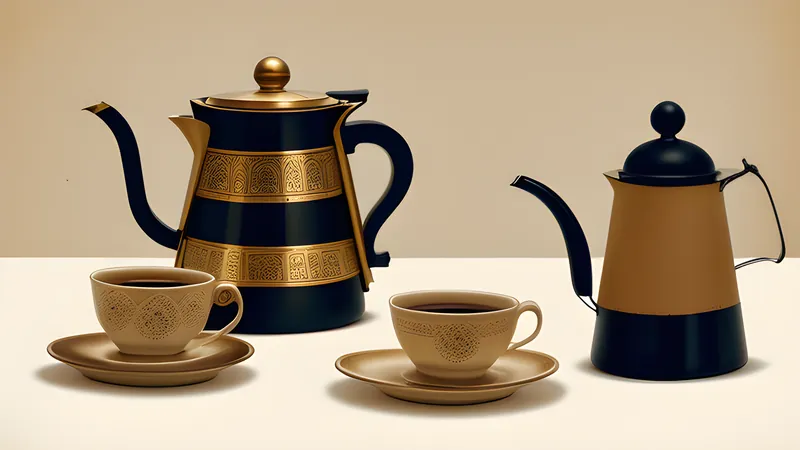
In a majlis in the Gulf, the youngest person present often pours the coffee. They hold the long-spouted brass pot, the dallah, in the left hand and a stack of small handleless cups, finjan, in the right, and they fill each cup only a third of the way, serving the eldest or most honoured guest first. When a guest has had enough, they give the cup a small shake before handing it back. None of this is improvised; every gesture belongs to a code of hospitality centuries in the making. World Arabic Coffee Day, observed on 30 March, honours that ritual, the pale-gold, cardamom-scented drink known as qahwa and the values of generosity it carries.
Where the day comes from
The precise origin of 30 March as a dedicated day is not well documented, and it would be dishonest to invent a founding decree for it. What is firmly established is the cultural recognition the day draws upon. In 2015, Arabic coffee was inscribed on UNESCO’s Representative List of the Intangible Cultural Heritage of Humanity, under the title “Arabic coffee, a symbol of generosity”, in a joint nomination by Saudi Arabia, the United Arab Emirates, Oman and Qatar. That inscription is the formal milestone behind the modern impulse to give the tradition its own place on the calendar.
The day, then, is best understood not as the invention of a single committee but as an outgrowth of that heritage recognition, a way to celebrate something the region had honoured long before any list existed. The word at its centre, qahwa, is itself the ancestor of the English “coffee”, which travelled into European languages through the Turkish kahve and the Italian caffè.
History
Coffee’s deep history is bound up with the Arabian Peninsula. The plant is native to the highlands of Ethiopia, but it was in Yemen that it was first cultivated and brewed as a beverage on any scale. By the fifteenth century, Sufi monks in Yemen were drinking it to stay awake through nocturnal devotions, and from there it spread to Mecca, Cairo and the wider Islamic world. The port of Mocha on Yemen’s Red Sea coast gave its name to the coffee trade, and for a long period the Arabian Peninsula held a near-monopoly on supply, guarding its beans jealously before cultivation escaped to Java and the Americas.
Arabic coffee as a distinct preparation, lightly roasted so that it stays pale rather than dark, and generously spiced with cardamom, evolved within this world as a centrepiece of hospitality across the peninsula and the Levant. The serving of it hardened into ceremony, especially in Bedouin and Gulf societies, where the etiquette around the dallah and the finjan became a way of signalling respect, status and welcome without a word being spoken. UNESCO’s 2015 inscription affirmed what those communities had always understood: that the ritual is a vessel for social values handed from one generation to the next.
Coffee did not arrive without controversy. In the early sixteenth century, religious authorities in Mecca debated whether the stimulating drink was permissible at all, and in 1511 the governor of the city briefly banned it, fearing that the lively coffeehouses springing up around it were breeding grounds for dissent. The prohibition did not last; the appetite for both the drink and the sociability it fostered proved stronger than the objections. That early episode set a pattern repeated wherever coffee travelled: the beverage and the gathering it created were inseparable, and attempts to suppress one inevitably ran up against the human desire for the other. By the time qahwa had settled into its role as the emblem of Arab hospitality, the coffeehouse had become one of the most important public institutions of the Islamic world.
Why it matters
To refuse a guest coffee, or for a guest to decline it, can be a real breach of manners in Gulf and Bedouin custom; to share it is to affirm a bond. The ritual encodes a whole grammar of relationship, deference to elders, care for visitors, the obligation of the host and the trust of the guest, in a sequence of small, fixed gestures. A day for Arabic coffee matters because it keeps that grammar visible at a time when fast food and faster lives erode the habit of sitting down together.
It also honours a living craft. The roasting, grinding and brewing of qahwa is skilled work, and the etiquette of pouring is a performance learned by watching. Recognition of the kind UNESCO conferred, and observances built on it, help ensure those skills are passed on rather than lost, much as the wider Arab cultural calendar guards its heritage through occasions such as Arabic Language Day.
The threat such recognition guards against is real. As Gulf societies have urbanised at extraordinary speed over a single lifetime, the unhurried rhythms of the majlis have had to compete with the demands of modern working life, and the patient transmission of custom from elder to child can no longer be taken for granted. Naming a day, like inscribing a tradition on a heritage list, is a deliberate act of preservation: a way of telling a younger generation, raised amid international coffee chains and instant everything, that the slow ceremony of qahwa is theirs to inherit and worth the keeping. The gesture matters most precisely where modernity presses hardest.
How it is celebrated
The day is marked with coffee gatherings, demonstrations of traditional preparation and cultural events in homes, in majlis sitting rooms and in public venues across the Arab world, with Gulf states such as the UAE and Saudi Arabia especially active. Hosts brew qahwa for family and friends; museums and cultural centres stage exhibitions on its history and etiquette; and the craft of roasting, grinding and pouring is shared with younger people and curious visitors. Cafés and heritage villages run tastings, and the day becomes, fittingly, an occasion for sitting down and slowing down. Tourism authorities in the Gulf have embraced it as a way of introducing visitors to a tradition that is otherwise easy to miss behind the region’s gleaming modern surfaces, pairing coffee ceremonies with date tastings and demonstrations of the pouring etiquette. For local families, by contrast, the day adds little to a ritual already performed daily; its real audience is anyone who has yet to understand why a small cup of pale, spiced coffee can carry so much meaning.
Cultural variations
While its heart lies in the Arabian Peninsula, the tradition spans the Arab world and travels with its diaspora, so that cardamom-scented coffee turns up in homes from the Levant to communities settled far abroad. The preparation varies by region: Gulf qahwa tends to be very pale and heavily spiced; Levantine versions may lean darker. Saffron, cloves or a little rosewater are added according to local custom. This sits within a far broader spectrum of how the world takes its coffee, from the dark espresso most Westerners picture when they hear the word to the iced and blended treats marked on days such as International Coffee Day and the sweeter indulgence of Coffee Ice Cream Day.
Symbols and traditions
The dallah, the elegant brass or copper pot with its curved spout, is the day’s defining emblem, so iconic that it appears on Gulf currency and public sculpture. It is paired with the finjan, the small cup without a handle, and accompanied almost always by dates, whose sweetness balances the coffee’s gentle bitterness and cardamom warmth. The act of pouring, performed standing, pot in the left hand and cups in the right, is itself a small ceremony of grace, and the shake of the cup to signal “enough” is a piece of wordless etiquette understood across the region.
Fun facts
- Arabic qahwa is usually far paler than the dark espresso most people associate with coffee, the result of a deliberately light roast.
- The cups are tiny and filled only partway, which encourages repeated, sociable refills rather than one large serving.
- The English word “coffee” descends from the Arabic qahwa, by way of Turkish and Italian.
- Cardamom is so central to Gulf qahwa that, for many drinkers, the two aromas are inseparable; some pots brew the spice directly with the beans.
- Arabic coffee earned UNESCO intangible-heritage status in 2015 under the title “a symbol of generosity”, jointly nominated by Saudi Arabia, the UAE, Oman and Qatar.
A Closing Reflection
It is easy to read a tradition like this as quaint, a bit of ceremony preserved for tourists and heritage lists. But the etiquette of the dallah is really a technology for trust, a way of making a stranger a guest and a guest an obligation, performed so often that it needs no explaining to those inside it. A day given over to qahwa is less about the drink than about the posture it demands: to stop, to sit, to pour for someone else before yourself, and to treat the simple act of welcome as something worth doing properly.
Related Content