World Alpaca Day
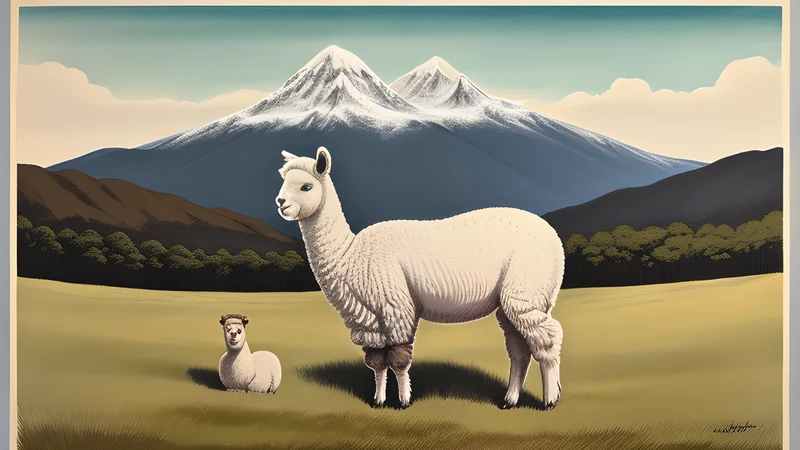
On the high plateau of southern Peru, at altitudes above four thousand metres where the air is thin and the nights bite hard, herders have kept alpacas for so long that the animal has no wild form — it exists only because human beings shaped it, over six thousand years, from a wild Andean grazer into a walking source of the finest wool on earth. World Alpaca Day, marked on 26 September in the international calendar, celebrates that small, soft-eyed, endlessly photogenic creature and the ancient culture that created it. From a strictly Andean animal barely known beyond South America a generation ago, the alpaca has become a global smallholding favourite, farmed for its fleece and kept for sheer pleasure on every inhabited continent, and the day honours both its economic worth and its improbable rise to international stardom.
What World Alpaca Day Marks
World Alpaca Day is an awareness and industry observance dedicated to the alpaca, Vicugna pacos, one of the four South American camelids alongside the llama, the wild guanaco and the wild vicuña. It celebrates the animal’s remarkable fibre, its importance to Andean communities past and present, and the growing worldwide community of alpaca breeders. The date is not universally fixed: Peru, the animal’s homeland, keeps its own National Alpaca Day on 1 August, and various countries have adopted local dates, but 26 September has become the most widely observed international date. Whatever the day, the message is the same — a celebration of an animal that clothes people in one of the world’s most prized natural fibres while asking very little of the harsh land it lives on.
History
The alpaca’s story begins in the Andes several thousand years before the Inca. Genetic research has settled a long argument about its ancestry: the alpaca was domesticated from the vicuña, the smallest and most delicate of the wild camelids, in a process that began roughly six to seven thousand years ago in the high puna grasslands of what is now Peru. The larger llama was domesticated in parallel from the guanaco as a pack animal, while the alpaca was bred specifically for its fleece. Centuries of selective crossing later blurred the lines between the two domestic species, which is why restoring the alpaca’s fine vicuña heritage has become a goal of modern Andean breeding programmes.
By the height of the Inca Empire in the fifteenth century, alpaca fibre had become a material of the highest status. The Inca prized cloth above almost all other goods; the very finest textiles, woven from alpaca and vicuña wool, were reserved for royalty and for religious offering, and garments were sometimes ritually burned as sacrifices too precious for any human to wear a second time. Herds were vast and carefully managed by the state, and the wealth of the empire was counted partly in camelids. The Spanish conquest of the 1530s came close to destroying all of it. The conquistadors valued gold and silver, brought European sheep and cattle that competed for grazing, and through war, forced labour and introduced disease reduced both the human population of the Andes and its camelid herds catastrophically — by some estimates the alpaca and llama populations fell by around nine-tenths. The surviving animals were pushed up onto the highest, poorest land, where indigenous herders kept the tradition alive through four centuries of neglect.
The alpaca’s modern revival began in the nineteenth century and gathered pace only recently. In the 1830s an English textile manufacturer, Titus Salt of Bradford, discovered a neglected consignment of alpaca fleece on a Liverpool dock, worked out how to spin the lustrous fibre, and built a fortune and an entire model village, Saltaire, on the strength of alpaca cloth, which became fashionable in Victorian Britain. In the twentieth century the trade in raw fibre centred on Peru’s city of Arequipa, still the hub of the global alpaca-wool business. The most dramatic change came late: the export of live alpacas to Australia, New Zealand, the United States and Europe from the 1980s onward created a farming industry from nothing, and turned an animal most Europeans had never seen into a fixture of hobby farms and rural tourism.
Why It Matters
For the Andean highlands, the alpaca remains a matter of livelihood rather than novelty. Peru holds the majority of the world’s alpacas, several million of them, and hundreds of thousands of families in Peru and Bolivia depend on the herds for income in an environment where little else can be farmed profitably. Alpaca fibre is among the most valuable natural textiles: it is warmer than sheep’s wool for its weight, remarkably soft, naturally free of the greasy lanolin that makes wool itchy, and available in a wider range of natural colours than almost any other fibre animal. The alpaca is also gentle on the land it grazes, with soft padded feet rather than sharp hooves and a habit of nibbling grass rather than tearing it out by the roots, which does far less damage to fragile high-altitude pasture than sheep or goats. The day draws attention to this quiet sustainability, in the same spirit as the observances that honour other hardy highland animals such as the International Day of the Yak and the desert-adapted World Camel Day.
Alpaca or Llama?
Much of the public affection for the alpaca comes bundled with confusion about how it differs from its larger cousin the llama, and the day is a good occasion to set the two straight. The llama is considerably bigger, standing well over a metre at the shoulder and often twice the weight of an alpaca, with a longer face and tall, banana-shaped ears that curve inward; it was bred as a beast of burden and can carry a load across mountain passes for a working day. The alpaca is smaller, with a blunt, woolly face, short spear-shaped ears and a much finer, denser fleece, and it was bred for that fleece rather than for carrying anything. Llamas tend to be independent and are sometimes set to guard flocks of sheep or, indeed, alpacas, using their size and their willingness to face down a fox or a stray dog; alpacas are herd animals that panic alone and settle only in company. The simplest field test is the face and the ears: long banana ears mean llama, short straight ears mean alpaca.
The fibre itself is graded with a precision that rewards a closer look. Alpaca wool is measured in microns, the diameter of a single fibre, and the finest grades — the so-called royal and baby alpaca, under about twenty microns — rival cashmere for softness and command the highest prices, while coarser grades from the legs and belly go into rugs and industrial felt. A single animal is shorn once a year, usually in spring, yielding a few kilograms of fleece, and a good huacaya fleece is judged on its fineness, its uniformity, its crimp and its lustre, the same qualities the Inca weighed six centuries ago.
How It’s Celebrated
Outside the Andes, World Alpaca Day is celebrated mostly on farms and at shows. Alpaca breeders hold open days where the public can meet the animals, watch shearing demonstrations and buy yarn and knitwear; agricultural societies stage alpaca shows judged on fleece quality and conformation; and the animals themselves, endlessly charming, make the day a natural draw for families. In Peru the national day on 1 August is marked with fairs, fibre competitions and celebrations of Andean pastoral culture. Increasingly the animals appear in a wholly modern role, too, as therapy and companion animals visiting care homes, schools and hospitals, where their calm curiosity makes them unexpectedly effective.
Traditions and Symbols
The alpaca is inseparable from the textile arts of the Andes, and the day carries that heritage of spinning, dyeing and weaving with it. In many Andean communities the animals are still honoured in a ceremony sometimes held around their fertility season, decorated with coloured ribbons and blessed with libations to the earth deity Pachamama, an unbroken thread of pre-Columbian pastoral religion. Two breeds define the animal’s public image: the huacaya, with its dense, crimped, teddy-bear fleece, and the rarer suri, whose fibre grows in long, silky, pencil-like locks that hang down in ringlets.
Fun Facts
Alpacas hum, more or less constantly, using a soft, wavering sound to communicate contentment, curiosity or mild anxiety to the rest of the herd. They are fastidious about hygiene and use communal dung piles, which makes them easy to keep clean and their manure easy to collect — the well-rotted result is a mild fertiliser gardeners call “alpaca beans”. When alarmed or annoyed they spit, but usually at one another rather than at people, and the spit of a truly cross alpaca is a foul, half-digested green cud drawn up from the stomach. And the whole species owes its existence to human hands: with no wild population anywhere, the alpaca is one of the few large animals that would simply vanish from the earth if people stopped keeping it.
A Closing Reflection
There is something humbling in an animal that human beings made and now cannot do without, an entire species conjured out of the wild vicuña by six thousand years of patient Andean herding and nearly wiped out in a single century of conquest. The alpaca survived because the poorest people on the highest land refused to give it up, and it has ended the story rescued and then adored across a world that had never heard of it a lifetime ago. To mark World Alpaca Day is to remember that the finest things are often the slowest made, and that a creature bred for warmth in the coldest inhabited places has turned out to warm rather more than bodies.
Related Content