World Accordion Day
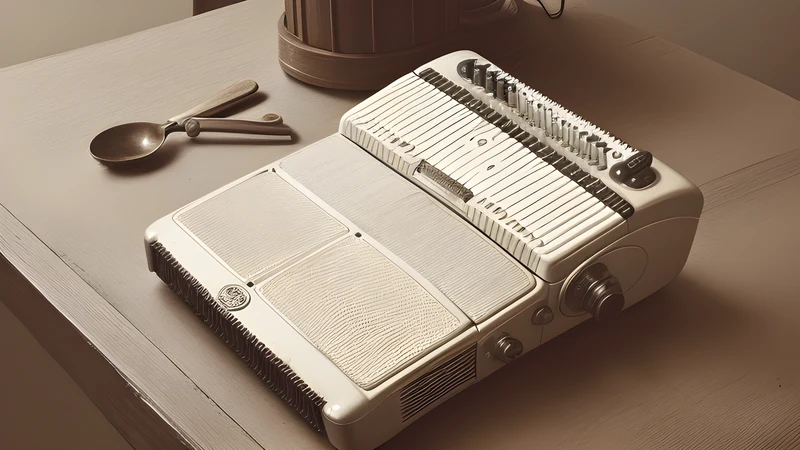
On 6 May 1829, an Armenian-born instrument maker named Cyrill Demian, working in Vienna with his sons Carl and Guido, was granted an imperial patent for a small bellows-driven instrument he called the Accordion. The name came from the German Akkord, a chord, because Demian’s clever addition was a set of buttons that each sounded a complete chord at a single press, letting an untrained player accompany a tune at once. World Accordion Day, first declared in 2009, marks that patent, and it honours an instrument that has been dismissed and adored in almost equal measure ever since.
Origin of the instrument
Demian did not invent the free reed, the vibrating metal tongue that gives the accordion its voice. That principle is ancient: the Chinese sheng, a mouth-blown instrument with bundled bamboo pipes, has used free reeds for thousands of years, and examples were brought to Europe in the eighteenth century where they fascinated instrument makers. In Berlin in 1822 Christian Friedrich Buschmann built a small free-reed device he called the Handäoline, and several inventors were circling the same idea when Demian filed his patent. His genius was commercial as much as musical: by giving the instrument ready-made chords and a portable bellows, he made harmony available to anyone who could push and pull, and the accordion sold as fast as workshops could build it.
History
The instrument multiplied into a whole family almost immediately. In the same year of 1829, in London, Charles Wheatstone patented the concertina, a hexagonal cousin with a button for each note and a sweeter, more flexible tone. Around 1840 the German instrument maker Heinrich Band lent his name to the bandoneón, a large square-built concertina intended for church and folk music, which German emigrants then carried to the ports of Argentina and Uruguay. There it found its destiny in the tango, its breathy, melancholic sound becoming the very voice of the genre; a century later Astor Piazzolla would compose for it music of concert-hall seriousness. Meanwhile the piano accordion, with a keyboard for the right hand and a grid of bass and chord buttons for the left, emerged in the later nineteenth century and became the form most familiar to English-speaking audiences.
The Italian town of Castelfidardo, in the Marche region, became the world capital of accordion manufacture after Paolo Soprani established a workshop there in the 1860s, and at the industry’s height thousands of the town’s inhabitants were employed making instruments that shipped across the globe. From those workshops the accordion travelled with emigrants and sailors into an astonishing range of local musics, and in each place it often became the lead voice, loud enough to carry a dance without amplification and cheap enough for a working musician to own.
The instrument also acquired a political and emotional charge in the countries it settled in. In the Soviet Union the button accordion, the bayan, was promoted as a proper folk instrument for the masses and taught in state conservatoires to a standard rivalling the piano; its virtuosi could play Bach and Mussorgsky as convincingly as any village dance. In Ireland and Scotland the melodeon and button box became fixtures of the session and the ceilidh, and generations of dancers stepped to their drive long before amplification existed. Everywhere it went the accordion absorbed the local repertoire and then, quietly, helped shape it.
A truly global instrument
Few objects have put down roots in so many unrelated cultures. In the bayous of Louisiana the diatonic accordion drives both Cajun music and the African American zydeco of players such as Clifton Chenier. Along the Texas–Mexico border it is the heartbeat of conjunto and norteño, where Flaco Jiménez made the button box famous far beyond the region. In Colombia the accordion carries vallenato, so central that the country holds a festival crowning a supreme accordion king; in north-eastern Brazil it powers forró, the dance music that Luiz Gonzaga built into a national style. French musette gave Paris its café soundtrack, Italian and Slovenian polka gave the American Midwest its dance halls, and klezmer, Irish, Scottish and Basque traditions each claimed the instrument as their own. That a single Viennese patent could seed all of this is one of the quiet wonders of music history.
Rise, fall and revival
For the first half of the twentieth century the accordion was one of the most popular instruments in the Western world. Vaudeville stars played it, radio orchestras featured it, and American children were signed up for accordion lessons in their millions during the 1940s and 1950s, when the piano accordion was as aspirational as the piano itself. Then rock and roll arrived, the electric guitar became the instrument every teenager wanted, and the accordion slid almost overnight from cool to comic, a punchline associated with polka bands and elevator music. Yet it never disappeared, and from the 1980s onward a revival gathered pace, driven partly by world music’s embrace of the roots styles that had always kept the instrument alive and partly by a new generation of players who found its unfashionability liberating. Today it appears in indie rock, film scores and folk revivals with none of the old embarrassment.
Why it matters
The accordion democratised harmony. Before it, a person who wanted to accompany singing or dancing needed either a keyboard instrument too heavy to carry or years of training on strings; Demian’s chord buttons handed a working musician the ability to fill a room with a full accompaniment, alone, for the price of a few weeks’ wages. That combination of loudness, portability and self-sufficiency made it the natural instrument of communities without concert halls or orchestras — dockside taverns, prairie dance floors, mountain weddings — and it is why the accordion became the sound of ordinary people enjoying themselves across four continents. To celebrate it is to celebrate music made by and for the people who could never have afforded a piano.
How the day is celebrated
World Accordion Day is marked with concerts, workshops and open-air performances by accordion clubs, music schools and folk societies around the world, and enthusiasts are encouraged to take their instruments into public places and simply play. Museums dedicated to the instrument, of which Castelfidardo has a notable example, mount special events, and online the day fills with players sharing performances in every style from tango to zydeco. The spirit of the occasion is gently proud, a chance for a much-mocked instrument to be taken seriously for twenty-four hours by the people who never stopped loving it.
Traditions and symbols
The accordion’s very shape has become an emblem — the folded bellows, the mother-of-pearl buttons, the fan of its opening and closing all read instantly as music made by hand and lung together. Because the sound depends on the bellows, the instrument seems almost to breathe, and players speak of phrasing a melody the way a singer would, with a push and pull that no keyboard can imitate. Its portability made it the instrument of the wanderer, the emigrant and the street musician, and that association with movement and memory clings to it still.
Fun facts
The bandoneón, so central to Argentine tango, is fiendishly difficult because many of its buttons play a different note when the bellows are pushed than when they are pulled, so a player must effectively learn two instruments at once. Castelfidardo’s economy was so bound up with the accordion that the town still calls itself the capital of the instrument and holds an annual international festival in its honour. The musician “Weird Al” Yankovic, one of the best-selling comedy artists of all time, is a trained accordionist who learned the instrument as a child, and his parody career began with the accordion at its centre. And the free-reed principle that makes the accordion work is the same one that powers the humble harmonica, meaning the pocket-sized mouth organ and the room-filling accordion are, at heart, close relations. Those drawn to other bellows-and-breath traditions might enjoy International Bagpipe Day, while lovers of massed harmony can turn to World Choral Day.
There is a mechanical marvel hidden inside the wooden box. A full-size piano accordion may contain several thousand individual metal reeds, each hand-tuned, arranged in banks that a player switches in and out with register buttons to change the timbre from a thin solo voice to a rich organ-like chorus. The best instruments are still assembled largely by hand, and a fine concert accordion can cost as much as a small car, a fact that sits oddly with the instrument’s humble reputation.
A Closing Reflection
The accordion carries a peculiar cultural weight for so portable an object: it is at once the sound of the Parisian café, the Buenos Aires tango hall, the Louisiana dance floor and the Alpine polka, and it manages to belong fully to each. Perhaps that is why it has survived every prediction of its death. An instrument that a farmer, an emigrant or a street busker could carry on their back and use to make a whole room dance was never going to vanish just because fashion turned against it. On 6 May its admirers open the bellows again, and the old breath fills the room, unembarrassed and very much alive.
Related Content