Whit Monday
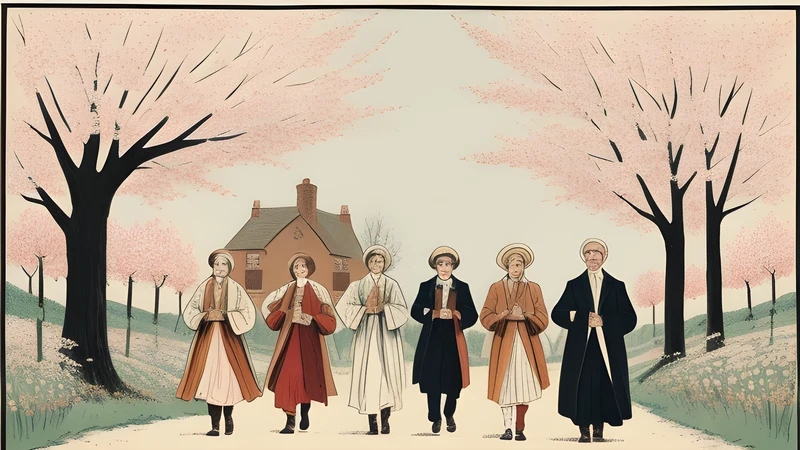
In the Lancashire town of Manchester in 1801, the Sunday schools of the Anglican parishes marched their children through the streets in fresh clothes for the first of what became the Whit Walks — vast processions of thousands, bands playing, banners held high, that continued into living memory. They took place at Whitsun, the old English name for the season of Pentecost, and the day at their heart was Whit Monday, the Monday following Whit Sunday. For centuries it was one of the great popular holidays of the English calendar, a day of fairs and races and church ales, and across much of continental Europe it remains a full public holiday to this day.
What Whit Monday Marks
Whit Monday is the day after Pentecost, the Christian feast that falls fifty days after Easter and commemorates the descent of the Holy Spirit upon the apostles as described in the second chapter of the Acts of the Apostles. The Greek word pentēkostē means simply “fiftieth”, counting the days from Easter, and many churches treat Pentecost as the birthday of the Christian Church itself — the moment the frightened disciples were filled with the Spirit and began to preach. Because the day was such a solemn and joyful feast, the Monday after it became a holiday in its own right, extending the celebration much as Easter Monday extends Easter.
Why the Date Moves
Whit Monday has no fixed place in the calendar because it is tied to Easter, the great movable feast. Easter Sunday falls on the first Sunday after the first full moon on or after the spring equinox, a rule settled by the Council of Nicaea in 325, so in the Western calendar it can land anywhere between 22 March and 25 April. Pentecost comes exactly fifty days later, always a Sunday, and Whit Monday is the day after — the fifty-first day of Eastertide. That tethering drags it across a five-week span of late spring, arriving as early as 11 May and as late as 14 June. Its close cousin Ascension Day falls ten days before Pentecost, and the whole cycle is counted forward from Easter Sunday.
Where the Name Comes From
“Whitsun” is a contraction of “White Sunday”, and the whiteness in question is generally traced to the white robes worn by those newly baptised at Pentecost. In the early Church, Pentecost was one of the favoured seasons for baptism, and the candidates were clothed in white garments they wore through the following week. An alternative old explanation connects the name to “wit”, in the sense of the wisdom conferred by the Holy Spirit, but the baptismal robes remain the likeliest source. By the medieval period the whole week was known as Whitsuntide, and Whit Monday and Whit Tuesday were both holidays.
The English Whitsun
In England, Whitsun grew into one of the busiest holidays of the year, second only to Christmas and Easter as a time of communal festivity. Parishes held Whitsun ales — church fundraising feasts where ale brewed by the churchwardens was sold to raise money for the parish, accompanied by dancing, games and morris dancing. The morris tradition in particular became bound up with Whitsuntide, and many surviving village sides still count Whit as their proper season. Cheese rolling at Cooper’s Hill in Gloucestershire, where competitors chase a wheel of Double Gloucester down a punishing slope, was long held at Whitsun before the modern holiday shifted it.
The Whit Walks of the industrial north were the grandest expression of the day. In Manchester and the surrounding towns, tens of thousands of Sunday school children, scrubbed and dressed in new outfits their families had saved for, processed behind their church banners through streets lined with spectators. The tradition was strong enough that “Whitsun clothes” became a byword for a child’s best new outfit. Whit Monday was a public bank holiday in England, Wales and Ireland from the Bank Holidays Act of 1871 until 1971, when the Banking and Financial Dealings Act replaced it with the fixed Spring Bank Holiday on the last Monday in May. The religious feast survived; the statutory day off migrated to a date that no longer moves with Easter.
A Public Holiday Across Europe
While Britain detached its holiday from the feast, much of Europe kept the two together. Whit Monday — Pfingstmontag in Germany and Austria, Lundi de Pentecôte in France, Tweede Pinksterdag in the Netherlands, Pinsedag variants across Scandinavia — remains a full public holiday in Germany, Austria, Belgium, the Netherlands, Luxembourg, Denmark, Iceland, Hungary and several other countries. France provides a revealing case study in how such holidays can shift: in 2004 the government turned Whit Monday into a journée de solidarité, a working day whose wages funded care for the elderly and disabled, following the deadly heatwave of 2003. The measure proved so unpopular and so unevenly applied that from 2008 the day’s status was left to employers, and in practice most French people once again have it off.
How the Day Is Kept
Where it survives as a holiday, Whit Monday tends to be a relaxed day of the outdoors — the first reliable warmth of the year in northern Europe, and a natural moment for excursions, family visits and country fairs. In parts of Germany and Austria it is associated with Pentecost markets and with the driving of cattle up to their summer alpine pastures. In the Alpine and Rhineland regions there are Whitsun processions and, in some villages, the crowning of a “Whitsun bride” or the parading of a leaf-covered figure representing the returning green of summer. English morris sides still dance out at Whitsun, and a handful of Whitsun ales and walks have been revived as heritage events. In parts of the Netherlands and northern Germany, Whit Monday coincides with old horse-fair and cattle-driving customs, and the town of Wischafen and others hold Whitsun rides in which decorated horses parade through the streets. In Italy, where the feast is Pentecoste, the day was once marked in some churches by dropping rose petals from the ceiling to represent the descent of the Spirit — a custom that gave Pentecost the alternative Italian name Pasqua rosata, the rose-coloured Easter, and which has been revived in the Pantheon in Rome, where firefighters shower the congregation with petals through the great oculus each year.
Why the Day Still Matters
Whit Monday preserves something that the modern calendar has otherwise worked hard to erase: a holiday whose date is dictated by an astronomical and liturgical calculation more than a thousand years old, indifferent to administrative convenience. Every country that keeps it must recompute the date each spring, quietly inheriting the medieval computus that fixed Easter. For churches it remains a pastoral high point — Pentecost is one of the three great feasts of the Christian year alongside Christmas and Easter, and the reddest, most exuberant of the three. For historians of popular culture the day is a rich seam: the Whitsun ale, the church-brewed feast that funded parish life before the Reformation curbed it, was one of the central institutions of medieval English village society, and much of what is known about ordinary rural celebration survives because churchwardens recorded the profits of their Whitsun brews.
The Whit Monday holiday also mattered to the industrial working class in a very practical way. In the mill towns of Lancashire and Yorkshire, the Wakes weeks and Whitsun were among the few guaranteed breaks in a punishing year, and the Whit Walks doubled as a rare public display of civic pride and Sunday-school belonging in communities where church attendance and factory discipline were tightly interwoven. When the statutory holiday was moved to a fixed May date in 1971, it severed a link between the labour calendar and the church calendar that had held for a century.
Traditions and Symbols
The dominant symbol of Pentecost, and so of Whit Monday, is fire — the “tongues of fire” that the Acts account describes settling on each of the apostles — together with the dove that represents the Holy Spirit. Liturgically the colour of the feast is red, for the fire and for the blood of the martyrs, and churches are decked accordingly. The natural symbolism of the season runs alongside the religious: green boughs, spring flowers and the imagery of new growth, reflecting Whitsun’s place at the threshold of summer. The white of the baptismal robes gives the feast its English name and lingers in the whiteness of children’s Whit Walk clothes.
Fun Facts
The cheese rolled down Cooper’s Hill at what was once the Whitsun holiday can reach speeds of around 70 miles per hour, fast enough that a stray wheel once injured a spectator, and the competitors chasing it regularly break bones. The Whitsun bank holiday’s abolition in Britain was mourned enough that Philip Larkin’s celebrated poem “The Whitsun Weddings” fixes a specific vanished England to the date. In Finland there is an old saying that if a person has no sweetheart by Whitsun they will be single all summer. And Pentecost’s fifty-day count is itself borrowed from Judaism: the feast coincides with Shavuot, the Jewish festival that falls fifty days after Passover, which is why the apostles were gathered in Jerusalem in the first place.
A Closing Reflection
Whit Monday is a holiday caught between two calendars. In Britain it was quietly unhooked from Easter and pinned to a convenient Monday in May, its ancient name surviving mainly in poems and morris sides; across the Channel it still drifts each year with the moon-and-equinox rule of the Resurrection. The difference is a small window onto how societies decide what a holiday is for — whether the point is the feast it commemorates or simply the shared day of rest. Either way, the Monday after Pentecost carries fifteen centuries of white robes, banners and spring processions behind it, and the warmth of early summer still gives people every reason to keep it.
Related Content