Walpurgis Night
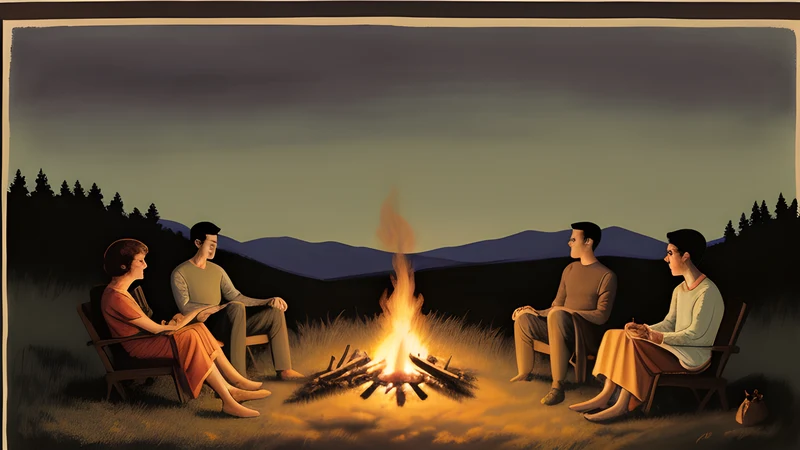
On the last night of April, in the university city of Uppsala, tens of thousands of students in white caps gather on the slope below the castle to sing choral songs to the arriving spring, then light an enormous bonfire that can be seen for miles. Six hundred kilometres to the south, in the Harz mountains of central Germany, villages fill with people in witches’ hats and devil masks climbing towards the Brocken, the peak where, in German folklore, witches were said to gather on this very night to feast and dance until dawn. Walpurgis Night — Walpurgisnacht in German, Valborg in Swedish, Vappu in Finnish — is the eve of the first of May, and it is at once a Christian saint’s vigil, an ancient welcome to spring, and the night the old world believed the powers of darkness walked abroad.
The Saint Behind the Name
The night takes its name from Saint Walpurga, an English Benedictine nun born in Devon around the year 710. She was a formidable figure of the eighth-century missionary Church: a niece of Saint Boniface, the “Apostle of the Germans”, and sister to the missionaries Willibald and Winnibald, she crossed to the Continent to help evangelise the pagan Saxons and became abbess of the double monastery at Heidenheim in what is now Bavaria. She died there around 777, respected for her learning and, later, credited with miracles of healing. Her connection to the last night of April is calendrical rather than dramatic: she was canonised, or her relics ceremonially moved to Eichstätt, on 1 May, and so her feast day fell on that date. The night before a saint’s feast is its vigil, and thus the eve of 1 May became Saint Walpurga’s Night — after which the folk beliefs already clustered around that turning point of the year attached themselves to her name.
The Witches of the Brocken
In German-speaking Europe, Walpurgis Night is above all the night of the witches’ sabbath. The tradition holds that on this night witches ride to the Brocken, the highest summit of the Harz range at 1,141 metres, to hold revels with the Devil and await the coming of May. The belief is old and was taken seriously enough during the witch trials of the sixteenth and seventeenth centuries to feature in confessions extracted under torture. Its greatest literary monument is Goethe’s Faust, whose “Walpurgisnacht” scene carries Faust and Mephistopheles up the Brocken through a phantasmagoria of witches, will-o’-the-wisps and spirits — a set-piece that fixed the association in European high culture. To ward off these night-riders, country people lit bonfires, cracked whips, rang bells and set out protective herbs and crosses. The Brocken itself lends the legend an eerie natural helper: the “Brocken spectre”, an optical phenomenon in which a climber’s shadow is cast, vastly magnified and ringed with rainbow light, onto the mist below.
From Fear to Festival
Over time, and especially in Scandinavia, the defensive bonfires against witchcraft became something else — a joyful communal welcome to spring after the long northern winter, a cousin of the fire festivals that also light up Midsummer’s Eve two months later. The fires that once frightened off evil spirits came to burn simply for the pleasure of the light and warmth and the turning of the season, and the night filled up with singing, food and drink. This is the form the celebration takes across most of northern Europe today, though the old imagery of witches and devils survives in the costumes and in the name.
The Other May Fires
Walpurgis Night sits on one of the year’s ancient hinges, and it shares the eve of May with an older fire festival still. In the Gaelic world the same night is Beltane, the Celtic feast that once marked the start of summer, when herders drove their cattle between two bonfires for protection and luck before turning them out to the high summer grazing. The festival faded under the Church but was revived in 1988 as the Beltane Fire Festival on Calton Hill in Edinburgh, where thousands now watch a torch-lit procession led by a May Queen and a Green Man. The kinship is no accident: both festivals fall at the cross-quarter point midway between the spring equinox and the summer solstice, one of the four turning points that the pre-Christian calendars of northern Europe marked with fire.
The night has drawn composers as surely as it drew Goethe. Felix Mendelssohn set a Goethe ballad as the cantata Die erste Walpurgisnacht, “The First Walpurgis Night”, completed in 1843, which imagines pagan Druids lighting fires on the mountains and disguising themselves as devils to frighten off the Christians trying to suppress their spring rites. It turns the whole legend inside out, casting the “witches” as ordinary worshippers defending an older faith, and it remains the most ambitious piece of music the night has inspired.
Valborg in Sweden
In Sweden, Valborgsmässoafton is one of the great communal nights of the year, and nowhere more so than in the university towns of Uppsala and Lund. In Uppsala the day follows an elaborate and much-loved script: in the morning students race homemade rafts down the Fyris river in the forsränning; at three in the afternoon, crowds gather outside the university library to don their white student caps in unison for the first time since the previous year, marking the arrival of spring; and in the evening the student nations and choirs sing traditional spring songs before the bonfires are lit. The male-voice choir tradition — men singing centuries-old songs welcoming spring, often to audiences of thousands — gives the Swedish celebration a particular solemn beauty amid the revelry. It is a national bonfire night, held in towns and villages across the country, and for many Swedes it marks the true psychological end of winter.
Vappu in Finland
Across the Gulf of Bothnia, the Finnish Vappu is one of the four largest festivals in the national calendar and perhaps the most exuberant. It fuses the spring celebration with a student carnival and, since the early twentieth century, with International Workers’ Day on 1 May, so that the streets fill with both graduates in their white caps and marching demonstrators. On the eve of Vappu, graduates ceremonially put on the white cap they received on finishing secondary school, and statues in Helsinki and other cities are traditionally “capped” as well — the mermaid statue Havis Amanda in Helsinki is washed and crowned with a giant student cap in a raucous ceremony. The food and drink of Vappu are specific and beloved: sima, a lightly fermented lemon mead; tippaleipä, tangled funnel cakes dusted with sugar; and a great deal of sparkling wine, drunk at picnics in the parks the following day.
Traditions and Symbols
Fire is the universal symbol of the night — the bonfire that wards off witches and welcomes spring in a single flame. In the German tradition the imagery of the witch, the broomstick and the Brocken dominates, and in towns such as Thale and Schierke the Walpurgisnacht is staged as a festival of costumed devils and witches. In Scandinavia the emblems are gentler: the white student cap, the male choir, the spring song, the lemon mead. Across the whole tradition, greenery and the first flowers of the year — birch branches, spring blossom — mark the season’s turn. The night sits almost exactly opposite Halloween in the calendar, at the other of the two ancient “cross-quarter” points midway between solstice and equinox, and shares with it the belief that at such hinges of the year the boundary between the living and the uncanny grows thin.
Fun Facts
Bram Stoker set an entire vampire tale, the short story “Dracula’s Guest” — often taken as a deleted opening chapter of Dracula — on Walpurgis Night, exploiting its reputation as the night the dead and the demonic are abroad. The relics of Saint Walpurga at Eichstätt are said to exude a clear liquid known as “Walpurgis oil”, collected by the nuns and distributed to the faithful, a phenomenon recorded for many centuries. The Brocken spectre that haunts the mountain of the witches is a genuine and repeatable optical effect, and the same peak was later used as a Cold War listening post because it towered over the inner-German border. And the Uppsala tradition of donning white caps at precisely three o’clock is timed so exactly that Swedish television broadcasts the moment live, a whole nation’s students raising their caps together.
World Variations
Beyond Germany, Sweden and Finland, Walpurgis Night is marked in the Czech Republic and Slovakia as Pálení čarodějnic, the “burning of the witches”, with bonfires topped by a straw witch effigy. In parts of the Netherlands and the Baltic states it survives in fire customs, and in Estonia Volbriöö has become a students’ carnival night much like the Finnish Vappu. In the United States the date is remembered chiefly through modern neo-pagan and Germanic-heritage revivals, and it lends its name, via the occult literature it inspired, to a great deal of horror fiction and film. Everywhere the shared thread is the same last night of April, the same bonfire, and the same sense that spring must be met with light and noise.
A Closing Reflection
Walpurgis Night is a study in how a fear can turn, over centuries, into a joy without ever quite losing its shadow. The fires that country people once lit to keep the witches of the Brocken away now blaze for the sheer pleasure of the returning light, and the students who race rafts and raise white caps are, whether they know it or not, keeping a vigil older than the English abbess who gave the night her name. That the same evening can hold a devil’s carnival in the Harz and a solemn choir on a Swedish hillside says something about the human need to mark the exact moment when winter loses its grip — and about our habit, at the hinges of the year, of standing a little closer to the fire. The night before May finds its answering festival at the year’s other pole in the candle-lit dark of Saint Lucy’s Day.
Related Content