US National Wine Day
In 2017, a team of archaeologists announced that pottery fragments excavated at Gadachrili Gora, a Neolithic village about fifty kilometres south of Tbilisi in Georgia, bore the chemical signature of wine: tartaric acid, the marker of the Eurasian grape, alongside malic, citric and succinic acids. The residue dated to around 6000 BC, pushing the known origins of winemaking back some six centuries in a single discovery and confirming the South Caucasus as the cradle of the craft. US National Wine Day, raised in glasses each 25 May, is an informal occasion, but the drink it honours is one of the oldest things humans still make the same way. To pour a glass is to repeat a gesture eight thousand years old.
Origins of the observance
The precise origins of National Wine Day are, like those of many modern food and drink observances, somewhat obscure. It appears to have emerged in the United States in the early twenty-first century, spreading through word of mouth, social media and the enthusiasm of wineries and merchants keen to celebrate their craft. Unlike a formally proclaimed holiday, it has no founding statute or single originator; it grew organically into a fixture of the late-spring calendar. It should not be confused with National Drink Wine Day, observed on 18 February, a separate occasion in a similar spirit, nor with the country-specific white and red wine days scattered through the year.
A long history in the glass
The Gadachrili Gora discovery is only the beginning of the story. From the South Caucasus the cultivated vine spread south and west into Mesopotamia, where wine appears in the world’s earliest written records, and into Egypt, where tomb paintings from the third millennium BC show grapes being trodden and the resulting jars sealed and labelled with vintage and vineyard, an early form of the appellation we still use. The Greeks made wine central to philosophy and worship alike, pouring libations to Dionysus and diluting their wine with water as a mark of civilised drinking; to take it neat was considered barbarous.
It was the Romans who industrialised and exported the vine. As the empire expanded, legionaries and settlers planted vineyards across Gaul, Iberia and the Rhine, establishing the rootstock of regions that would later become Bordeaux, Burgundy, Rioja and the Mosel. When the empire receded, it was the monasteries of medieval Europe that kept viticulture alive, the Cistercian and Benedictine orders mapping the vineyards of Burgundy with a precision that still underlies the region’s classifications today. Celebrating wine each May, the modern enthusiast steps into a continuous tradition that runs from a Neolithic Georgian village through Roman Gaul to the bottle on the table.
Why it matters
National Wine Day matters partly as a moment of pleasure and partly as a celebration of craft. Winemaking sits at a fascinating intersection of agriculture, science and art. The character of any wine reflects its grape variety, the soil and climate in which the vines grew, the year’s weather and the countless decisions of the winemaker. The French notion of terroir captures this idea that a wine expresses the particular place and conditions from which it comes, so that the same grape, planted on two adjacent slopes, can yield two recognisably different wines.
The day also honours a craft that hinges on a single piece of microbiology: fermentation, in which yeast converts the sugar of ripe grapes into alcohol and carbon dioxide. For most of history nobody understood the mechanism; it was Louis Pasteur, in the 1860s, who demonstrated that living yeast drove the process, a discovery that turned winemaking from folk art towards controllable science. Beyond the glass, wine supports a vast industry of growers, producers, merchants and hospitality workers, and an observance such as this offers a gentle reminder of the people and places behind every bottle.
How It Is Celebrated
People mark National Wine Day in ways large and small. Many simply open a bottle they have been saving, perhaps pairing it with a favourite meal or sharing it with friends. Wineries and vineyards often welcome visitors for tastings and tours, while restaurants and wine bars may offer special flights or featured selections. Online, enthusiasts share recommendations, tasting notes and photographs of their chosen wines.
For the curious, the day is an ideal opportunity to try something unfamiliar: a grape variety one has never tasted, a wine from an unexpected region, or a style outside one’s usual preference. Some use the occasion to learn about food and wine pairing, discovering how a crisp white might lift a dish of seafood or how a robust red can complement roasted meats. Those who want to narrow the focus might save their reds for this day and turn to US National White Wine Day in August, when the summer heat makes a chilled glass the obvious choice.
World Variations and Cultural Context
While National Wine Day is an American observance, the love of wine is global. Countries such as France, Italy and Spain have their own deep-rooted wine cultures, complete with regional festivals tied to the harvest. The autumn vendange in France and the grape harvest festivals of Italy and Spain celebrate the gathering of the year’s crop with feasting and ceremony. New World wine nations, including the United States, Australia, Chile, Argentina and South Africa, have developed vibrant traditions of their own, often centred on their distinctive regions and signature grapes.
Each of these countries has, in effect, claimed a grape. Argentina made Malbec, a variety that struggled in its native Bordeaux, into its national signature in the high vineyards around Mendoza. Chile rediscovered Carménère, long thought extinct, growing misidentified among its Merlot vines, a botanical surprise confirmed only in the 1990s. South Africa nurtured Pinotage, a cross of Pinot Noir and Cinsaut bred there in 1925, while Australia built a global reputation on Shiraz. These choices were rarely planned; more often a grape simply thrived where others faltered, and a national identity grew up around the accident. The map of world wine, for all its appearance of ancient inevitability, is in large part a record of which vines happened to like which soil, and of the growers patient enough to find out.
The autumn harvest is the year’s pivot, and the rituals around it are among the oldest continuous traditions in European life. In Burgundy and Bordeaux the vendange once drew whole villages and seasonal workers into the vineyards for a few intense weeks; in parts of Spain and Italy the pressing was, within living memory, still done by foot. Modern Georgia, where this story began, celebrates Rtveli, the grape harvest, with feasting, song and the ceremonial filling of the buried qvevri, a festival that has changed remarkably little in centuries. New World nations have grafted their own customs onto this inheritance, from the crush festivals of Napa to the harvest events of Australia’s Barossa, each adapting an ancient rhythm to a new hemisphere.
Traditions and symbols
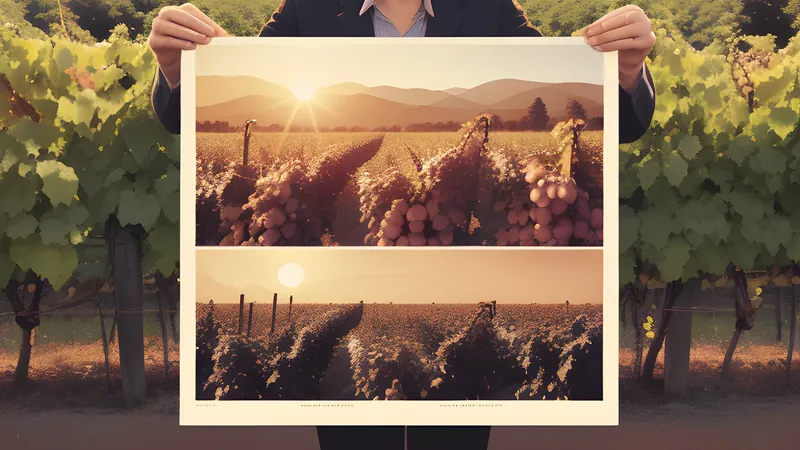
The imagery of wine is rich and evocative: sun-drenched vineyards in neat rows, baskets of ripe grapes, oak barrels resting in cool cellars and the gentle swirl of a glass held up to the light. The ritual of tasting, observing colour, breathing in aroma, savouring the flavour, is itself a kind of tradition, encouraging mindfulness and attention. The clink of glasses in a toast remains one of the most universal symbols of celebration and goodwill.
Fun facts
- Georgia still ferments much of its wine in qvevri, large egg-shaped clay vessels buried underground, a method so ancient and continuous that UNESCO added it to its list of intangible cultural heritage in 2013.
- Of the thousands of distinct wine-grape varieties grown worldwide, a single one, Cabernet Sauvignon, is itself a natural cross between Cabernet Franc and Sauvignon Blanc, identified by DNA analysis only in 1996.
- Champagne may legally bear that name only if it comes from the Champagne region of France and is made by its traditional method of secondary fermentation in the bottle.
- The deepest cellars under the city of Reims, dug into chalk by the Romans and later expanded, hold tens of millions of bottles of Champagne ageing in near-constant cool and dark.
A closing reflection
National Wine Day is, at heart, an invitation to slow down and appreciate something made with care and patience. Behind every glass lies a long chain of effort and history, from the Neolithic vintners of Gadachrili Gora to the grower tending the vines this season. There is a quiet continuity in that: few of the things we consume connect us so directly to the deep past, made by essentially the same act of crushing grapes and waiting. Whether the day is marked with a treasured bottle or a modest everyday wine, the spirit is the same, to take pleasure in good drink, food and company. Those who enjoy pairing the glass with a plate might explore National Wine and Cheese Day, a natural companion to this one.
Related Content