US National Crabmeat Day
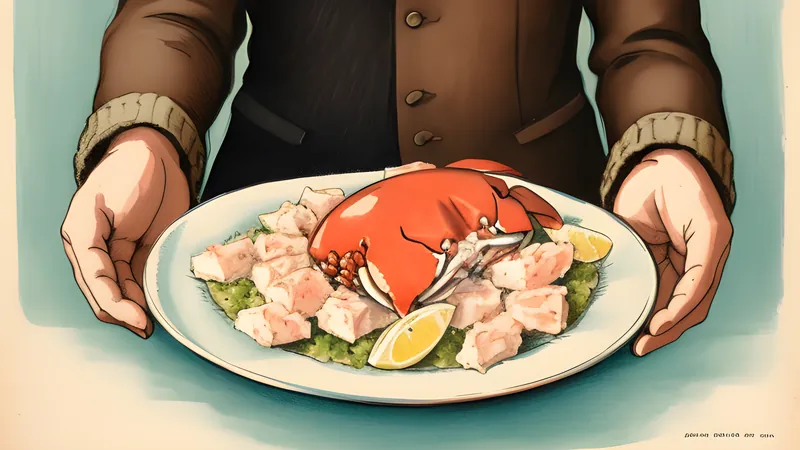
The blue crab that dominates the Chesapeake Bay carries a scientific name that is essentially a compliment: Callinectes sapidus, which translates as “beautiful savory swimmer”. Carl Linnaeus’s naming convention rarely produces such an honest verdict, but the meat of that crab — briny, faintly sweet, and rich — has earned it. US National Crabmeat Day, held each year on 9 March, exists to honour that meat and the coastal cultures built around it, from the steamed-crab tables of Maryland to the cracked Dungeness of the Pacific shore.
The exact origin of the day itself is not recorded, and no single founder can be named without inventing one. What can be told, with names and dates attached, is the story of how crabmeat became a regional emblem — and how a single German refugee’s spice blend came to define the most famous crab dish in America.
Crab and the coast, long before the day
Crab has been eaten on American shores for far longer than the United States has existed. Indigenous peoples gathered and ate crabs long before European settlers arrived, and over the centuries crab dishes hardened into regional specialities tied to particular waters — Maryland, Louisiana, Alaska, and the Pacific Northwest each developing their own treasured preparations. Few foods are as bound to local identity as crab, because the species itself changes with the coastline, and the cooking changes with the species.
In the Chesapeake Bay, the blue crab reigns: steamed under a heavy crust of seasoning, or picked and bound into the crab cake that the region is known for. Along the Gulf Coast, crab finds its way into gumbos, stews, and boils flavoured with the bold seasonings of the region. On the Pacific coast, the Dungeness crab — sweet, tender, slightly nutty — is prized, often simply cracked and dipped in melted butter. In the cold northern waters, the large king and snow crabs are harvested and shipped across the country. Each tradition is a story about a place and the people whose livelihoods depend on its waters.
These regional differences are not merely a matter of seasoning but of the animals themselves. The Chesapeake blue crab is small, aggressive, and labour-intensive to pick, which is why its meat commands a premium and why the picking houses of Maryland’s Eastern Shore developed into a skilled trade of their own. The Dungeness, by contrast, is large and yields generous lumps of meat from its body and legs, suiting the simpler preparations of the Pacific coast. King crab, hauled from the frigid Bering Sea, is so large and so dangerous to catch that its fishery became a byword for hazardous work. A single ingredient, in other words, has shaped three quite different working cultures, each adapted to the particular crab its waters happen to hold.
The refugee who flavoured the crab cake
The defining seasoning of Chesapeake crab has a precise and rather extraordinary origin. Old Bay — the celery-salt-and-spice blend now inseparable from steamed blue crab — was created by Gustav Brunn, a German Jewish refugee who reached the shores of the Chesapeake in 1939. Brunn had escaped Nazi Germany with his wife, daughter, and son after a bribe bought his release from the Buchenwald concentration camp. Settling in Baltimore, he set up a spice business and developed a blend of around eighteen herbs and spices — celery salt, pepper, mustard, paprika, pimento, cloves, and more — tailored to the local appetite for crab.
The timing was uncanny. The term “crab cake” itself appears to be a twentieth-century coinage, with Baltimore crab cakes recorded in Crosby Gaige’s New York World’s Fair Cook Book of 1939 — the very year Brunn arrived. The seasoning that would come to define the dish and the dish’s emergence into print thus happened almost simultaneously, and the partnership between Old Bay and the blue crab has shaped Chesapeake cooking ever since.
Part of what makes Old Bay so suited to crab is restraint disguised as complexity. Its eighteen-odd components read like a long list, but the dominant note is celery salt, and the blend’s role is to season the steaming water and the crab’s shell rather than to mask the meat. A good Chesapeake crab cake is, in fact, defined by how little it contains: lump meat held together with the barest amount of binder, seasoned lightly, and cooked just enough to set. The art is in resisting the temptation to add filler, breadcrumbs and peppers and sauces that stretch the expensive meat but bury its delicate flavour. That principle — let the crab lead, and season with a light hand — is the through-line that connects nearly every great crab dish, however different their spice cabinets. It is a reminder that “regional” American food is often the work of recent arrivals, a theme echoed in the immigrant-shaped traditions behind dishes celebrated on days like US National Guacamole Day, where a Mesoamerican staple became an American fixture.
How the day is celebrated
People mark 9 March by eating crab, whether dining out or cooking at home. Crab cakes, bisques and soups, stuffed crab, and simply steamed or boiled crab are the usual choices. The most characteristic celebration is the communal crab feast: newspaper spread across the table, wooden mallets and crackers handed round, and a steaming pile of seasoned crabs to be picked apart by hand over a long, sociable afternoon. It is a meal that resists hurry — there is no fast way to eat a whole crab, and the labour-to-reward ratio is part of the point, forcing diners to slow down, talk, and work for each morsel — which is exactly its appeal, much like the unhurried pleasures of a layered Italian ice celebrated on US National Spumoni Day. The mess is not incidental; a crab feast is one of the few formal-feeling meals where getting your hands filthy is the expected, even required, way to behave. Sharing recipes and tips for selecting and picking crab is part of the ritual, and the day is a natural prompt to support local fishmongers and seafood markets.
Crab around the world
Crab is treasured far beyond American shores. In East and Southeast Asia it is prepared in bold, fragrant ways — Singapore’s chilli crab and black pepper crab, the latter now a national dish, or whole crabs stir-fried with ginger and spring onion and steamed with dipping sauces. European coastal cuisines, from Britain and France to the Mediterranean, favour dressed crab served in its own shell, bisques, and crab folded through pasta and rice. In Britain the brown crab, with its rich darker meat alongside the sweet white, supports a substantial fishery off the south-west coast, much of it exported live to the Continent. Wherever crab is caught, cooks tend toward the same instinct: pair its sweet, delicate meat with a few complementary flavours and let the seafood lead. The American day is one expression of a much wider affection for the crustacean, and a reminder that crab is one of the few luxury foods that nearly every coastal culture seems to have arrived at independently.
A word on sustainability
Because crab depends on healthy coastal waters and well-managed harvests, the day carries a quiet practical dimension. Many crab fisheries operate under seasonal closures, minimum size limits, and catch rules designed to protect breeding stocks — the Chesapeake blue crab fishery in particular has been the subject of careful management as populations have fluctuated. Choosing crab from responsibly managed sources helps safeguard both the species and the communities that live by it, turning a plate of crab into a small act of stewardship.
Fun facts
- The Chesapeake blue crab’s scientific name, Callinectes sapidus, means “beautiful savory swimmer”.
- Old Bay seasoning, now inseparable from Chesapeake crab, was invented by Gustav Brunn, a refugee who escaped Buchenwald and reached Baltimore in 1939, and contains roughly eighteen spices.
- The earliest known printed reference to a Baltimore crab cake appears in Crosby Gaige’s 1939 New York World’s Fair Cook Book — the same year Old Bay’s creator arrived in the city.
- Crabs grow by moulting, shedding their hard shells entirely; a soft-shell crab is one caught just after moulting, when the whole crab can be eaten.
- Crabs are not confined to the sea: different species live in oceans, fresh water, and even on land, and they are crustaceans related to lobsters and shrimp.
A closing reflection
It is striking how much of a “local” delicacy can be owed to people from far away. The crab is native to the bay, but the seasoning that made it famous arrived in the luggage of a man fleeing a concentration camp, and the dish it flavours found its name in a cookbook printed the same year. A regional cuisine often looks fixed and ancient from the outside, yet trace any single element back far enough and it tends to begin somewhere else, with someone who had recently lost a great deal and was trying to build something new by the water.
Related Content


