US National Coconut Torte Day
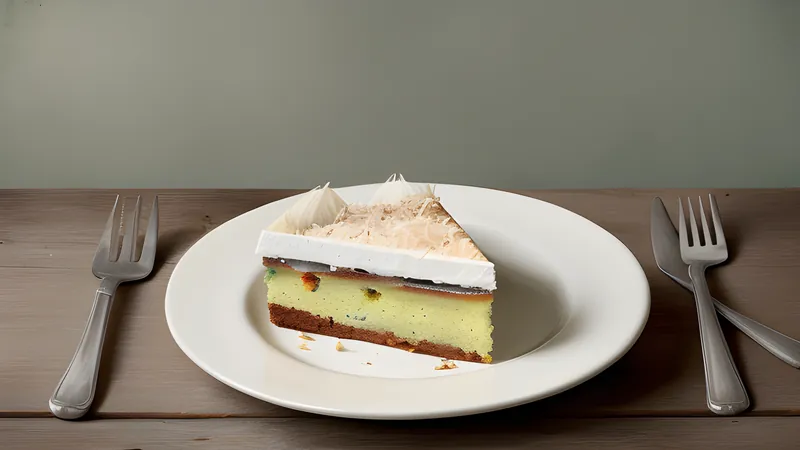
The oldest cake named after a place is the Linzertorte, and the earliest known recipe for it, found in 2005 by the researcher Waltraud Faißner in a Veronese manuscript of 1653 held at Admont Abbey in Austria, predates the Sachertorte by nearly two centuries. The coconut torte that US National Coconut Torte Day celebrates on 13 March belongs to that same Central European lineage of dense, layered, nut-rich cakes, but it carries an ingredient those Austrian bakers never had: shredded coconut, which only became available far from the tropics in the 1890s. The day, in other words, honours a marriage between a very old European craft and a very new piece of industrial food technology.
Where the day comes from
No documented founder or origin attaches to US National Coconut Torte Day, which places it among the many undated food observances on the American calendar. The interesting history is not the day’s but the dessert’s, and that history is genuinely traceable. To understand a coconut torte you have to follow two separate threads, one running out of the Austrian pastry kitchen and the other out of a Philadelphia flour mill, and see where they meet.
What a torte actually is
A torte is a rich, often multi-layered cake from Central European tradition, and the word matters. Classically a torte uses ground nuts or breadcrumbs in place of much or all of the flour, which gives it a dense, moist, close-grained character quite unlike a light airy sponge. The form was raised to high art in the coffee-house culture of Vienna and the wider Habsburg lands. The Sachertorte, the most famous of them, was created in 1832 when the sixteen-year-old apprentice Franz Sacher was pressed into service after the head chef fell ill, charged by the State Chancellor Prince Metternich with producing something extraordinary; his chocolate cake with apricot jam and dark glaze became one of the most recognised desserts in the world. The Linzertorte, older still, is a lattice-topped shortcrust filled with fruit preserve and ground nuts. These are the ancestors of the coconut torte: cakes built in layers, leaning on nuts rather than flour, and treated as celebratory centrepieces.
How coconut joined the cake
For the European torte to acquire coconut, coconut first had to become something a baker far from a palm tree could keep in a cupboard, and that is a story of the 1890s. Fresh coconuts spoil and are awkward to ship, so the breakthrough was desiccation: shredding the white flesh and drying it thoroughly until it kept indefinitely. A French firm, J.H. Vavasseur and Company, was already shipping thousands of tons of desiccated coconut out of Ceylon by the early 1890s. In the United States the pioneer was Franklin Baker, a Philadelphia flour miller who in 1895 took a shipload of fresh coconuts in settlement of a debt, found he could not sell them, and instead bought machinery to shred and dry the flesh into a uniform product. The business so outgrew his flour mill that he sold the mill and founded what became the Franklin Baker Company. Sweet, fragrant, shelf-stable shredded coconut suddenly sat on shelves thousands of miles from any palm, and bakers folded it into fillings, pressed it into frostings and toasted it for garnish. The coconut torte is the natural offspring of that meeting: European layering technique applied to an industrialised tropical ingredient.
Why the fusion is worth marking
The coconut torte is, at heart, a small monument to cultural and technological exchange, the structure and refinement of the Habsburg pastry kitchen carrying the perfume of an equatorial drupe. Celebrating it is a quiet way of recognising how cuisines borrow from and enrich one another, and how often a “traditional” dessert turns out to depend on a relatively recent invention. For the bakeries and patisseries that make such cakes, the date is also a practical boost, an occasion to show off skill and tempt customers with a special slice, much as other dessert observances do for the artisans who keep the craft alive. The instinct to pair coconut with a soft, creamy structure links the torte to the family of coconut sweets honoured on National Coconut Cream Pie Day.
How it is celebrated
People mark 13 March by seeking out a coconut torte at a favourite bakery or by taking on the rewarding challenge of building one at home. A home version might layer sponge or nut cake with coconut pastry cream, blanket the whole in whipped cream, and finish with a generous shower of toasted coconut flakes, the toasting deepening the flavour and adding a gentle crunch against the soft cream. Others experiment, slipping in a layer of fruit, a measure of rum, or a coconut custard. Sharing a slice with friends over coffee is the most natural way to honour the day, and the pale, snow-white, layered cake tends to photograph well enough to feature warmly online.
What makes it difficult
A torte is unforgiving in ways that reward attention, and the coconut version adds its own complications. Because a classic torte leans on ground nuts rather than flour, it has little gluten to hold air, so it depends on whisked eggs for lift; overbeat or knock the air out and the layers bake heavy and damp. Coconut compounds the problem by carrying a good deal of fat and fibre, which can weigh the crumb down further, so bakers often balance shredded coconut with a lighter sponge layer rather than building the whole cake from it. The pastry cream that fills it must be cooked to exactly the right thickness: too loose and the layers slide, too firm and the cake turns stodgy. Toasting the coconut for the topping is the one easy pleasure in the process, though even that turns from golden to burnt in the space of a minute under a grill, as anyone who has looked away at the wrong moment can confirm; the high oil content that makes coconut so fragrant is also what makes it scorch so suddenly, so the patient baker toasts it low and stirs it often rather than trusting it for even a moment.
Assembly is the final test. A layered torte must be built level, chilled between stages so the cream sets enough to bear the next tier, and crumb-coated before its final blanket of cream if the snow-white finish is to stay clean. None of this is visible in the elegant slice on the plate, which is rather the point of the craft.
Coconut in many kitchens
Although the named observance is American and the technique European, the love of coconut desserts is far older and wider than either. In the tropical regions where the palm grows abundantly, coconut appears in countless sweets, from milk-based puddings to fried pastries and rich layered confections, traditions that long predate the desiccation machine. The torte form, meanwhile, travelled out of Central Europe into bakeries everywhere, adapted to local taste at each stop. The coconut torte sits comfortably in both lineages at once, which makes the day a small invitation to look sideways at how different cultures treat the same fruit. In the Philippines, now one of the world’s largest coconut producers, the flesh becomes bukayo and the sap is boiled down into syrup; in South India, coconut sweetens payasam; in Brazil, cocada sets shredded coconut into chewy bars; in the Caribbean, coconut enriches everything from tarts to rum cakes. The fruit is treated as fresh and immediate in these traditions, used hours from the tree, whereas the European torte could only adopt it once it had been dried into something that survived a long sea voyage. That cross-cultural curiosity also runs through observances like World Coconut Day, which takes the ingredient itself rather than any one dish as its subject.
Fun facts
- The coconut is botanically a drupe, like a peach or plum, not a true nut, so it is more closely related to stone fruit than to almonds or walnuts.
- Desiccated coconut owes its existence to a 1895 accident: Franklin Baker took a shipload of coconuts as debt repayment, couldn’t sell them, and built a shredding business instead.
- The Linzertorte’s oldest known recipe dates to 1653, making it arguably the oldest cake in the world to be named after a place.
- The Sachertorte was invented by a sixteen-year-old apprentice, Franz Sacher, thrown into the role when the head chef fell ill in 1832.
- A true torte traditionally replaces much of its flour with ground nuts or breadcrumbs, which is why it is denser and moister than an ordinary sponge cake.
A closing reflection
It is tempting to imagine the coconut torte as something timeless, a slice of old-world tradition, but the truth is more revealing. The technique is genuinely old, traceable to Austrian kitchens centuries deep, while the defining ingredient could not have reached most of those kitchens until a flour miller bought the wrong machinery in 1895. The cake is a reminder that many of the dishes we think of as heritage are in fact recent collaborations between a craft and a convenience, no less worth celebrating for being young.
Related Content


